• Home
  • About
    • Overview
    • Borícua Muslims
    • Engaged Spirituality
    • The Muslims of Latin America and the Caribbean
  • Contact
Menu

KEN CHITWOOD

Religion | Reporting | Public Theology
  • Home
  • About
  • Books
    • Overview
    • Borícua Muslims
    • Engaged Spirituality
    • The Muslims of Latin America and the Caribbean
  • Contact
“The person who knows only one religion, knows none”
— Max Müller

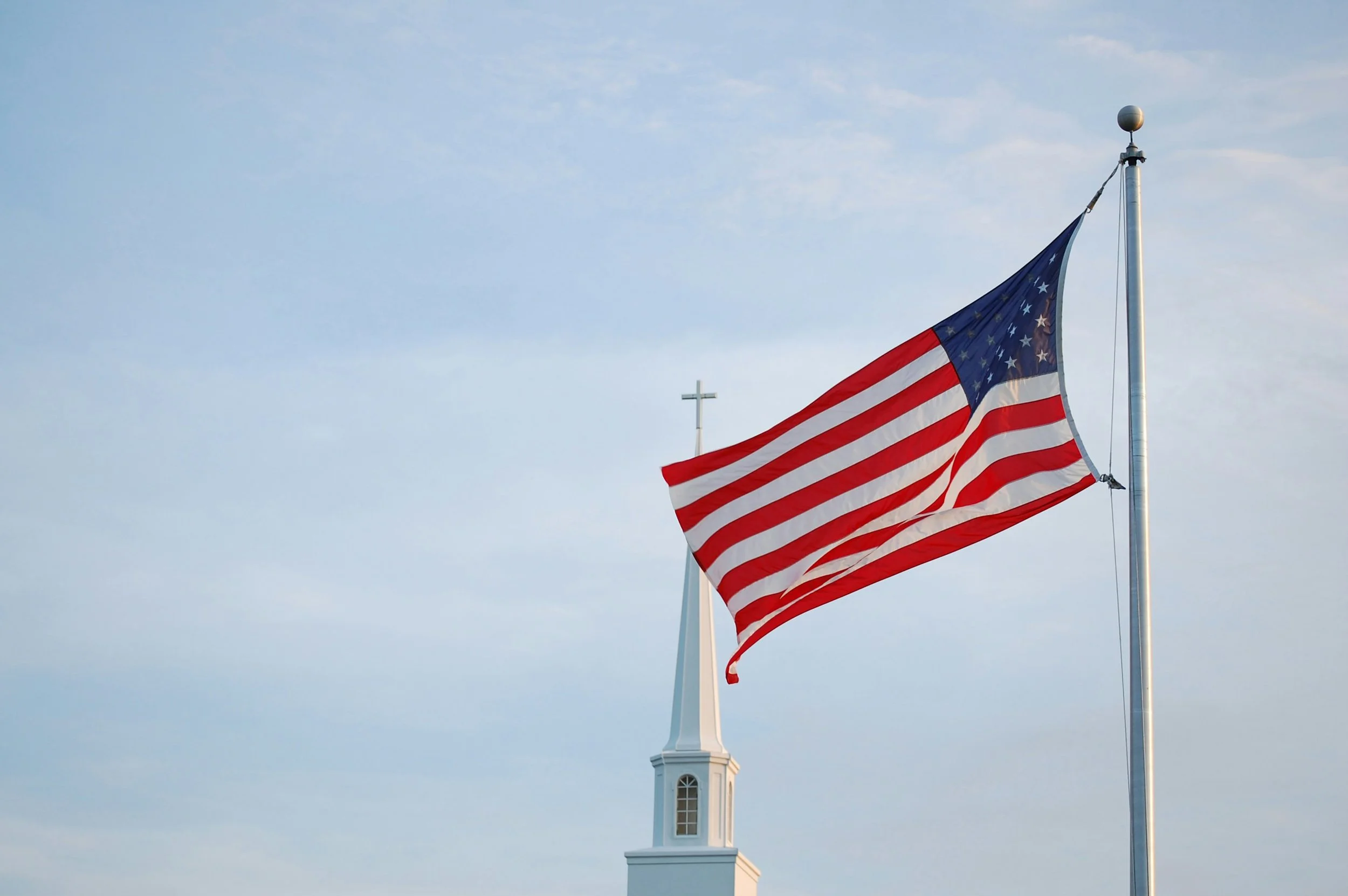
Photo by Brad Dodson.

American Religion at 250

May 6, 2026

As the United States approaches its 250th anniversary in July 2026, journalists have a rare opportunity to revisit the nation’s story through one of its most dynamic and contested forces — religion.

From before the earliest encounters between Indigenous Peoples and Europeans, to today’s increasingly diverse and “spiritual-but-not-religious” landscape, religion has shaped American identity, politics and culture in profound ways.

The Semiquincentennial is not just a moment to look back but a chance to tell deeper, more human stories about belief, doubt and belonging across 25 decades of American life. The most engaging religion reporting will move past histories and clichés and into the lived realities of Americans whose spiritual lives continue to shape the nation, sometimes in surprising ways.

This guide is designed to help reporters uncover fresh, compelling and nuanced stories in advance of the celebrations and remembrances. It encourages moving beyond institutional histories to critically cover lived religion, overlooked communities and emerging spiritual trends.

At its best, coverage of religion during the Semiquincentennial can illuminate how Americans have wrestled with meaning, belonging and power, what has resulted from these struggles and how those struggles continue to evolve.

A Crash Course on American Religious History

Religion in America predates the nation itself, beginning with the rich and varied spiritual traditions of Indigenous peoples. Scholar of American religion, Thomas Tweed, reflects in his new book Religion in the Lands that Became America: 

Most surveys of U.S. religion have presupposed that the story must begin with and focus on the British colonies—as opposed to starting, as I do, with ancient Indigenous practices in the territory now within national borders, and then chronicling the history of those locales, from Florida to Alaska and Maine to Hawai‘i. That presupposition commits narrators to focusing on Anglo-Protestant men who had political and ecclesiastical power in Britain’s Atlantic colonies. In turn, everyone else—Protestant women as well as racial and religious others—appear as supporting actors with bit parts. More recent survey writers have enriched the story. But the plot has not changed; nor have the supporting players’ roles. Everyone who is not an Anglo-Protestant man becomes defined by her or his relation to those with political or ecclesiastical authority during a relatively brief period, 1607–1776, on a strip of land along the North Atlantic coast.

To alter this pattern, Tweed and other historians have expanded “the narrative scope” to include a range of Indigenous traditions — traditions deeply tied to land, community, and cosmology that were profoundly disrupted by European colonization, which introduced Christianity alongside systems of displacement and violence.

In the colonial period, religion proved both motivator and source of conflict. Some European settlers, such as Puritans in New England, sought to build religiously ordered societies, while others came in search of economic opportunity rather than spiritual refuge. Colonies and their relationships to religion varied widely. Some had established churches, while others, like Rhode Island and Pennsylvania, experimented with religious tolerance. There were also small communities of minorities, such as Jews, in major port cities like New Amsterdam (New York), Newport, Philadelphia, Charleston and Savannah. This diversity laid the groundwork for what would become the First Amendment’s protections of religious freedom and non-establishment.

The 18th and early 19th centuries saw waves of revivalism known as the First and Second Great Awakenings, which helped democratize religion and emphasized personal experience over institutional authority. These movements fueled the growth of evangelical forms of Protestantism and inspired reform efforts, including pushes for abolitionism and temperance. At the same time, new religious movements emerged, including the Church of Jesus Christ of Latter Day Saints and various utopian communities such as the Oneida Community and Shakers. Each sought to establish “heaven on earth” by separating from mainstream society to practice activities  like communal ownership and shared labor or adherence to strict religious tenets aimed at perfecting life, both in this world and the next.

From the colonial period through the early 19th century, forcibly enslaved Africans brought diverse religious traditions — including West and Central African spiritual practices as well as Islam — which persisted in adapted forms despite forced conversion and repression. Over time, these influences blended with Christianity in what scholars call the “invisible institution,” a vibrant religious life that emphasized liberation, communal solidarity and spiritual resilience. This evolving tradition became the foundation of Black churches such as the African Methodist Episcopal Church (AME) or National Baptist Convention — and later Pentecostalism — which would play a central role in American religious and political life by the 19th and 20th centuries.

Immigration in the 19th and early 20th centuries transformed the religious landscape immensely. Catholics, Jews and Eastern Orthodox Christians established institutions and communities across the U.S. — from the St. Photios Greek Orthodox National Shrine in Florida to the Eldridge Street Synagogue in New York City’s Lower East Side — often facing suspicion and discrimination in due course. Meanwhile, the first Buddhist communities emerged on the West Coast, particularly in California, among Chinese and later Japanese immigrants who faced significant discriminatory laws. Religion became further intertwined with questions of American identity, with leaders and laypeople asking themselves and society who belonged, and on what terms.

The 20th century brought both consolidation and immense change. Mainline Protestant denominations wielded significant cultural influence by the mid-century, while Catholicism and Judaism became more integrated into public life, despite ongoing suspicions about European and Mexican Catholics political allegiance. The post–World War II era saw a rise in religious affiliation and the framing of the U.S. as a broadly “Judeo-Christian” nation, especially in contrast to what was framed as “atheistic” communism.

However, the late 20th century also saw increasing polarization and diversification. The Civil Rights Movement drew heavily on Black church traditions, while also exposing tensions within religious communities. The rise of the Religious Right in the 1970s and 1980s linked conservative Christianity to partisan politics in new ways.

Immigration reforms such as the Hart-Celler Act of 1965 opened the door to new forms of religious diversity, bringing growing numbers of Muslims, Hindus, Buddhists and Sikhs, and changing America’s religious landscape yet again. The rise of Hindu temples in suburban New Jersey, Sikh gurdwaras in California’s Central Valley and expanding Muslim communities in cities like Dearborn, Michigan are only a few examples of this changing landscape.

At the same time, the number of Americans who choose to identify as religiously unaffiliated (or “nones”) has surged, now comprising roughly 28–29% of U.S. adults, up from just 16% in 2007, according to Pew Research Center and Public Religion Research Institute. Among younger adults, the shift is even more pronounced, with close to four in ten identifying as unaffiliated in some surveys. Many within this group still express spiritual beliefs — about a third describe themselves as “spiritual but not religious” — often blending practices such as yoga, meditation, and mindfulness with elements drawn from multiple traditions

Today’s religious landscape is marked by both fragmentation and innovation. Traditional institutions face declining membership, yet new forms of community are emerging. Online congregations, interfaith networks, hyper-nationalist enclaves and activist spiritual movements have become increasingly common, with religion continuing to shape debates over American identity, morality and public life, even as its forms become less predictable.

As the nation marks 250 years, and various parties try to define the nation as a “Christian” one, its religious story is less a single narrative than an increasingly vibrant one told from the perspective of multiple voices and reflects ongoing struggles over freedom, diversity and the potential of American futures in the decades to come.

Find resources, stories and more at ReligionLink
In Religion, Religion and Culture, Religion News, ReligionLink, Religious Literacy Tags American religion, American Religious Landscape, America at 250, American religion at 250, U.S. religion, Religion in the U.S., American religious history, Semiquincentennial religion, ReligionLink
Comment

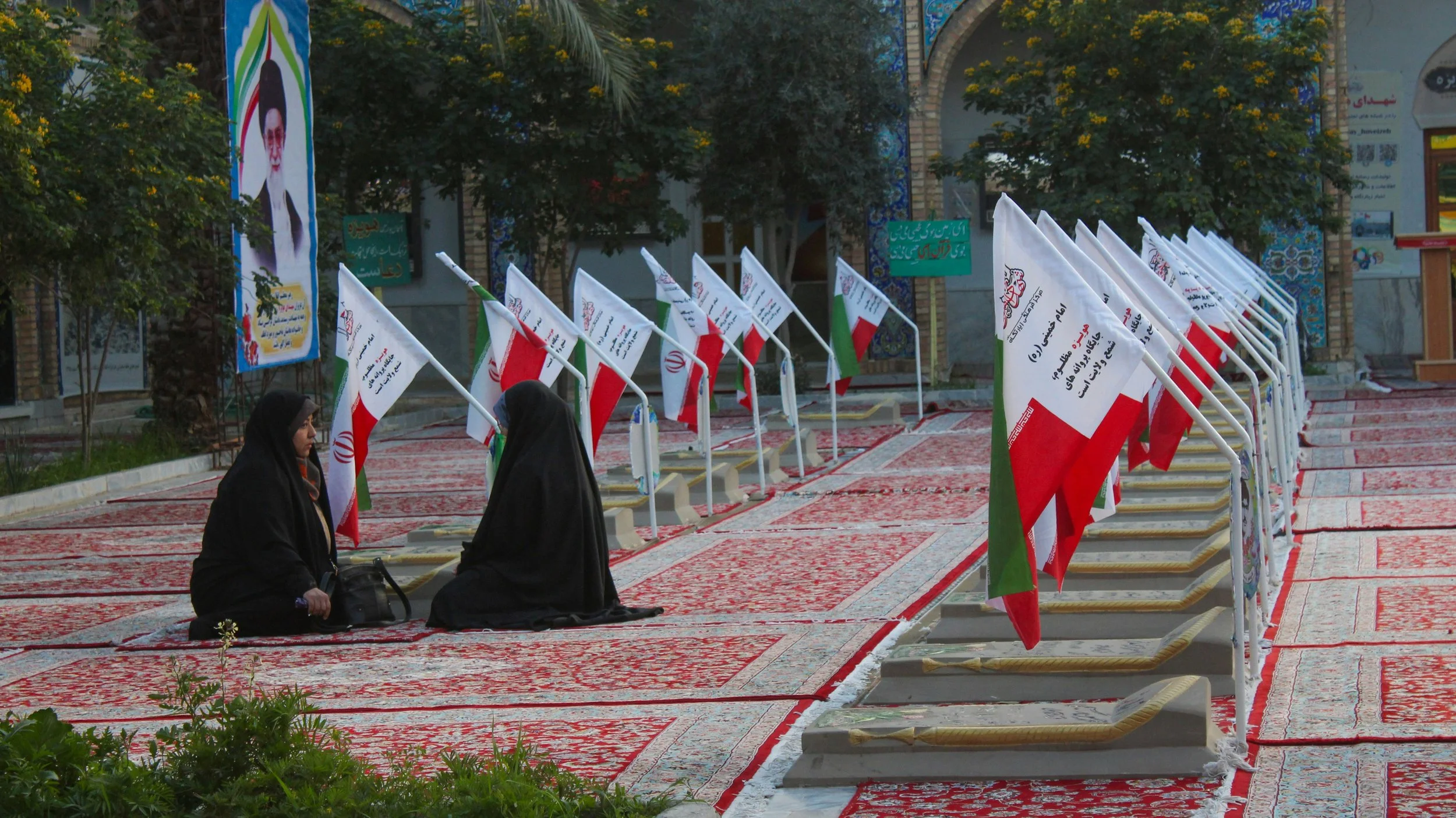
Photo by Moslem Daneshzadeh.

War in Iran: The conflict’s religious contours

May 6, 2026

Reporting on the war in Iran requires not only bringing a keen eye to its geopolitical realities and ramifications but also a nuanced understanding of how religion shapes, and is shaped by, the conflict.

This reporting requires paying attention to both internal dynamics (e.g., how the state uses religion to justify policy and suppress diversity) and external narratives, including how religious rhetoric is mobilized abroad to offer support for, and protest, the war. 

In this guide, we offer background, resources, relevant stories and expert sources to help you better cover the religion angle on the current conflict and what it might mean in the wake of the latest war in the Middle East. 

Background

Iran’s religious contours are shaped by centuries of history but more recently the 1979 Islamic Revolution, when clerical leadership fused religion with state authority. The Islamic Republic of Iran it founded is a theocratic state that constitutionally embeds its interpretation of Twelver Shiʿa Islam into the country’s legal and political systems, shaping governance, laws and public life. This gives the clerical establishment broad influence over the state and country as a whole — including the laws and how they are implemented across the judiciary, educational sector and to govern public morality.

This framework influences everything from public morality codes to social services, and it is integral to understanding how the state responds to dissent and dissenters. At the same time, this official religious order exists alongside a rich tapestry of religious communities — including Sunnis, Christians, Jews, Zoroastrians and others — whose rights and freedoms are unevenly protected and often actively suppressed. Most notably, Baha’is, who are not legally recognized, face harsh persecution, including arrests and property seizures, while Christians — especially converts — are frequently prosecuted under charges that frame peaceful worship as “propaganda against the state.”

According to the latest monitoring by the U.S. Commission on International Religious Freedom (USCIRF), approximately 90–95 % of the country’s nearly 90 million people are identified as Shiʿa Muslims, with Sunni Muslims making up most of the remainder; recognized non‑Muslim minorities such as Christians, Jews and Zoroastrians make up a small fraction of the population and have limited, conditional protections under law. Non‑recognized communities — most prominently Baha’is — are denied legal safeguards and are subject to systematic discrimination and violence.

Over the past year, and prior to the 2026 U.S.-Israeli war against Iran and the killing of Supreme Leader Ali Khamenei, reports of crackdowns on religious minorities have increased. State security forces have carried out raids on homes, arrested Baha’is on broad charges as threats to national security, and aggressively prosecuted Christian converts for basic acts of worship. Authorities often frame these actions in national security language, but independent monitoring sees this as part of a broader effort to reinforce ideological conformity and suppress alternatives to the state’s religious monopoly.

This religious framework also conditions Iranian society’s response to the war. Inside Iran, state media and officials frequently invoke themes of sacrifice, resistance and divine duty drawn from their interpretation of Shiʿa tradition to buttress public support and frame the conflict within a larger moral narrative. Martyrdom — a central concept in Shiʿa thought given the killing of Imam Husayn ibn Ali at Karbala in 680 — resonates deeply when leaders or soldiers fall, bridging state objectives with religious sentiment.

The status of religious minorities, along with other minoritized populations, has deteriorated even further since the start of the 2026 war. The Iranian government has been treating its minority populations as potential internal threats, with arrests and escalating state-sponsored violence. For instance, the government has used the conflict to justify a surge in arrests among members of the Baha’i, Jewish and Christian communities.

Specifically, it has intensified property confiscations and arbitrary detentions against Baha’is; increased the number of arrests of Christian converts for “promoting Zionist Christianity;” demolished Sunni mosque foundations and arrested clerics who challenge official narratives and pressured Jewish Iranians to publicly denounce Israel, with some facing heightened risk of being charged with espionage. Furthermore, reports suggest the conditions of religious prisoners of conscience have deteriorated given abandoned prison management, severe deprivation and a surge in executions.

Externally, the war has also become entangled with religious narratives in the U.S. and Israel. In both, elements of religious framing have emerged that cast the conflict in civilizational or prophetic terms, complicating perceptions and policy debates, as well as an end to the war.

Some U.S. military personnel have reported that commanders used biblical end‑times rhetoric — drawn from parts of Christian evangelical tradition — to frame the conflict as divinely sanctioned, prompting concerns about the mixing of religious ideology with military policy. Likewise, commentators note that political leaders in both Washington and Jerusalem sometimes employ civilizational language — framing the confrontation as a clash between religious identities — to mobilize support, simplify complex geopolitical causes and appeal to domestic constituencies such as Christian Zionists, who believe “the strengthening of the state of Israel will ultimately lead to the erection of the Temple in Jerusalem and hasten the arrival of the day of judgement.”

All this shapes how the war’s religious dimensions are reported: the theocratic nature of the Iranian state, the vulnerability of minority faith communities and dissenting members of the majority as well as the global politics of faith and war are intertwined in ways that extend far beyond the battlefield.

Learn more at ReligionLink
In #MissedInReligion, Religion, Religion and Culture, Religion News, ReligionLink, Religious Literacy Tags Iran, War in Iran, Religion in Iran, Iran religion, Bahais in Iran, Iranian religion, U.S. war in Iran, Israel war in Iran, Islamic Revolution, Christian Zionists, Iranian Christians
Comment

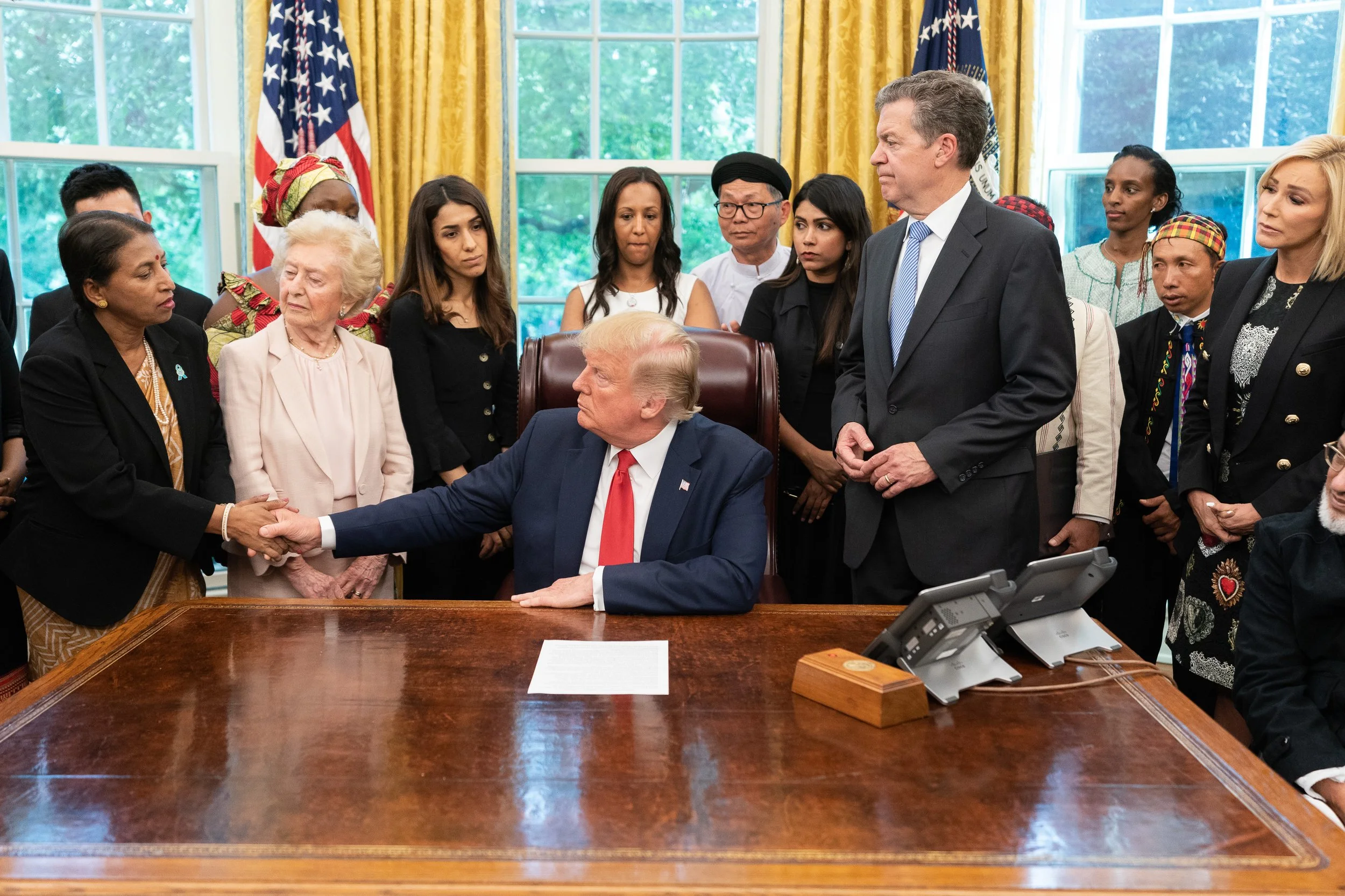
President Donald J. Trump meets with survivors of religious persecution from 17 countries Wednesday, July 17, 2019, in the Oval Office of the White House. (Official White House Photo by Shealah Craighead)

Claims of religious persecution in the media

March 11, 2026

Religious persecution is a profoundly human story.

Deeply held beliefs, issues of identity and belonging, power and exclusion, violence and reconciliation all play a role in telling that story, which makes it particularly compelling for reporters to cover.

Yet religious persecution is among the most complex issues journalists can report on.

Across the globe, individuals and communities face threats to their freedom of religion or belief.  Such threats include limitations on, not only how people worship and care for their sacred spaces, but also on how they live their public and private lives — because of who they are and what they believe. At the same time, narratives about these violations can be shaped, amplified or distorted by political interests, cultural anxieties and media ecosystems that reward simplicity and dissension over nuance and systems-thinking. 

Journalists have a responsibility to illuminate injustice without reinforcing misleading tropes or inflaming tensions.

This guide offers you the tools to navigate the topic as it plays out in the media, offering background, resources and a special interview with Candace Lukasik, author of Martyrs and Migrants (NYU Press). 

Learn more
In Religion, Religion and Culture, Religion News, ReligionLink, Religious Literacy Tags Persecution, Religious pers, religious freedom, International religious freedom and the 2024 election, Candace Lukasik, Martyrs and Migrants, ReligionLink
Comment

Photo via DJ Paine on Unsplash.

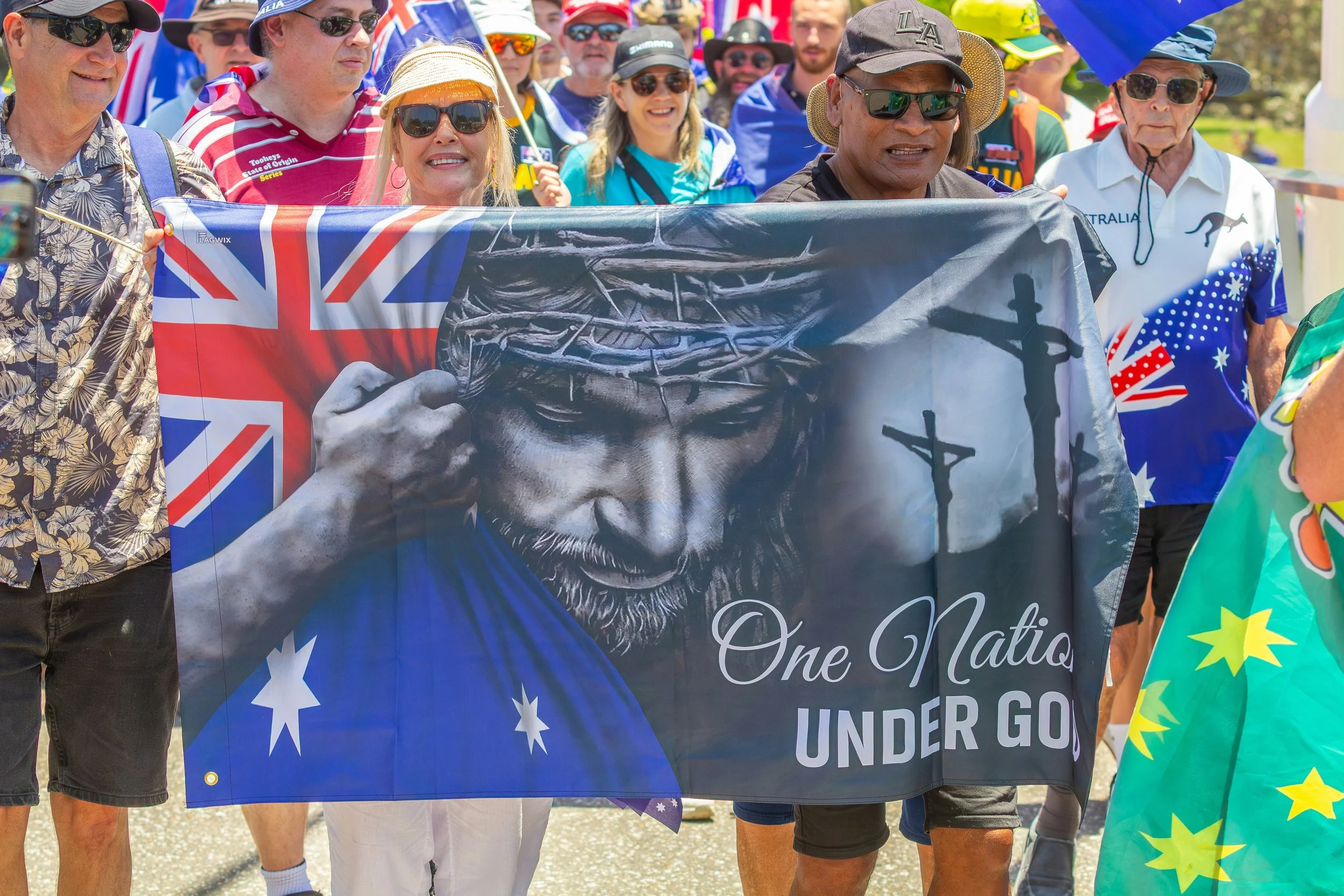
Global Christian Nationalism: A Guide

February 27, 2026

Religious nationalism knows no borders.

In many countries, the line between faith and political power is no longer just blurred — it’s a defining force in public life.

In a new guide at ReligionLink, we offer practical tools for understanding and covering global Christian nationalism: what it is, how it operates across different contexts and why it matters for democracy, human rights and international affairs.

While the term is often associated with U.S. politics, movements that fuse Christian identity with nationalist agendas are shaping policies, society and public debates from Eastern Europe to Latin America and beyond.

Whether you’re on the religion beat or covering politics, this resource is designed to help you ask sharper questions, spot emerging trends and report with greater clarity.

Learn more
In #MissedInReligion, Religion, Religion and Culture, Religion News, ReligionLink, Religious Literacy Tags Christian nationalism, Global Christian nationalism, Global Christianity, Christian nationalism in Brazil, Christian Nationalism in Australia, Christian Nationalism in Latin America, Christian Nationalism in Europe, Europe, European Christians, Christian right, Christian right in Europe, ReligionLink
Comment

Image via ReligionLink.

Religion + Black History Month

February 10, 2026

Black History Month is a reminder that the religious traditions of Black Americans are far broader, and more complex, than the stories we usually tell. 

Too often, coverage zooms in on the Black church at election time or dusts off prominent civil rights-era imagery, then moves on. What can get missed are stories such as Black women shaping faith communities with or without titles or pulpits, Black Muslims and Buddhists building institutions and influence, younger generations remixing tradition online and African diasporic spiritual practices sustaining people outside formal institutions.

Just as underreported are the tensions — between generations, over gender and sexuality, between religious traditions, around money, power and politics. Black religion is not frozen in time. It is adaptive, contested and deeply embedded in the everyday experiences of a diverse range of Black Americans’ lives.  

In a moment marked by racial violence and economic strain, Black religious life in the U.S. continues to shape how communities resist, heal and imagine what comes next. The task for religion reporters is not to mythologize Black religious traditions, but cover them with curiosity, range and urgency.

In the latest edition of ReligionLink, we offer background, experts, and relevant stories to help you better understand this diversity and dynamism.

Learn more
In Religion, Religion and Culture, Religion News, ReligionLink, Religious Literacy, Religious Studies Tags Black History Month, Black religion, Black religious traditions, Black Americans, Black Atlantic Religion, Black Muslims, Black Buddhists, Black Jews, ReligionLink, American religion
Comment

Image from Adobe Stock via Patheos.

From Headlines To Trendlines: Religion News In A World Of Chaos

February 4, 2026

Snap. Pop. Fizzle. Bang.

To me, that’s the sound of the modern news cycle, with headlines blowing up in rapid succession, each demanding our attention before we scroll to the next. We live in the midst of an unrelentless attention economy, where urgency becomes currency, outrage is easy to manufacture and what seems to matters most is whatever is newest, loudest or most emotionally charged.

In this environment, it is perhaps inevitable to get trapped in the present moment, mistaking immediacy for importance and something going viral for significance. But when it comes to understanding religion’s role in society, staying locked on today’s headlines is not enough.

To make sense of religion in public life, we need not only track breaking stories or flip through reels on our social media feed but lift our eyes to the horizon, looking for emerging patterns, global developments, and stories still unfolding.

As 2025 ended and 2026 began, I had the chance to contribute to two recent efforts to chart that horizon: the University of Southern California’s Center for Religion and Civic Culture’s “6 to 7 Trends to Watch in Religion and Society in 2026” and ReligionLink’s 2026 predictions.

Read more
In #MissedInReligion, Religion, Religion and Culture, Religion News, ReligionLink, Religious Literacy Tags Religion news, Headlines, Trendlines, USC Center for Religion and Civic Culture, Trends in religion news, ReligionLink, 2026 Predictions, Religion newswriters, Religion newswriting
Comment

Image via Pexels.

From the Arctic to the Amazon: Religion in the Extremes

October 29, 2025

From November 10-21, international representatives will gather in Belém, Brazil--in the heart of the Amazon rainforest--for the COP30 climate summit.

Billed as a critical event to assess progress on the Paris Agreement, evaluate national climate plans and discuss the Amazon's sustainability, the event not only highlights the region's biodiversity and challenges but reminds us that the hot spots of climate change are often far from familiar institutions and global centers.

In the Arctic, melting ice reshapes both landscapes and livelihoods, raising questions of survival and meaning. On low-lying islands in the Pacific, rising seas threaten ancestral graves and sacred sites, forcing communities to reimagine their relationship with place, identity and faith. In the Amazon, where Catholic priests bless river communities and Indigenousvoices advocate resilience, religion is emerging as a frontline voice against the bleeding edges of climate change. And when extreme weather events — from heat waves to hurricanes — leave devastation in their wake, faith groups are on the front lines of responding and rebuilding.

Religion is shaped by these changes, even as it shapes the way individuals and communities react. It is woven into the ways people understand loss, cultivate resilience, cope or hold onto hope at the planet’s margins.

For journalists, covering religion in these contexts means widening the lens. The story isn’t only about policy debates or institutional statements; it’s about how belief is lived at the edges: in prayers for safe hunting grounds, rituals for vanishing coastlines and ceremonies that reinterpret tradition in the face of upheaval.

By telling these stories with nuance, journalists can illuminate how climate change is not only an environmental crisis but a spiritual one — reshaping the meaning of place, community and religion itself.

As COP30 approaches, this edition of ReligionLink offers into religion and climate change in the extremes.

Read more
In Religion, Religion and Culture, Religion News, ReligionLink, Religious Literacy, Religious Studies Tags ReligionLink, Religion in the extremes, Religion in the Arctic, Arctic Religion, Amazon religion, Religion in the Amazon, COP30, Climate Change, Religion and climate change, Julia Duin, Luis Andres Henao
Comment

Photo: Sam Mann, via Unsplash.

Religion & Political Violence

October 17, 2025

On a hot and humid September afternoon in Glendale, Arizona, mourners streamed into State Farm Stadium for the memorial of conservative activist Charlie Kirk. Banners of the cross hung beside American flags, and gospel anthems mixed with political slogans from the stage. What some saw as a service of remembrance was also something else: a rallying cry where grief and faith were harnessed to a political narrative, casting Kirk as a martyr and his death as proof of values under siege.

Religion has always been woven into American politics, but that mix has turned sharper in recent years. With faith language cropping up at campaign rallies, on protest signs and at crime scenes, the U.S. is facing a new era where religious identification, political loyalty and violence often overlap.

In this edition of ReligionLink, we provide background, tips, stories, sources and other resources for reporters to better cover the confluence of religion and political violence in the months and years ahead. 

Read more
In Religion, Religion and Culture, Religion News, ReligionLink, Religious Literacy, Religious Studies Tags Religon and violence, Violence, Violent religion, Charlie Kirk, ReligionLink, religious literacy
Comment

Summer of Interfaith Love

July 16, 2025

Interfaith families had a bit of a moment last year. 

Democratic presidential candidate Kamala Harris’ multireligious marriage was called a “map of the future.” The popular Netflix comedy “Nobody Wants This” called up memories of the early aughts’ popularization of the portmanteau Chrismukkah — referring to the merging of the holidays of Christianity’s Christmas and Judaism’s Hanukkah — just as the two holidays coincided at the end of the year. 

These crossovers and conversations are no surprise to Susan Katz Miller, who has been writing about her own experience with, and expertise concerning, interfaith families. And those intersections are likely to continue, Miller says, with interfaith families becoming more common in the U.S. and in other diverse democracies. 

Twelve years after the publication of her book Being Both: Embracing Two Religions in One Interfaith Family, Miller says the theme is not only still relevant, “but perhaps more relevant than ever.” 

“With demographic changes and increasing support from religious institutions, I think it’s become easier to be an interfaith family; easier at being and doing both,” she says. “I think as a society, we’ve become more educated about these issues. And there have been some important shifts as a result.”

Challenges remain, says Miller, with family members, social circles and religious institutions sometimes still putting up barriers to the fusing of families from different religious traditions. 

In this edition of ReligionLink, we offer background, tips, related stories and relevant sources for you to better understand, appreciate and report on interfaith relationships, families and love. 

Learn more
In Interreligious Dialogue, Religion and Culture, Religion News, ReligionLink, Religious Literacy Tags Interfaith, Interfaith marriage, Multifaith marriage, Susan Katz Miller, Being Both, ReligionLink, Interfaith love, Interreligious, Interreligious marriage, Christian-Muslim marriage, Jewish-Christian marriage, Jewish interfaith marriage, Interfaith weddings
Comment

Photo via Pexels.

Religion...in space! 🚀

June 17, 2025

Picture outer space. Its seemingly endless reach, its pulsating planets and twinkling stars, the swirling canopy of galaxies, a mantle of nebulae, the curvature of Earth’s blue expanse from a vantage point miles away.

Absorbing yourself in these images, what do you feel? 

Some might compare the impulse to awe when we picture outer space or see images beamed back from faraway satellites to religious epiphany or other forms of spiritual inspiration. 

From astrology to astrotheology, from questions of how to practice religions ensconced in Earth’s realities and rhythms to the context of outer space or life on other planets to the creation of new traditions, spirituality and space exploration are more intertwined than you may think. 

In the latest edition of ReligionLink, we explore the intersections between religion and space, offering background, relevant stories and expert sources to help you report on religious traditions boldly going where no religions have gone before.

Religion’s next great frontier 

Humans have long been drawn to space as part of our search for meaning, significance and security.

Astrology originated in ancient Mesopotamia before spreading to various regions and cultures, perhaps most notably in the Hellenistic period in Greece and later in Islamic and European cultures.  It initially was a form of divination, with early astrologers using celestial events to interpret omens from the gods and predict the future.

Over time, astrology developed in different directions, with horoscope columns coming to feature in daily newspapers starting in the 1930s.

Today, astrology has been experiencing a bit of a renaissance, with many among the spiritual-but-not-religious seeking to discern meaning and purpose by studying the positions of celestial objects.

Stars have held varying levels of significance in various religious traditions. A star is supposed to have guided “wise men from the East” to the first Nativity; and both the Hebrew Scriptures and Christian New Testament bear references to the stars providing divine guidance and revelation. Finno-Ugric and Turkish Tatars associated the North Star (Polaris) with the “pillar of heaven,” while the Milky Way has been seen as a symbol of a cosmic tree or the path of the gods.

In Judaism, the Star of David, or six-pointed star, is a prominent symbol representing the union of heaven and earth and is a rallying marker of protection, identity and unity. In Buddhism, stars can be seen as celestial luminaries, and in Hindu scriptures, the stars are often depicted as the abode of gods and goddesses, symbolizing enlightenment and the eternal nature of the soul.

More recently, the relationship between religious traditions and space is evolving — for example, as more Muslim-majority nations venture into space exploration, writes Béatrice Hainaut. The first Muslim in space was in 1985, and to date, 18 Muslim astronauts have traveled beyond Earth’s orbit. But over the last 10 years, countries such as Bahrain, the United Arab Emirates and Saudi Arabia have established space agencies and expressed ambitious space strategies. Other states, including Iran, Turkey, Malaysia, Indonesia and Pakistan, are also showing interest in space research and possible applications derived from it.

It is perhaps the new religious movement Astronism, however, that has taken the relationship between astronomy and religion to its logical limit. At the age of 15, Brandon Reece Taylorian, also widely known under his mononym Cometan, founded Astronism, an astronomical religion that “teaches that outer space should become the central element of our practical, spiritual, and contemplative lives,” according to its website.

“From my perspective, how religion and outer space intersect is crucial to understanding the future of religion,” Cometan, who is also a lecturer at Lancaster University in the United Kingdom, told ReligionLink. “Outer space is the next great frontier that will reshape the human condition, including our religions.”

To that end, some have started to ponder how space exploration itself might be considered its own form of epiphanic religion, producing its own forms of insight, revelation and spiritual experience.

That makes sense to Cometan. “The further we dare to venture beyond Earth, the more our beliefs about God and the universe will transform. I think that we need new and bold religious systems that will inspire our species to confront and overcome the challenges of the next frontier,” he said. “As an Astronist, I define outer space as the supreme medium through which the traditional questions of religion will be answered.”

Whether Cometan proves to be correct, stars have been interpreted in diverse ways across religious traditions, reflecting the human desire to understand and connect with the divine through the wonders of the cosmos.

Learn more
In Religion, Religion and Culture, Religion News, Religious Literacy, ReligionLink Tags Religion in outer space, Religion in space, Cometan, Astronism, Religion and space travel, UFOs, Aliens, Extraterrestrial religion, NASA and religion, Outer space, Space travel, Mars and religion, Martian religion, ReligionLink
Comment

Sikhi: An Updated Guide

May 26, 2025

There are more than 27 million Sikhs around the world, which makes Sikhi (also known as Sikhism) the fifth-largest major world religion. Yet the Sikh tradition remains largely unknown to the global community – no other religion of its magnitude is as misunderstood as Sikhi.

The Sikh religion has been underrepresented and misrepresented in the popular media, and these problems have contributed to the serious challenges that Sikhs experience today, including negative stereotypes, discriminatory policies, and violent hate crimes.

This guide — a collaboration between the Sikh Coalition and ReligionLink and updated in 2025 — provides information on the Sikh tradition in order to facilitate better understanding of Sikhs and Sikhi.

Read more
In #MissedInReligion, Religion, Religion and Culture, Religion News, ReligionLink, Religious Literacy Tags Sikh, Sikhi, Sikhism, Sikh Coalition, ReligionLink, religious literacy, Guide to Sikhism, Introduction to Sikhism
Comment

Intrafaith minorities: Appreciating religious communities’ internal diversity

May 15, 2025

When it comes to international religious freedom, we tend to hear a lot about religious minorities, their struggle for rights and recognition or persecution — both state-sanctioned and informal. 

But what of intrafaith minorities? 

While interfaith tensions refer to high-friction relations between different religious communities, intrafaith conflict occurs between different denominations or groups within a faith tradition. 

One might think of frictions between Shiite majorities in Iraq and Iran and their Sunni minorities — or vice versa in Afghanistan, Pakistan or Syria — or the sometimes awkward relationship between The Church of Jesus Christ of Latter-day Saints and other Christians. 

In this edition of ReligionLink, we look at intrafaith diversity and discrimination, unpacking how people of different interpretations deal with internal distinctions and differences within shared traditions. 

Learn more
In Interreligious Dialogue, Religion, Religion and Culture, Religion News, ReligionLink, Religious Literacy Tags Intrafaith minorities, Internal religious diversity, interfaith, Religious freedom, Religious persecution, ReligionLink
Comment

Pope Francis dies aged 88. What's next?

April 21, 2025

After briefly appearing in Saint Peter’s Square to wish thousands of worshippers “Happy Easter” on Sunday, Pope Francis died on Easter Monday, April 21, at his residence in the Vatican’s Casa Santa Marta. He was 88.

In a video statement, the Vatican announced his death early Monday, just weeks after he survived a serious bout of double pneumonia.

His death plunged Catholics around the world into grief. Cardinal Kevin Farrell, camerlengo, announced the Pope’s passing, “with profound sadness.” His passing also leaves the papacy vacant until a conclave is convened in Rome to elect the new pontiff.

Pope Francis — who was the first Latin American elevated to the papacy on March 13, 2013, after a two-day conclave charged with determining a successor to Pope Benedict XVI — leaves a record of attacks on clericalism, empowerment of the church’s lay members and dialogue within the church around its public and pastoral role on issues such as climate change and xenophobia, immigration and women’s ordination.

Labeled “liberal, progressive, populist, disruptive and even pop,” Francis steered the church leftward after more than three decades of conservative leadership. But his record on issues like climate change, clergy abuse scandals, women’s ordination and LGBTQ acceptance is far from settled, with critics questioning his reforms and his handling of the Roman Catholic Church’s various crises. 

That legacy, and its long-term impact on Catholics worldwide, will be in part decided by who is selected as the next pope. That process begins with a convening of the College of Cardinals — the conclave — within 15 to 20 days of the pope’s death. 

This edition of ReligionLink provides insight on Pope Francis’ tenure in the papal office, in-depth information about how a new pope will be chosen and leads on who the top contenders are to lead more than 1.3 billion Roman Catholics worldwide.

Learn more
In Religion, Religion and Culture, Religion News, ReligionLink, Religious Literacy, Religious Studies Tags Pope Francis, Pope Francis dies, Pope Francis death, Pope Francis conclave, Conclave, Vatican, Electing the next pope, Papal election, Rome
Comment

A housing crisis of faith

April 14, 2025

“It’s the first thing you notice about the United States,” said Bernhard Froebe, a German tourist visiting Los Angeles in the summer of 2024. “There are so many people living in the streets, on the sides of the road, in whole encampments,” said Froebe, who hails from the Saxon city of Zwickau. “It’s shocking.” 

Froebe’s remarks come as no surprise to Americans, who have seen homelessness rise 40% since 2018 and rent and home sale prices soar upward of 155% over the last five years. 

According to the 2024 “America’s Rental Housing” report by the Joint Center for Housing Studies of Harvard University, 22.4 million renter households spent more than 30% of their income on rent and utilities in 2022 — a record high. Together, the numbers speak to an impending sense of crisis and pessimism about the U.S. housing market. 

And according to the U.S. Department of Housing and Urban Development’s 2024 Annual Homelessness Assessment Report, the number of people experiencing homelessness on a single night — 771,480 people — was the highest ever recorded. Accounting for around 2 of every 1,000 people in the country, people in families with children, individuals,  unaccompanied youth, veterans and others found themselves in emergency shelters, safe havens, transitional housing or unsheltered and out on the streets.

Like the stats themselves, the factors are many: a worsening housing crisis, stagnating wages among middle- and lower-income households, systemic racism, public health crises, disasters and displacement, inflation.

But how are faith communities responding?  

In early 2025, numerous nonprofits and federal agencies were dealt a series of blows, as President Donald Trump signed several executive orders halting aid and slashing budgets, including that of the U.S. Interagency Council on Homelessness, which was formed in 1987 to coordinate the federal response. The cuts, experts fear, will exacerbate the problems they already were struggling to address.

Religious communities across the spectrum have responded in various ways, providing direct support to those in need. For example, Latino Muslims in Chicago have developed a program called “Neighborly Deeds,” distributing warm meals, blankets, clothes and hygiene products to those experiencing homelessness. And on the streets of Skid Row in Los Angeles, the Friars and Sisters Poor of Jesus Christ — a Catholic religious order founded in Brazil — have been ministering to recently arrived immigrants living in temporary housing or in tents along the road.

Individually, many who are unhoused turn to religious and spiritual practices, including Christian prayer, Buddhist meditationor Native-specific independent spiritual practices, as a means of protection or coping with the stress and related problems of homelessness.

Long a partner, or primary provider, to individuals and families experiencing homelessness, faith and values groups have also started to respond in more creative ways to the current crisis, looking to address more than immediate needs.

Shifting away from traditional shelters or safe havens, faith communities have started offering affordable housing: erecting microhomes on church properties, converting residences — from parsonages to convents — into units or repurposing vacant schools and parking lots. Many of the churches converting their underused land into affordable flats riff off the anti-development slogan “Not in my backyard” (NIMBY), instead advocating with the motto “Yes in God’s backyard” (YIGBY).

Meanwhile, the nonreligious organization SecularHelp runs its “Helping the Homeless” program, which it says provides direct, practical support to individuals experiencing homelessness without “relying on supernatural or faith-based approaches.”

But critics such as Americans United for Separation of Church and State lament that for many experiencing homelessness, “the only organized form of temporary shelter comes from a faith-based organization or church.” Though they can provide essential resources, Americans United wrote, churches can also use “this resource gap as an opportunity to proselytize a vulnerable population.” This issue recently came to the fore in the U.S. Supreme Court Decision in Grants Pass v. Johnson, in which Justice Sonia Sotomayor, in her dissent, questioned the religious rules around providing shelter to the unhoused.

In another case, a church providing temporary shelter around the clock in Bryan, Ohio, was found guilty of violating zoning and fire codes in local criminal court. That decision, along with a civil case against the church, is being appealed.

At the very least, the above shows the numerous religion, ethics and values angles to be explored when it comes to the United States’ rapidly growing housing crisis.

Learn more
In Religion, Religion and Culture, Religion News, ReligionLink, Religious Literacy Tags Religion and the homeless, Homelessness, Unhoused, Skid Row, Housing crisis, Rent prices and religion, Rent prices, ReligionLink
Comment

When religious leaders die

April 2, 2025

For me, Jimmy Carter’s death came too soon.

Not necessarily because of his age. He lived to the ripe old age of 100 and, in many respects, lived those years to the fullest.

No, and if I may be crass for a moment, Carter passed before I had a reporting guide ready for reporters looking to cover the faith angles of his life and legacy.

You see, as Editor for ReligionLink, I put together resources and reporting guides for journalists covering topics in religion. Each month, we publish a guide covering topics such as education and church-state-separation under Trump, faith and immigration or crime and houses of worship.

Early in 2024, I started to put together a guide to cover the passing of Jimmy Carter. Serving as Editor is only a part-time gig, and it usually takes all the time I have dedicated to the role to produce a single, monthly guide. But on the side, I started to make notes, identify sources and build a timeline for Carter’s life and legacy.

When he passed on December 29, 2024, the guide was not ready. Nor would it be in the matter of days necessary for it to be useful. So, the opportunity came and went. The draft of the guide to covering Jimmy Carter’s passing tossed on the editing floor.

The missed occasion, however, inspired me to work ahead more intentionally on guides for other famous faith leaders. The process of putting such guides together led me to reflect on what it means to remember, and report on, the passing of prominent figures in religion. 

Learn more
In #MissedInReligion, Religion, Religion and Culture, Religion News, ReligionLink, Religious Literacy, Religious Studies Tags Patheos, What you missed without religion class, ReligionLink, When religious leaders die, Dalai Lama, Dalai Lama death, Pope Francis, Next pope, Jimmy Carter, Desmond Tutu, Death, Obituary
Comment

Keeping religion at home: learning about, and from, domestic devotion

December 11, 2024

While shopping for a home outside Austin, Texas, James Yonkers — a self-confessed religion nerd — came across an unexpected find.

“We were looking at this lovely duplex and the real estate agent was showing me everything in the house, except for the downstairs closet next to the kitchen,” said Yonkers, “so, I got curious.”

Left alone to look around the house one more time, Yonkers could not help but open the closet door to look inside. What he found was the last thing he expected. Inside was a lavishly adorned altar to Ganesha, “with candles, a coconut, marigold, mango leaves and all these other elements around it,” said Yonkers.

Readily identified by his elephant head, Ganesha is widely revered in Hindu, Jain and Buddhist traditions as a remover of obstacles and bringer of good fortune.

“Whoever owned the duplex before us, I hoped the good luck from Ganesha would stick,” Yonkers said, “because we bought the place!”

Domestic religious practices — that is, religious conduct within a household setting — provide an outlet for expressing and addressing the concerns of everyday life. An altar to Ganesha, where devotees can regularly perform puja — an act of reverence and worship — in the intimate surrounds of their home, not only beckons good luck but serves as a touchstone of resilience through the ups and downs of day-to-day life. 

Archaeologists have found protective deities, tools for conducting rites of protection and healing and shards of pottery used to hold libations and offerings in the homes of ancient peoples in places as diverse as Egypt to North America, Mesopotamia to Oceania. These practices were not divorced from a wider continuum of religious practice outside the home, but part-and-parcel to them.

In other words, practitioners the world over have long made religion a domestic affair, utilizing religious beliefs, actions and imagery to give shape and substance to hearth and home for millennia.

Beyond temples, synagogues and other places of public and communal devotion, a range of practices, material objects and rituals have provided solace, inspiration and an opportunity for regular devotion for individuals and families in the privacy of their personal space.

Today, the increasing privatization and individualization of spirituality and its associated customs means the home can often be a substitute for, or supplement to, communal houses of worship and the public display of religion.

Learn more
In Religion, Religion and Culture, Religion News, ReligionLink, Religious Studies Tags Domestic religion, Religion at home, Home altars, Sacred space, ReligionLink
Comment

Five religion stories to follow after the election

November 7, 2024

The 2024 elections are (finally) over.

Donald J. Trump is returning to the White House, Republicans look set to regain control of Congress and a range of measures and propositions have gone one way or another on matters such as abortion rights and immigration.

Though there may be a natural drop-off in the frequency, and intensity, of religion+politics coverage in the weeks and months to come, the storylines we have been tracking will not slow down.

As we transition from the nonstop election cycle to map its aftermath and look to what is ahead, the latest ReligionLink guide offers an overview, data and resources for following five ongoing religion stories in the weeks and months to come.

  • Faith shifts

  • The election’s global ramifications

  • Minority concerns, with a focus on Indigenous land protections

  • The 2024/25 U.S. Supreme Court term

  • A whole range of issues with religion angles, including the economy, immigration, reproductive rights, debates about gender and sexuality and more …

Learn more
In Religion and Culture, Religion News, Religion, ReligionLink Tags Election 2024, Religion and politics, Religion and the 2024 elections, ReligionLink, SCOTUS, Minority religion, Indigenous land, International ramifications of U.S. election, International religious freedom and the 2024 election, The 2024/25 U.S. Supreme Court Term and religion
Comment

How Latter-day Saints, Muslims in Michigan, Black Protestants or Latino Catholics might sway the 2024 election

October 15, 2024

In the lead-up to the 2024 elections, white Christian nationalists and “MAGA evangelicals” are sucking up a lot of the air in the religion media space.

And for good reason. As Tobin Miller Shearer of the University of Montana wrote for The Conversation: 

In the 2016 race, evangelical voters contributed, in part, to Republican nominee Donald Trump’s victory. Those Americans who identified as “weekly churchgoers” not only showed up at the polls in large numbers, but more than 55% of them supported Trump. His capture of 66% of the white evangelical vote also tipped the scales in his favor against his Democratic rival, Hillary Clinton.

Evangelicals look set to support the former president in outsized numbers again — with a Pew Research Survey indicating 82% of white evangelical Protestants are likely to vote for Trump in November — and a significant “subset of Christian nationalists, which some suggest amounts to roughly 10% of the US population,” are rallying around him as they push “for Christianity to be the official, dominant religion of the US.”

But religious Americans from other backgrounds and traditions, such as Catholics, mainliners and Black Protestants — whom Bob Smietana and Jack Jenkins of RNS called “swing state faith voters” — could also prove critical to electoral victory due to their influence in key swing states. 

In this edition of ReligionLink, we offer a roundup of stories, perspectives and sources from a broad swath of faith constituencies around the U.S., addressing questions such as: How might Hindus be approaching local and state elections? How might Muslims in swing states prove decisive for the Electoral College? How might the nonreligious approach key ballot issues differently from others? 

Learn more
In Religion, Religion and Culture, Religion News, ReligionLink, Religious Literacy Tags 2024 elections, Faith and the 2024 elections, Faith voters, Religion, Religion and politics, U.S. elections, President race, President religion, Latter-day Saints, Black Protestants, Latino Cathoics, Muslim voters, Muslim politics, American Muslims, American Muslim politics, Bahá'í Faith, Sikh, Hindu, Buddhist politics, Jewish voting, American Jewish community, MAGA evangelicals, White Christian nationalists, Christian nationalism
1 Comment

Religion, Immigration and the 2024 Elections

September 9, 2024

Over the last six months, I’ve been covering religion and immigration for Sojourners Magazine.

I traveled to Tijuana, Mexico, Lampedusa, Italy, southern Arizona and downtown Los Angeles to hear from migrants making their way. I heard from Muslim aid workers on the front lines providing sanctuary and nuns serving the vulnerable asylum seekers living on the streets of Skid Row. I sat with mothers weeping over their children and praying for safe passage at a cemetery just meters from the bollard-steel border wall that rips through the Sonoran wilderness like a rust-colored wound. 

In my latest for ReligionLink and as part of my “What You Missed Without Religion Class” series at Patheos, I reflect on what you need to know about faith and immigration ahead of the 2024 elections.

A PRIMER ON RELIGION AND IMMIGRATION
Learn more at Patheos
In Religion and Culture, Religion News, ReligionLink, Religious Literacy Tags Religion, Religion and immigration, Immigration, People on the move, Migrants, Asylum seekers, ReligionLink, Patheos, What you missed without religion class, Tijuana, Southern Arizona, Los Angeles, Lampedusa, Faith and Immigration, Sojourners
1 Comment

Crime and perception: Religion, public safety and the 2024 elections

August 13, 2024

On the second day of the recent Republican National Convention the theme was “Make America Safe Again.”

Addressing those gathered in Milwaukee, U.S. House Speaker Mike Johnson, a Louisiana Republican and evangelical, warned against the threat the “radical left” posed to what he said were long-held American “principles of faith, family and freedom.”

Linking those principles to Americans’ safety, Johnson promised Republicans would remain “the law and order team.”

“We always have been — and we always will be — the advocates for the rule of law,” Johnson said.

But since the beginning of 2024, violent crime is down across the U.S. According to the FBI, there was a 15% overall decline in violent crime over the last several months and decreases in the rates of murder and rape (nearly 26%), robbery (18%), property crime (15%) and aggravated assault (12%).

Why then do more than half (54%) of U.S. voters — and nearly three-fourths (74%) of registered Republicans — consider crime a “major factor” in their considerations of who will be president?

Part of that, as CBS News’ Camilo Montoya-Galvez explains, is due to perceptions about the danger of incoming immigrants and increased numbers of encounters along the U.S.-Mexico border.

But as this edition of ReligionLink explores, religious adherence can also help explain the fear factor ahead of November’s elections and why Republican presidential candidate Donald J. Trump has much to gain from Americans’ anxiety around crime and public safety in 2024.

Learn more at ReligionLink
In Religion and Culture, Religion, Religion News, ReligionLink, Religious Literacy Tags Crime, Crime and religion, Religion and crime, Crime and immigration, Republican National Convention, Fears about crime, Evangelicals and crime, FBI, ReligionLink
Comment
Older Posts →
Latest Writing RSS

Fresh Tweets

Tweets by kchitwood

Latest Writing RSS

RELIGION | REPORTING | PUBLIC THEOLOGY