• Home
  • About
    • Overview
    • Borícua Muslims
    • Engaged Spirituality
    • The Muslims of Latin America and the Caribbean
  • Contact
Menu

KEN CHITWOOD

Religion | Reporting | Public Theology
  • Home
  • About
  • Books
    • Overview
    • Borícua Muslims
    • Engaged Spirituality
    • The Muslims of Latin America and the Caribbean
  • Contact
“The person who knows only one religion, knows none”
— Max Müller

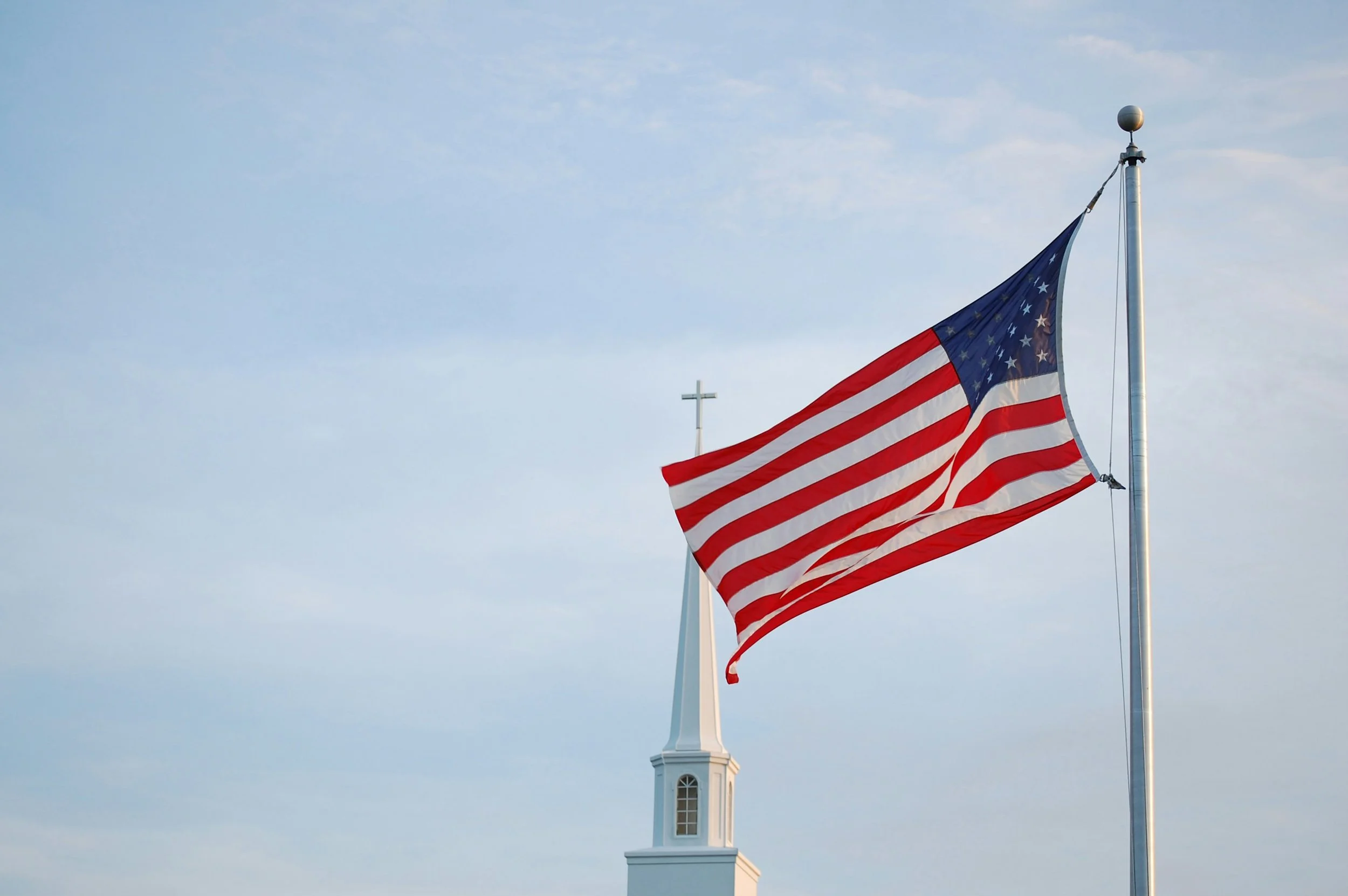
Photo via Pexels.

Are we talking too much about Christian nationalism?

May 11, 2026

Maybe you’re here because you read “Christian Nationalism” in the title.

That is, in part, my point.

Over my last 15 years in religion media, I’ve learned that in the competition for public attention, not all subjects are created equal. Some generate more clicks, more eyeballs, more attention, more praise, and more prize money. I’ve also seen how editorial meetings, grant-making priorities and selection committees all play a role in determining which stories dominate the national conversation.

In the past several years, few topics have benefited more from this convergence of attention than what has been called “Christian nationalism.” And rightly so. Its prominence reflects real concerns and urgent questions. But it also invites a reflection on what stories we are missing with so much attention given to Christian nationalism — and in particular, the white version thereof.

Is Christianity the Heart of the American Story?

In recent years, coverage of Christian nationalism has become ubiquitous.

Journalists, scholars and commentators have rightly sought to define the term, trace its historical roots and document its contemporary manifestations. The phenomenon, loosely understood as the fusion of a particular vision of Christianity with American civic identity and political power, has been linked to exclusionary policies, democratic erosion, and cultural conflict. It has been called a democracy demolisher. Given such stakes, the surge of attention seems understandable and urgently so.

Others, however, have raised concerns that coverage of Christian nationalism is “overhyped” and the concept poorly defined.

I’m not here to discount the careful work being done by my academic and journalistic colleagues, but my sense is that there is a growing case for interrogating not only Christian nationalism itself, but also the scale and framing of the attention it receives. Essentially, from my perspective, when coverage becomes disproportionate, when it begins to dominate institutional resources, editorial priorities and intellectual energy, it risks producing unintended consequences.

Chief among these is that in attempting to critique Christian nationalism, media ecosystems may inadvertently amplify its central claim: that Christianity sits at the heart of the American story.

Proving Christian Nationalists Right

With that said, recent commentary reflects increasing unease with how the term “Christian nationalism” is deployed and circulated. Writers have observed that the phrase has, in some contexts, drifted from analytic category toward polemical shorthand. Its elasticity can obscure more than it clarifies, argues historian Heath Carter, for example, flattening distinctions among religious conservatives or disregarding progressive political actors who have also imagined the U.S. as a “Christian nation.”

This ambiguity presents a challenge for journalists, whose tenacity in reporting the subject must meet the reality of the term’s recent overuse and imprecise application. Failing to do so risks dulling the term’s explanatory power, turning it into what Carter describes as a catch-all epithet rather than a rigorously defined concept.

At the same time, others have raised questions about the political economy of attention surrounding Christian nationalism. As sociologist Musa al-Gharbi wrote on Substack a few years back, elite discourse often gravitates toward topics that resonate within professional and academic circles, sometimes at the expense of broader or more materially consequential issues.

Christian nationalism, with its dramatic narratives and moral clarity, lends itself to compelling storytelling. It attracts readership, funding and institutional recognition for the journalists who cover it. But this very appeal may encourage a concentration of resources on a single frame of analysis while sidelining other dimensions of American religious and political life.

And this leads me to my main concern. With all the coverage of Christian nationalism, and with so much type-space, bandwidth and podcast minutes given to its predominately white practitioners, it is possible the volume and framing of coverage may unintentionally reinforce the movement’s claims.

At its core, Christian nationalism asserts that the U.S. is fundamentally a Christian nation and that its identity, history, and future should be understood through that lens. When media coverage repeatedly centers Christian nationalists, whether in critique or condemnation, it risks reifying that centrality. The story remains anchored around Christianity, particularly white versions thereof, even if the moral valence is inverted.

The Stories We Aren’t Seeing Enough Of

This dynamic is particularly salient as the nation approaches its 250th anniversary.

Anniversaries are moments when societies revisit foundational stories and reconsider whose voices are included — or excluded. If the discourse leading up to this milestone is dominated by debates over Christian nationalism, there is a danger that the broader tapestry of American religious life will be overshadowed.

Such an outcome would be a profound loss. As I often teach in my courses on American religion, the religious history of the U.S. is not reducible to white Christianity and its various internal debates, denominations and divisions (as important as those are!).

It encompasses, instead, Indigenous traditions that predate European colonization, the diverse expressions of Christianity in all its forms, as well as Judaism, Islam, Sikhi, Buddhist and Hindu traditions, other faiths brought by immigrants and the many forms of religious innovation that have emerged over the last two-and-a-half centuries. It also includes the growing population of Americans who identify as religiously unaffiliated, but whose ethical and communal lives nonetheless shape the nation’s moral and spiritual landscape and its futures.

To focus disproportionately on Christian nationalism is to risk narrowing this expansive field into a single story. This not only encourages a binary framing of “Christian nationalism v. its opponents” but may divert attention from other notable issues at the intersection of religion and public life: interfaith cooperation, religious responses to climate change, the role of faith-based organizations in social services or the evolving legal landscape of religious freedom.

Widen The American Story’s Scope

None of this is to suggest that coverage of Christian nationalism should stop.

On the contrary, investigative reporting and scholarly analysis remain essential for understanding its influence and mitigating its harms. But narrative diversity matters and, at this point, I am starting to wonder if we are losing the plot.

So, the question becomes not whether to cover Christian nationalism, but how to situate that coverage within a broader ecosystem of stories.

As the Semiquincentennial approaches, the U.S. faces an opportunity to tell a richer, more inclusive story about itself. This story should acknowledge conflict and the important role played by Christianity in shaping the nation’s past, present and future — including the contemporary challenges posed by Christian nationalism.

But we should also celebrate the diversity of religious traditions that have shaped, and continue to shape, America. To do otherwise is to risk conceding the narrative to those that insist on Christianity’s centrality.

Ironically, in other words, in trying to challenge that framework, we may end up sustaining it.

The task, then, is not simply to report on Christian nationalism, but to resist allowing it to define the scope of our attention. By broadening the breadth of our coverage and diversifying the narrative, we can instead contribute to a public discourse that is not only more accurate, but also more expansive — one that resists reduction and embraces, for good and for ill, the plurality that has always been at the heart of the American story.

In #MissedInReligion, Religion, Religion and Culture, Religious Literacy, Religious Studies Tags Christian nationalism, Global Christian nationalism, American religion, American religion at 250, U.S. religion, Religious diversity, What you missed without religion class, Patheos
Comment

Photo by Brad Dodson.

American Religion at 250

May 6, 2026

As the United States approaches its 250th anniversary in July 2026, journalists have a rare opportunity to revisit the nation’s story through one of its most dynamic and contested forces — religion.

From before the earliest encounters between Indigenous Peoples and Europeans, to today’s increasingly diverse and “spiritual-but-not-religious” landscape, religion has shaped American identity, politics and culture in profound ways.

The Semiquincentennial is not just a moment to look back but a chance to tell deeper, more human stories about belief, doubt and belonging across 25 decades of American life. The most engaging religion reporting will move past histories and clichés and into the lived realities of Americans whose spiritual lives continue to shape the nation, sometimes in surprising ways.

This guide is designed to help reporters uncover fresh, compelling and nuanced stories in advance of the celebrations and remembrances. It encourages moving beyond institutional histories to critically cover lived religion, overlooked communities and emerging spiritual trends.

At its best, coverage of religion during the Semiquincentennial can illuminate how Americans have wrestled with meaning, belonging and power, what has resulted from these struggles and how those struggles continue to evolve.

A Crash Course on American Religious History

Religion in America predates the nation itself, beginning with the rich and varied spiritual traditions of Indigenous peoples. Scholar of American religion, Thomas Tweed, reflects in his new book Religion in the Lands that Became America: 

Most surveys of U.S. religion have presupposed that the story must begin with and focus on the British colonies—as opposed to starting, as I do, with ancient Indigenous practices in the territory now within national borders, and then chronicling the history of those locales, from Florida to Alaska and Maine to Hawai‘i. That presupposition commits narrators to focusing on Anglo-Protestant men who had political and ecclesiastical power in Britain’s Atlantic colonies. In turn, everyone else—Protestant women as well as racial and religious others—appear as supporting actors with bit parts. More recent survey writers have enriched the story. But the plot has not changed; nor have the supporting players’ roles. Everyone who is not an Anglo-Protestant man becomes defined by her or his relation to those with political or ecclesiastical authority during a relatively brief period, 1607–1776, on a strip of land along the North Atlantic coast.

To alter this pattern, Tweed and other historians have expanded “the narrative scope” to include a range of Indigenous traditions — traditions deeply tied to land, community, and cosmology that were profoundly disrupted by European colonization, which introduced Christianity alongside systems of displacement and violence.

In the colonial period, religion proved both motivator and source of conflict. Some European settlers, such as Puritans in New England, sought to build religiously ordered societies, while others came in search of economic opportunity rather than spiritual refuge. Colonies and their relationships to religion varied widely. Some had established churches, while others, like Rhode Island and Pennsylvania, experimented with religious tolerance. There were also small communities of minorities, such as Jews, in major port cities like New Amsterdam (New York), Newport, Philadelphia, Charleston and Savannah. This diversity laid the groundwork for what would become the First Amendment’s protections of religious freedom and non-establishment.

The 18th and early 19th centuries saw waves of revivalism known as the First and Second Great Awakenings, which helped democratize religion and emphasized personal experience over institutional authority. These movements fueled the growth of evangelical forms of Protestantism and inspired reform efforts, including pushes for abolitionism and temperance. At the same time, new religious movements emerged, including the Church of Jesus Christ of Latter Day Saints and various utopian communities such as the Oneida Community and Shakers. Each sought to establish “heaven on earth” by separating from mainstream society to practice activities  like communal ownership and shared labor or adherence to strict religious tenets aimed at perfecting life, both in this world and the next.

From the colonial period through the early 19th century, forcibly enslaved Africans brought diverse religious traditions — including West and Central African spiritual practices as well as Islam — which persisted in adapted forms despite forced conversion and repression. Over time, these influences blended with Christianity in what scholars call the “invisible institution,” a vibrant religious life that emphasized liberation, communal solidarity and spiritual resilience. This evolving tradition became the foundation of Black churches such as the African Methodist Episcopal Church (AME) or National Baptist Convention — and later Pentecostalism — which would play a central role in American religious and political life by the 19th and 20th centuries.

Immigration in the 19th and early 20th centuries transformed the religious landscape immensely. Catholics, Jews and Eastern Orthodox Christians established institutions and communities across the U.S. — from the St. Photios Greek Orthodox National Shrine in Florida to the Eldridge Street Synagogue in New York City’s Lower East Side — often facing suspicion and discrimination in due course. Meanwhile, the first Buddhist communities emerged on the West Coast, particularly in California, among Chinese and later Japanese immigrants who faced significant discriminatory laws. Religion became further intertwined with questions of American identity, with leaders and laypeople asking themselves and society who belonged, and on what terms.

The 20th century brought both consolidation and immense change. Mainline Protestant denominations wielded significant cultural influence by the mid-century, while Catholicism and Judaism became more integrated into public life, despite ongoing suspicions about European and Mexican Catholics political allegiance. The post–World War II era saw a rise in religious affiliation and the framing of the U.S. as a broadly “Judeo-Christian” nation, especially in contrast to what was framed as “atheistic” communism.

However, the late 20th century also saw increasing polarization and diversification. The Civil Rights Movement drew heavily on Black church traditions, while also exposing tensions within religious communities. The rise of the Religious Right in the 1970s and 1980s linked conservative Christianity to partisan politics in new ways.

Immigration reforms such as the Hart-Celler Act of 1965 opened the door to new forms of religious diversity, bringing growing numbers of Muslims, Hindus, Buddhists and Sikhs, and changing America’s religious landscape yet again. The rise of Hindu temples in suburban New Jersey, Sikh gurdwaras in California’s Central Valley and expanding Muslim communities in cities like Dearborn, Michigan are only a few examples of this changing landscape.

At the same time, the number of Americans who choose to identify as religiously unaffiliated (or “nones”) has surged, now comprising roughly 28–29% of U.S. adults, up from just 16% in 2007, according to Pew Research Center and Public Religion Research Institute. Among younger adults, the shift is even more pronounced, with close to four in ten identifying as unaffiliated in some surveys. Many within this group still express spiritual beliefs — about a third describe themselves as “spiritual but not religious” — often blending practices such as yoga, meditation, and mindfulness with elements drawn from multiple traditions

Today’s religious landscape is marked by both fragmentation and innovation. Traditional institutions face declining membership, yet new forms of community are emerging. Online congregations, interfaith networks, hyper-nationalist enclaves and activist spiritual movements have become increasingly common, with religion continuing to shape debates over American identity, morality and public life, even as its forms become less predictable.

As the nation marks 250 years, and various parties try to define the nation as a “Christian” one, its religious story is less a single narrative than an increasingly vibrant one told from the perspective of multiple voices and reflects ongoing struggles over freedom, diversity and the potential of American futures in the decades to come.

Find resources, stories and more at ReligionLink
In Religion, Religion and Culture, Religion News, ReligionLink, Religious Literacy Tags American religion, American Religious Landscape, America at 250, American religion at 250, U.S. religion, Religion in the U.S., American religious history, Semiquincentennial religion, ReligionLink
Comment

Hail Mary, Mother of Midterms: Religion and the 2022 U.S. Elections

August 9, 2022

As President Joe Biden looks to the 2022 midterm elections -- and sees prophecies of a Republican surge -- perhaps the above has become his personal, as well as political, petition.

Whatever the Catholic President's prayers, and whether or not Republicans or Democrats come out on top, religion is sure to shape the results.

Fallout from multiple Supreme Court decisions and results from recent primary elections have shaken up the prospects for candidates on both sides of the aisle. Changes in access to abortion services, questions around notions of religious liberty and dramatic decisions impacting the interpretation of the Constitution's "Establishment Clause" are at the front of voters' minds along with religious takes on the rising cost of living, climate change and crime rates.

In this edition of ReligionLink, you will find important background, relevant stories, and numerous experts to help you understand the 2022 midterms and their religion angle with balance, accuracy, and insight.

Explore the guide
In Religion, Religion and Culture, Religion News, ReligionLink, Religious Studies Tags Religion and politics, Religion and elections, Midterm elections, Elections 2022, Democrats and religion, U.S. religion, U.S. Supreme Court, ReligionLink, Religion and the 2022 midterms
Comment
Latest Writing RSS

Fresh Tweets

Tweets by kchitwood

Latest Writing RSS

RELIGION | REPORTING | PUBLIC THEOLOGY