• Home
  • About
    • Overview
    • Borícua Muslims
    • Engaged Spirituality
    • The Muslims of Latin America and the Caribbean
  • Contact
Menu

KEN CHITWOOD

Religion | Reporting | Public Theology
  • Home
  • About
  • Books
    • Overview
    • Borícua Muslims
    • Engaged Spirituality
    • The Muslims of Latin America and the Caribbean
  • Contact
“The person who knows only one religion, knows none”
— Max Müller

Photo by Ken Chitwood.

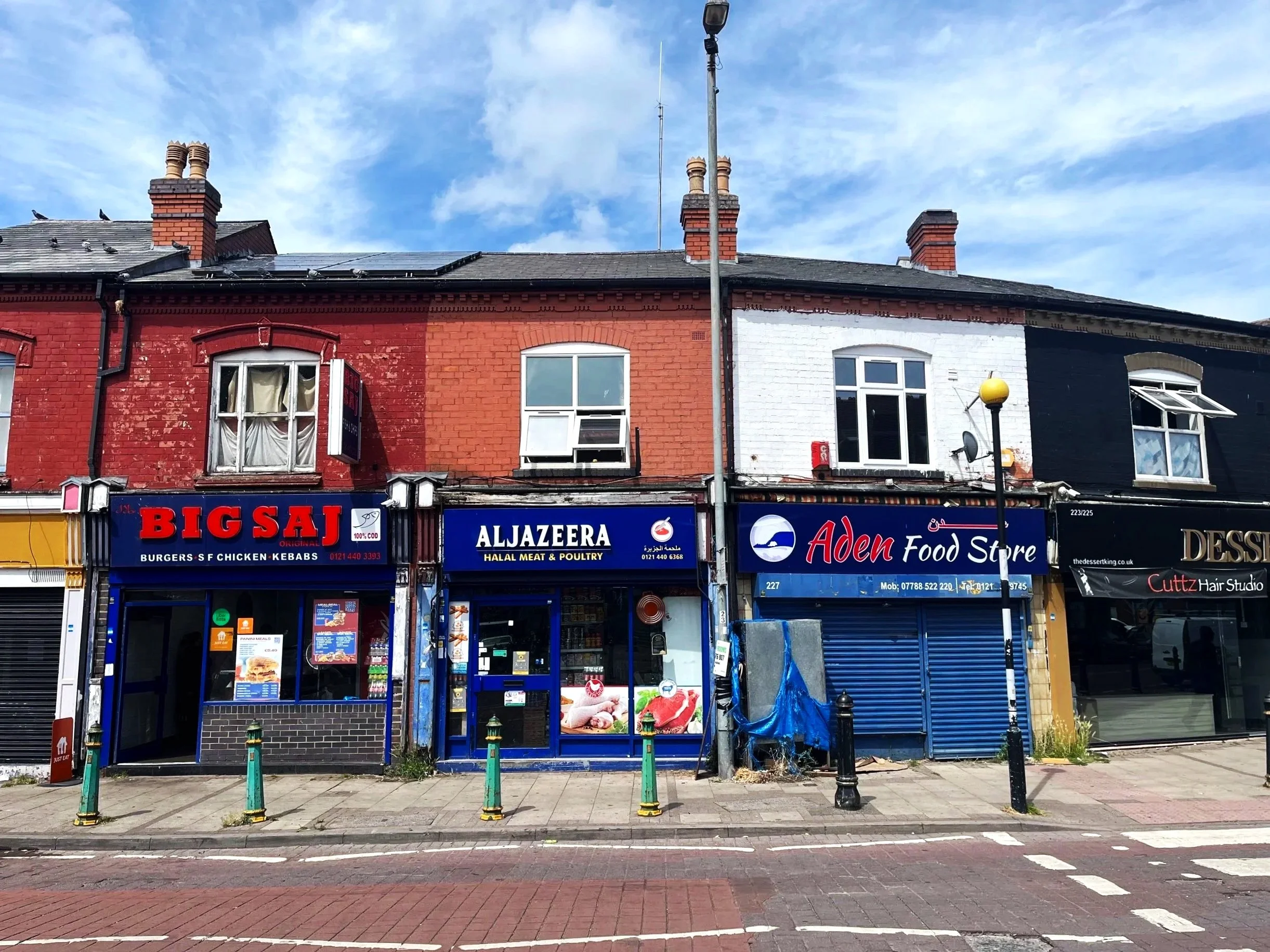
Who Speaks for Britain’s Muslims?

May 7, 2026

Is the current political climate about the failure of Muslim representation—or the impossibility of it given the state of UK politics?

On a cold, breezy February night in Manchester, Hannah Spencer, a plumber-turned-politician, did something no Green Party candidate had ever done.

As intermittent rain fell, the results came in and she’d won a Westminster by-election, giving her a seat in Parliament before the next United Kingdom general election in 2029.

Spencer not only defeated her rivals; she also increased the Green Party’s share of the vote by nearly 30 percent from two years prior. In doing so, she secured the progressive party’s first ever by-election victoryin what was a Labour Party stronghold.

In the days after, rival campaigns and commentators rushed to explain how Spencer, who is not Muslim, won in a constituency with a significant Muslim population. Some pointed to grassroots organizing around Gaza and disillusionment with Keir Starmer’s increasingly centrist Labour Party. Others suggested a broader realignment on the political left and a fracturing of the country’s “Muslim vote.”

Then there was the defeated Reform UK candidate, Matthew Goodwin, who polled second. Losing by nearly 12 percentage points, Goodwin told reporters the result showed “a coalition of Islamists and woke progressives” had “dominated” a constituency that some predicted might even swing so far as to support his right-wing populist party. Others suggested Muslim voters had been instructed how to vote or even engaged in fraud, as if the thousands of ballots cast across southeast Manchester were evidence of coordination and corruption rather than people’s political will.

To those who spent weeks canvassing for Spencer, the accusations sounded less like analysis than Islamophobic sour grapes. They had done what political activists everywhere do. They organized, argued, persuaded and, ultimately, showed up to vote for the candidate they felt spoke best to their needs.

But beyond Manchester, the by-election, its results, and the dispute that followed captured a broader, persistent tension in British politics. For decades, Britain’s Muslims have been active participants in the country’s political life—as candidates, campaigners, donors, and voters capable of swinging close contests. At the same time, and at least since the 1990s, successive governments have struggled, or flat-out declined, to engage Muslims’ political demands on their own terms, showing reluctance to address issues such as Islamophobia, foreign policy concerns, or the recognition of representative bodies like the Muslim Council of Britain (MCB).

Now, as Britain’s Muslims are more politically engaged, and fragmented, than ever ahead of another cycle of elections, a long-running, nagging question remains. The issue is not simply who speaks for Britain’s Muslims, but whether the country’s political system is prepared to listen—and whether meaningful representation is even possible in the UK’s current political climate.
Read the full story
In Religion, Religion and Culture, Religion News Tags British Muslims, UK Muslims, UK politics, Scotland Muslims, UK and Islam, Islam in the UK, Islam in England, Islam in Europe, Muslim politics, British Muslim politics, Muath Trust, Amanah Centre, Birmingham, Manchester, Muslim Council of Britain, The Revealer, Jehangir Malik, Abdallah Adnan, Muslim Engagement and Development, Shahin Ashraf
Comment

Image: AP Photo/Richard Drew via RNS

Between success and suspicion: In US and Germany, Muslims meet the moment

November 14, 2025

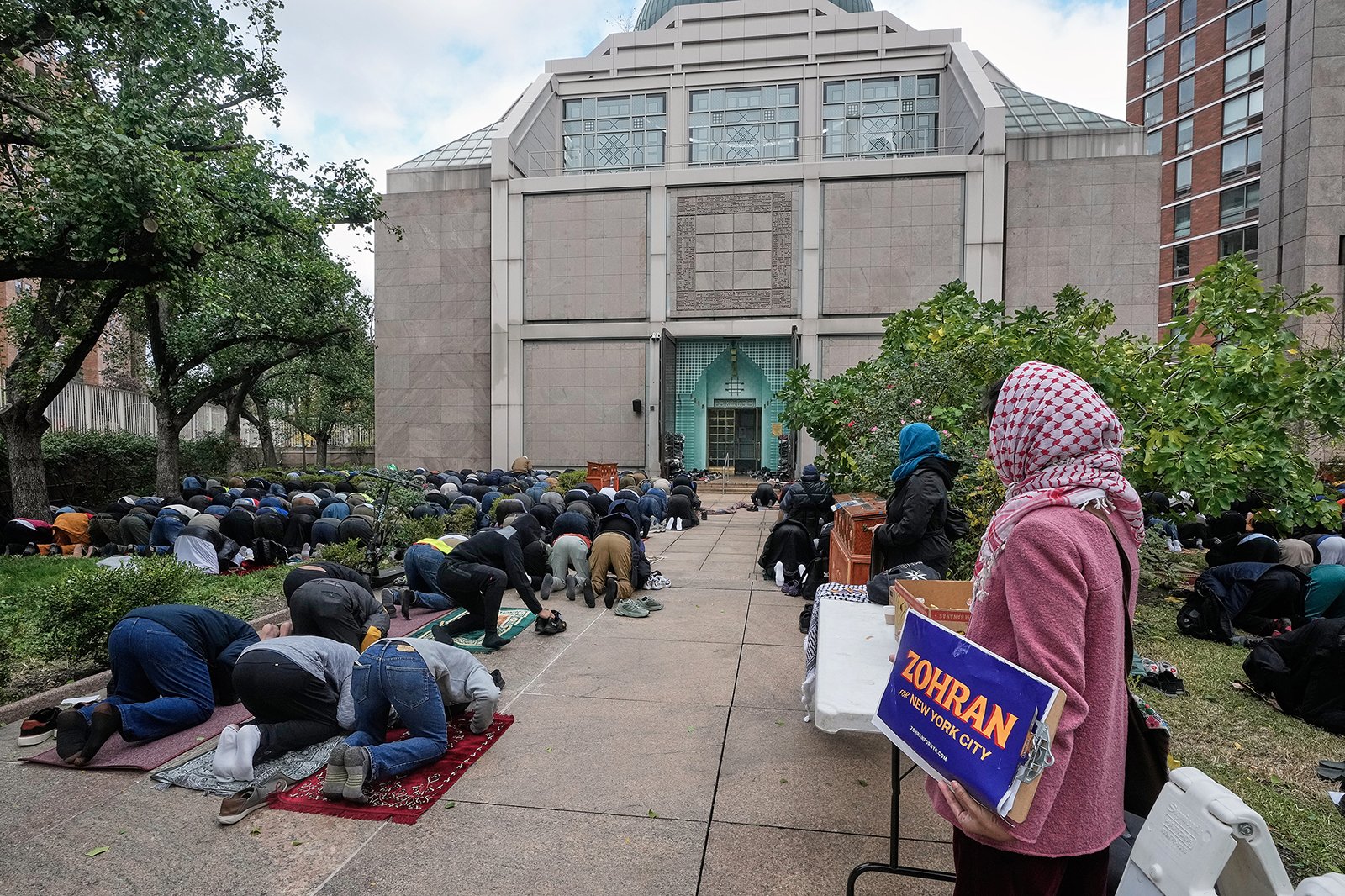
Zohran Mamdani’s election as New York City mayor is being celebrated by many as a new political height for Muslims, even as the 34-year-old’s astounding rise is shadowed by a persistent, if unsurprising, increase in Islamophobic attacks, against him and other Muslim politicians.

A day later in Germany, meanwhile, the government announced a ban on a group called Muslim Interaktiv for allegedly “threatening constitutional order.” The action followed government raids on the premises of other groups authorities referred to as purveyors of “modern TikTok Islamism.”

The fate of Muslims in two leading Western democracies could not seem to be more different, with one country appearing to welcome more political integration for Muslims and the other restricting what is acceptable. But a deeper look reveals that Muslim “success” stories in the U.S. are often a matter of interpretation, obscuring ongoing and significant challenges. Meanwhile, the negative narrative in Germany misses profound, albeit uneven, progress.

Read more
In Religion, Religion and Culture, Religion News Tags Germany, German Muslims, Immigration, Zohran Mamdani, Muslims in the U.S., U.S. Muslims, Muslim politics, Muslim success, Muslim excellence, Muslim futures, Gastarbeiter, Religion News Service, RNS
Comment

How Latter-day Saints, Muslims in Michigan, Black Protestants or Latino Catholics might sway the 2024 election

October 15, 2024

In the lead-up to the 2024 elections, white Christian nationalists and “MAGA evangelicals” are sucking up a lot of the air in the religion media space.

And for good reason. As Tobin Miller Shearer of the University of Montana wrote for The Conversation: 

In the 2016 race, evangelical voters contributed, in part, to Republican nominee Donald Trump’s victory. Those Americans who identified as “weekly churchgoers” not only showed up at the polls in large numbers, but more than 55% of them supported Trump. His capture of 66% of the white evangelical vote also tipped the scales in his favor against his Democratic rival, Hillary Clinton.

Evangelicals look set to support the former president in outsized numbers again — with a Pew Research Survey indicating 82% of white evangelical Protestants are likely to vote for Trump in November — and a significant “subset of Christian nationalists, which some suggest amounts to roughly 10% of the US population,” are rallying around him as they push “for Christianity to be the official, dominant religion of the US.”

But religious Americans from other backgrounds and traditions, such as Catholics, mainliners and Black Protestants — whom Bob Smietana and Jack Jenkins of RNS called “swing state faith voters” — could also prove critical to electoral victory due to their influence in key swing states. 

In this edition of ReligionLink, we offer a roundup of stories, perspectives and sources from a broad swath of faith constituencies around the U.S., addressing questions such as: How might Hindus be approaching local and state elections? How might Muslims in swing states prove decisive for the Electoral College? How might the nonreligious approach key ballot issues differently from others? 

Learn more
In Religion, Religion and Culture, Religion News, ReligionLink, Religious Literacy Tags 2024 elections, Faith and the 2024 elections, Faith voters, Religion, Religion and politics, U.S. elections, President race, President religion, Latter-day Saints, Black Protestants, Latino Cathoics, Muslim voters, Muslim politics, American Muslims, American Muslim politics, Bahá'í Faith, Sikh, Hindu, Buddhist politics, Jewish voting, American Jewish community, MAGA evangelicals, White Christian nationalists, Christian nationalism
1 Comment
Latest Writing RSS

Fresh Tweets

Tweets by kchitwood

Latest Writing RSS

RELIGION | REPORTING | PUBLIC THEOLOGY