• Home
  • About
    • Overview
    • Borícua Muslims
    • Engaged Spirituality
    • The Muslims of Latin America and the Caribbean
  • Contact
Menu

KEN CHITWOOD

Religion | Reporting | Public Theology
  • Home
  • About
  • Books
    • Overview
    • Borícua Muslims
    • Engaged Spirituality
    • The Muslims of Latin America and the Caribbean
  • Contact
“The person who knows only one religion, knows none”
— Max Müller

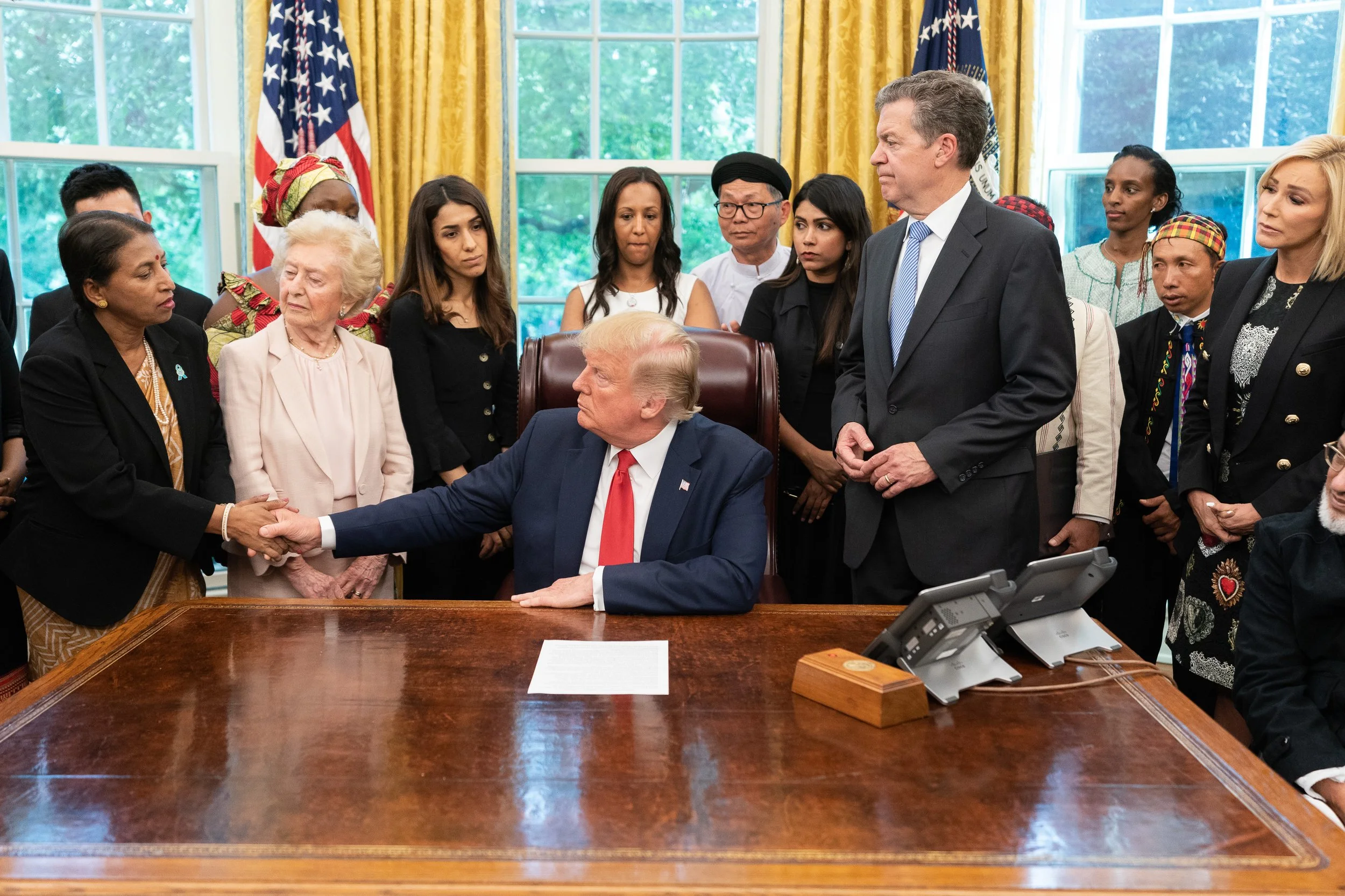
President Donald J. Trump meets with survivors of religious persecution from 17 countries Wednesday, July 17, 2019, in the Oval Office of the White House. (Official White House Photo by Shealah Craighead)

Claims of religious persecution in the media

March 11, 2026

Religious persecution is a profoundly human story.

Deeply held beliefs, issues of identity and belonging, power and exclusion, violence and reconciliation all play a role in telling that story, which makes it particularly compelling for reporters to cover.

Yet religious persecution is among the most complex issues journalists can report on.

Across the globe, individuals and communities face threats to their freedom of religion or belief.  Such threats include limitations on, not only how people worship and care for their sacred spaces, but also on how they live their public and private lives — because of who they are and what they believe. At the same time, narratives about these violations can be shaped, amplified or distorted by political interests, cultural anxieties and media ecosystems that reward simplicity and dissension over nuance and systems-thinking. 

Journalists have a responsibility to illuminate injustice without reinforcing misleading tropes or inflaming tensions.

This guide offers you the tools to navigate the topic as it plays out in the media, offering background, resources and a special interview with Candace Lukasik, author of Martyrs and Migrants (NYU Press). 

Learn more
In Religion, Religion and Culture, Religion News, ReligionLink, Religious Literacy Tags Persecution, Religious pers, religious freedom, International religious freedom and the 2024 election, Candace Lukasik, Martyrs and Migrants, ReligionLink
Comment

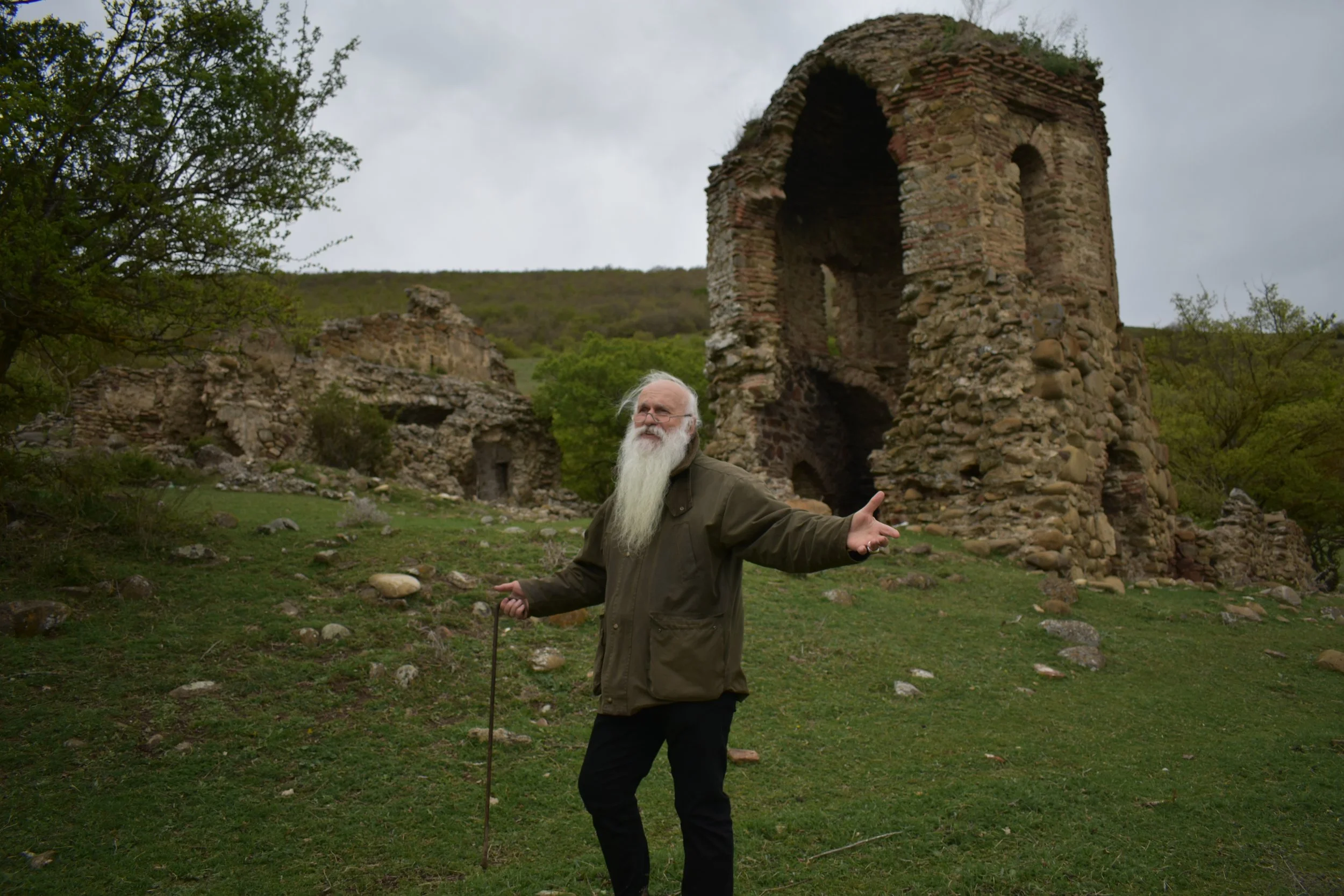
Bishop Malkhaz Songulashvili leads the way up the side of a mountain outside Tbilisi, Georgia. PHOTO: Ken Chitwood

The Spiritual Is Political: Georgia’s Peace Cathedral as a Hub for Pro-Democracy Religious Resistance

October 8, 2025

Draped in a Georgian flag, protective goggles over her fashionable eyeglasses, and wearing a European Union flag for a scarf, Keti Chikviladze is standing with hundreds on Rustaveli Avenue in Tbilisi, the capital of Georgia. It is the 150th consecutive day of protests in front of the Georgian Parliament building, demanding the resumption of Georgia’s progress toward European Union membership, railing against a series of laws limiting free speech, and calling for fresh parliamentary elections.

On November 28, 2024, following months of mounting tension and conflict with the European Union, Georgia’s ruling party, Georgian Dream, suspended the country’s bid to join the EU. Since then, hundreds and thousands of protestors have shown up every night to block traffic along Tbilisi’s main symbolic, cultural, and political artery. On numerous nights, Chikviladze has been one of them, there to counter what human rights organizations report are systematic crackdowns on civil society, media, political opposition, and a turn away from European democratic standards and toward Russian-style authoritarian practices.

Beyond her political activism on Rustaveli Ave., Chikviladze is also the co-founder of the first liberal Jewish movement in the Caucasus region—Dor L’Dor (meaning “generation to generation”)—along with her husband Mikheil “Misha” Grishashvili and others. Just two weeks before the April 28 protests marking 150 days, Chikviladze was welcoming attendees of multiple faiths at the community’s Passover seder. Organized around themes of democracy, justice, and peacebuilding, the haggadah for the evening retold the story of the exodus from Egypt connecting enslavement in the Hebrew Scriptures to what it means to be a citizen in Georgia today. One participant, Benny, said the haggadah reminded him of the need for Jews and others to stand up for freedom, liberation, and democracy “right here, right now.”

The Chikviladzes’ progressive Jewish community, however, does not have support from Georgia’s wider, and larger, Orthodox Jewish community—in part because its physical home is in a church, the Peace Cathedral.

The Peace Cathedral, sometimes called the Peace Project, was originally established in 1867 as the First Baptist Church of Tbilisi. Embodying a legacy of bold social justice, inclusivity, and courage in the face of opposition, it is the mother church of the country’s Evangelical Baptist Church. But in 2017, its leader, Bishop Malkhaz Songulashvili, reimagined—and managed to rebuild—it as a multi-faith sacred space, with a synagogue, mosque, church, temple and oratory housed under one roof and sharing a single entryway.

More than a spiritual home for members of multiple faith communities, it is a place for homegrown political activism as well.

And as the human rights situation in Georgia deteriorates at a rapid rate, the Peace Cathedral could serve as a proving ground for how building coalitions and working across differences might be part and parcel to restoring Georgia to the path of democracy, and a potential model for other countries facing an assault on democracy and human rights violations today.

Read more at the Revealer
Learn more at the Fetzer Institute
In Interreligious Dialogue, Religion, Religion and Culture, Religion News, Travel Tags Bishop Malkhaz Songulashvili, Keti Chikviladze, Dor L'Dor, Peace Cathedral, Tbilisi, Georgia, Georgian Dream, Georgian Orthodox Church, religious freedom, intersectional politics, First Baptist Church of Tbilisi, Evangelical Baptist Church Georgia, Human rights, Religion and human rights
Comment
Latest Writing RSS

Fresh Tweets

Tweets by kchitwood

Latest Writing RSS

RELIGION | REPORTING | PUBLIC THEOLOGY