• Home
  • About
    • Overview
    • Borícua Muslims
    • Engaged Spirituality
    • The Muslims of Latin America and the Caribbean
  • Contact
Menu

KEN CHITWOOD

Religion | Reporting | Public Theology
  • Home
  • About
  • Books
    • Overview
    • Borícua Muslims
    • Engaged Spirituality
    • The Muslims of Latin America and the Caribbean
  • Contact
“The person who knows only one religion, knows none”
— Max Müller

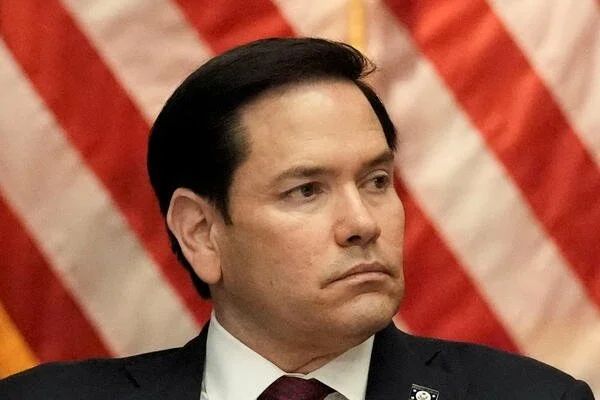
Image via Sojo.net.

The DOJ’s report on anti-Christian bias mistakes policy for persecution, advocates say

May 11, 2026

When the U.S. Department of Justice released its report on “eradicating anti-Christian bias” last week, the argument it sought to settle had long hardened along familiar fault lines.

For some, the document confirmed what they see as a years-long sidelining of Christian voices in public life. For others, it read less like a civil rights diagnosis and more like a reframing of political grievances as religious persecution.

The Task Force to Eradicate Anti-Christian Bias, established by executive order in February 2025 and chaired by Acting Attorney General Todd Blanche, included numerous members of the Cabinet, such as Robert F. Kennedy Jr., Secretary of Education Linda McMahon, and Administrator of the Small Business Administration Kelly Loeffler.

In their 565-page report—with appendices—the task force catalogued a cavalcade of issues it believes show systemic bias against Christians, from abortion policy to gender identity discrimination guidelines to public school lessons about race to vaccination against COVID-19.

Pointing to federal actions, legal interpretations, and enforcement priorities that, in its telling, disproportionately burden Christian individuals and institutions, the task force concluded that “in its zealous pursuit of its preferred policies and constituents, the Biden Administration engaged in anti-Christian bias, seeking to limit Christians’ ability to act in concert with their sincerely held beliefs in their homes, in the workplace, and in the public square.”

Yet critics argue the report rests on a foundational assumption that treats policy disagreement as persecution, taking different political positions in a pluralistic democracy and casting them as evidence of anti-Christian hostility.

“The bulk of the report consists of cherry-picked anecdotes that omit crucial context and legal basis,” Amanda Tyler of the Baptist Joint Committee for Religious Liberty said in a press release.

Tyler argued the report reflects a selective and politically driven interpretation of events, adding that disputes over religious liberty are “best worked out in the courts, not in partisan political documents.”

Tyler’s critique questioned the scope of religious freedom encompassed in the report as well. “Make no mistake: religious freedom only exists when it is enjoyed by everyone,” she said, warning that focusing narrowly on alleged anti-Christian bias risks ignoring broader patterns of discrimination affecting other groups.

By “advancing certain theological views … not shared by all faiths or even all Christians” and seeking special protections for them, she said, the task force risks perpetuating “the very bias it purports to eradicate.”

Read more at Sojo.net
In Religion and Culture, Religion News Tags DOJ, Department of Justice, Anti-Christian bias, Anti-Christian persecution, Persecution, religious freedom, Trans Christians, Transmission Ministries, Milche Ilana van Essen, Amanda Tyler, Mark Reynolds, Baptist Joint Committee for Religious Liberty, Transgender Day of Visibility, Easter, Sojourners
Comment

Image via Wikimedia Commons.

Covering, and Questioning, Anti-Christian Persecution

February 20, 2025

If you report on religion long enough, you’re bound to be called an anti-Christian bigot at some point in time.

In my 14 years of reporting, I’ve been labeled an atheist agent for my coverage of a book on how Jesus may have been a vegetarian, denounced as a prejudiced partisan as I covered instances of clergy abuse in Houston, Texas, and much worse for my writing on neo-Nazi ideology and racism among Lutherans in Germany and the U.S.

In each case, the critique of my writing was less about the coverage or claims therein, but much more to do with a feeling that anti-Christian bias — and even persecution — in the media is not only real but rampant.

When it comes to the issue of anti-Christian persecution itself, coverage in the media can sometimes swing between two magnetic poles. On one end are those who are convinced that such persecution is the most pressing contemporary human rights issue. On the other are those who equate such statements as melodrama, with little grounding in the lived reality of most communities worldwide.

Journalists covering the issue might be swayed depending upon their sources, who often have a stake in arguing one way or the other.

To best cover the matter of anti-Christian persecution, or to address it when it comes up in critiques of our coverage, reporters have to make two things clear: 1) many individuals and communities across the globe are vulnerable because of their identification as Christians and 2) that the extent of anti-Christian persecution is not as widespread or as grievous as some make it out to be.

To help navigate how to cover particular cases and claims, I recommend journalists consider issues related to power, the shift from “privilege to plurality,” and how Christians use the idea of persecution as a way to make sense of their faith in the 21st century. 

Read more
In #MissedInReligion, Missiology, Religion, Religion and Culture, Religious Literacy Tags Persecution, Privilege, Pluralism, Patheos, What you missed without religion class, Are Christians persecuted?, Banal privilege, Anti-Christian persecution
Comment
Latest Writing RSS

Fresh Tweets

Tweets by kchitwood

Latest Writing RSS

RELIGION | REPORTING | PUBLIC THEOLOGY