• Home
  • About
    • Overview
    • Borícua Muslims
    • Engaged Spirituality
    • The Muslims of Latin America and the Caribbean
  • Contact
Menu

KEN CHITWOOD

Religion | Reporting | Public Theology
  • Home
  • About
  • Books
    • Overview
    • Borícua Muslims
    • Engaged Spirituality
    • The Muslims of Latin America and the Caribbean
  • Contact
“The person who knows only one religion, knows none”
— Max Müller

A housing crisis of faith

April 14, 2025

“It’s the first thing you notice about the United States,” said Bernhard Froebe, a German tourist visiting Los Angeles in the summer of 2024. “There are so many people living in the streets, on the sides of the road, in whole encampments,” said Froebe, who hails from the Saxon city of Zwickau. “It’s shocking.” 

Froebe’s remarks come as no surprise to Americans, who have seen homelessness rise 40% since 2018 and rent and home sale prices soar upward of 155% over the last five years. 

According to the 2024 “America’s Rental Housing” report by the Joint Center for Housing Studies of Harvard University, 22.4 million renter households spent more than 30% of their income on rent and utilities in 2022 — a record high. Together, the numbers speak to an impending sense of crisis and pessimism about the U.S. housing market. 

And according to the U.S. Department of Housing and Urban Development’s 2024 Annual Homelessness Assessment Report, the number of people experiencing homelessness on a single night — 771,480 people — was the highest ever recorded. Accounting for around 2 of every 1,000 people in the country, people in families with children, individuals,  unaccompanied youth, veterans and others found themselves in emergency shelters, safe havens, transitional housing or unsheltered and out on the streets.

Like the stats themselves, the factors are many: a worsening housing crisis, stagnating wages among middle- and lower-income households, systemic racism, public health crises, disasters and displacement, inflation.

But how are faith communities responding?  

In early 2025, numerous nonprofits and federal agencies were dealt a series of blows, as President Donald Trump signed several executive orders halting aid and slashing budgets, including that of the U.S. Interagency Council on Homelessness, which was formed in 1987 to coordinate the federal response. The cuts, experts fear, will exacerbate the problems they already were struggling to address.

Religious communities across the spectrum have responded in various ways, providing direct support to those in need. For example, Latino Muslims in Chicago have developed a program called “Neighborly Deeds,” distributing warm meals, blankets, clothes and hygiene products to those experiencing homelessness. And on the streets of Skid Row in Los Angeles, the Friars and Sisters Poor of Jesus Christ — a Catholic religious order founded in Brazil — have been ministering to recently arrived immigrants living in temporary housing or in tents along the road.

Individually, many who are unhoused turn to religious and spiritual practices, including Christian prayer, Buddhist meditationor Native-specific independent spiritual practices, as a means of protection or coping with the stress and related problems of homelessness.

Long a partner, or primary provider, to individuals and families experiencing homelessness, faith and values groups have also started to respond in more creative ways to the current crisis, looking to address more than immediate needs.

Shifting away from traditional shelters or safe havens, faith communities have started offering affordable housing: erecting microhomes on church properties, converting residences — from parsonages to convents — into units or repurposing vacant schools and parking lots. Many of the churches converting their underused land into affordable flats riff off the anti-development slogan “Not in my backyard” (NIMBY), instead advocating with the motto “Yes in God’s backyard” (YIGBY).

Meanwhile, the nonreligious organization SecularHelp runs its “Helping the Homeless” program, which it says provides direct, practical support to individuals experiencing homelessness without “relying on supernatural or faith-based approaches.”

But critics such as Americans United for Separation of Church and State lament that for many experiencing homelessness, “the only organized form of temporary shelter comes from a faith-based organization or church.” Though they can provide essential resources, Americans United wrote, churches can also use “this resource gap as an opportunity to proselytize a vulnerable population.” This issue recently came to the fore in the U.S. Supreme Court Decision in Grants Pass v. Johnson, in which Justice Sonia Sotomayor, in her dissent, questioned the religious rules around providing shelter to the unhoused.

In another case, a church providing temporary shelter around the clock in Bryan, Ohio, was found guilty of violating zoning and fire codes in local criminal court. That decision, along with a civil case against the church, is being appealed.

At the very least, the above shows the numerous religion, ethics and values angles to be explored when it comes to the United States’ rapidly growing housing crisis.

Learn more
In Religion, Religion and Culture, Religion News, ReligionLink, Religious Literacy Tags Religion and the homeless, Homelessness, Unhoused, Skid Row, Housing crisis, Rent prices and religion, Rent prices, ReligionLink
Comment

When religious leaders die

April 2, 2025

For me, Jimmy Carter’s death came too soon.

Not necessarily because of his age. He lived to the ripe old age of 100 and, in many respects, lived those years to the fullest.

No, and if I may be crass for a moment, Carter passed before I had a reporting guide ready for reporters looking to cover the faith angles of his life and legacy.

You see, as Editor for ReligionLink, I put together resources and reporting guides for journalists covering topics in religion. Each month, we publish a guide covering topics such as education and church-state-separation under Trump, faith and immigration or crime and houses of worship.

Early in 2024, I started to put together a guide to cover the passing of Jimmy Carter. Serving as Editor is only a part-time gig, and it usually takes all the time I have dedicated to the role to produce a single, monthly guide. But on the side, I started to make notes, identify sources and build a timeline for Carter’s life and legacy.

When he passed on December 29, 2024, the guide was not ready. Nor would it be in the matter of days necessary for it to be useful. So, the opportunity came and went. The draft of the guide to covering Jimmy Carter’s passing tossed on the editing floor.

The missed occasion, however, inspired me to work ahead more intentionally on guides for other famous faith leaders. The process of putting such guides together led me to reflect on what it means to remember, and report on, the passing of prominent figures in religion. 

Learn more
In #MissedInReligion, Religion, Religion and Culture, Religion News, ReligionLink, Religious Literacy, Religious Studies Tags Patheos, What you missed without religion class, ReligionLink, When religious leaders die, Dalai Lama, Dalai Lama death, Pope Francis, Next pope, Jimmy Carter, Desmond Tutu, Death, Obituary
Comment

Photo via Publishers Weekly.

Islam, Real and Imagined: PW Talks with John Tolan

March 25, 2025

In Islam: A New History, the historian chronicles the religion’s 1,400–year evolution through profiles of figures who showcase its diversity.

Why is a new history of Islam particularly relevant now?

Much of the current discourse on Islam is based on a traditional narrative about its origins and rise, as if everything we know about the religion was produced by Muhammad and his companions in the seventh century. But as recent scholarship shows, Islam emerged gradually and has been in constant change over the centuries. This pushes back on what Muslim fundamentalists believe is a “pure” form of Islam—an imagined, ideal society around Muhammad where Sharia was already the law of the land. The far right does the opposite, saying that this early Islamic society persecuted minorities, women, and so forth, and that it is essentially the same today. This means, for them, that Muslims are not able to adapt to modern Western societies. I hope to show people who are not on either of those extremes Islam’s rich history and diversity.

Who are some of the people from Islamic history you introduce and how do they illustrate these themes?

One of the chapters that was most fun for me is about Ibn Battuta, a 14th-century Moroccan man who leaves home at the age of 22 and travels for 20 years, going as far as India, China, and beyond. He gets jobs as a judge and an administrator in Delhi and the Maldives. He’s appreciated wherever he goes, because he knows his Quran and Islamic law. At the same time, his testimony shows the diversity of the Muslim world and its constant engagement with others—with Christians, with Hindus, with Buddhists. His story reminds us that the real demographic center of Islam is much further east than the Middle East or North Africa, and that in all these countries Muslims have had to interact, often creatively, with people of other faiths. Still today, none of the top five countries with the largest Muslim population is Arab.

How does one make sense of such a vast and diverse religion?

I like to point readers to the cover of the book. You see this Indian-looking woman lying prostrate in prayer and receiving a paper with a text in Arabic, a verse from the Quran. This is Rabia al-Adawiyya, an eighth-century Iraqi Sufi woman, portrayed a thousand years later by an Indian artist as a well-dressed, idyllic beauty of 18th-century India. That, to me, shows Islam’s paradoxical unity in diversity, because here she is, an Iraqi Sufi who speaks across borders and centuries, holding a verse from the Quran to which all Muslims would relate.

A version of this article appeared in the 03/24/2025 issue of Publishers Weekly under the headline: John Tolan

In Religion, Religion and Culture, Religion News, Religious Literacy, Religious Studies Tags John Tolan, Islam: A New History, Publishers Weekly, New book, Islam, Muslims, Global Islam
Comment

Getty Images, via Foreign Policy.

Can Christian Charities Serve Both God and Trump?

March 17, 2025

The U.S. government and faith-based organizations have worked together since the dawn of the United States. The same Congress that prevented the government from endorsing or becoming too involved in religious activities through the First Amendment also set aside land for churches in the Northwest Territory, later Ohio, in the 1780s. Funds to support recently emancipated people after the Civil War were often channeled through Christian schools and agencies.

In the wake of World War II, faith-based relief organizations worked hand-in-hand with the U.S. government to deliver aid and address hunger, poverty, and displacement around the world. In the early 2000s, the George W. Bush administration created its “faith-based initiatives” program, which made religious social-service providers—including evangelical groups—institutionalized partners of the U.S. government.

But in his second term, President Donald Trump has quickly signaled a drastic shift in this relationship. In executive orders, Trump froze federal grants flowing to religious nonprofits; terminated refugee resettlement programs, most of which are run by religious organizations; and suspended foreign aid pending review. The Trump administration effectively dismantled the United States Agency for International Development (USAID), which partners with an array of religious charities and communities.

The administration’s efforts face legal challenges on multiple fronts. A federal judge in Washington ordered a temporarily lift to the funding freeze that halted U.S. foreign aid. Meanwhile, religious groups have challenged the administration’s cuts, arguing that they disproportionately harm vulnerable populations. In separate suits, multiple faith-based organizations have challenged what they say is the unlawful suspension of refugee resettlement programs.

Faith leaders fear that such measures are just the beginning of a larger realignment of the U.S. government’s relationship with religious groups toward an aggressive attitude of brute force and domination.

Read the full article
In Religion, Religion and Culture, Religion News, Religious Literacy Tags Foreign Policy, USAID, U.S. foreign policy, Soft power, Evangelical soft power, Evangelical, Evangelicals, Evangelicals and foreign policy, New Apostolic Reformation, NAR, NAR and foreign policy, Nations, Donald Trump, Faith-based nonprofit, Charities
Comment

Image via Wikimedia Commons.

Covering, and Questioning, Anti-Christian Persecution

February 20, 2025

If you report on religion long enough, you’re bound to be called an anti-Christian bigot at some point in time.

In my 14 years of reporting, I’ve been labeled an atheist agent for my coverage of a book on how Jesus may have been a vegetarian, denounced as a prejudiced partisan as I covered instances of clergy abuse in Houston, Texas, and much worse for my writing on neo-Nazi ideology and racism among Lutherans in Germany and the U.S.

In each case, the critique of my writing was less about the coverage or claims therein, but much more to do with a feeling that anti-Christian bias — and even persecution — in the media is not only real but rampant.

When it comes to the issue of anti-Christian persecution itself, coverage in the media can sometimes swing between two magnetic poles. On one end are those who are convinced that such persecution is the most pressing contemporary human rights issue. On the other are those who equate such statements as melodrama, with little grounding in the lived reality of most communities worldwide.

Journalists covering the issue might be swayed depending upon their sources, who often have a stake in arguing one way or the other.

To best cover the matter of anti-Christian persecution, or to address it when it comes up in critiques of our coverage, reporters have to make two things clear: 1) many individuals and communities across the globe are vulnerable because of their identification as Christians and 2) that the extent of anti-Christian persecution is not as widespread or as grievous as some make it out to be.

To help navigate how to cover particular cases and claims, I recommend journalists consider issues related to power, the shift from “privilege to plurality,” and how Christians use the idea of persecution as a way to make sense of their faith in the 21st century. 

Read more
In #MissedInReligion, Missiology, Religion, Religion and Culture, Religious Literacy Tags Persecution, Privilege, Pluralism, Patheos, What you missed without religion class, Are Christians persecuted?, Banal privilege, Anti-Christian persecution
Comment

Image via Patheos.

If Piety Is Always Political, Who Then Is A Saint?

February 11, 2025

On the outskirts of Naples, in the shadow of Mount Vesuvius, lies the sanctuary of Madonna dell’Arco in Sant’Anastasia.

The walls of the shrine are covered in painted, votive tavolette — little, painted boards given as an offering in fulfillment of a vow (ex voto) and featuring devotional scenes and images of the Virgin Mary holding the infant Christ.

One of my favorites features a man in bed, with a heavily bandaged leg, his small children and wife praying to the Virgin and Child as they appear amidst a veil of clouds from their throne in heaven.

It is, in many ways, a visual embodiment of traditional notions of piety, defined as dutiful devotion to the divine.

But as I teach in my religious studies courses, piety can take a variety of forms.

It can be visual and sartorial, both highly personal and politically charged. More than an individual’s particular practice of religious reverence, piety is a socially defined and structured response to one’s emotional, social and material context. And in a time of political upheaval, social uncertainty and ecological anxiety, it might do well to revisit piety and its varieties.

Read more
In #MissedInReligion, Religion, Religion and Culture, Religious Literacy, Religious Studies Tags Piety, Culture, Political piety, Visual piety, Madonna dell'Arco in Sant'Anastasia, Virgin and Child, Devotional piety, Devotion, Religious studies, Patheos
Comment

Image via Interfaith America.

How they do it in Deutschland: Signposts for Interreligious Dialogue in Germany

February 4, 2025

The Christmas market attacks in Magdeburg — and the heated political atmosphere that followed — have stressed a range of issues ahead of Germany’s snap elections on February 23.  

Voters across Europe’s largest economy are concerned about domestic security, immigration, upholding the rule of law and strengthening democracy against perceived enemies within and without.  

An important aspect of this equation is how followers of Germany’s various religious communities might work to address these concerns together.  

With a total population of nearly 85 million, there are an estimated 23 million Catholics (27 percent), 21 million Protestants (25 percent) and nearly 5 million Muslims (5.7 percent). There are also smaller populations of evangelicals (2 percent) and Orthodox Christians (1.9 percent), as well as Jews, Buddhists, Jehovah’s Witnesses, Hindus, Yezidis, members of The Church of Jesus Christ of Latter-day Saints, Pagans and Sikhs. Notably, 44 percent of Germans (or 37 million) claim no religious affiliation, but may practice some form of spirituality or hold some kind of enchanted worldview.  

In my latest for Interfaith America, I explore how members of these various groups work together — or against one another — is of great importance for the future of plural, open societies like Germany. 

Learn more
In Interreligious Dialogue, Religion, Religion and Culture, Religion News, Religious Literacy, Religious Studies Tags Germany, Deutschland, Interfaith dialogue, Interreligious engagement, Interreligious cartographie, Interreligiöse, House of One, Interfaith America, Interfaith America Magazine, How they do it in Germany
Comment

Reporting on faith in polarized times

January 20, 2025

In a slight departure from my usual column at Patheos (“What you missed without religion class”), I was asked by my editors to respond to the following prompt, as part of their new initiative on Faith & Media:

“Faith Amid the Fray: Representing Belief Fairly During Polarized Political Times - Explore the role of media in shaping perceptions of faith during politically charged times. As we have a government in transition and the world becomes less stable, how should the media work to accurately reflect faith’s place in all this? ”

As outgoing president of the Religion News Association and Editor of ReligionLink — a premier resource for journalists writing on religion — I’ve spent time thinking about what religion reporters write about and how it’s best done.

Looking back on my 14 years on the beat, and looking ahead to the role of news media in shaping perceptions of faith in the politically charged times we have ahead of us, I believe religion reporters have the opportunity to approach the next year with “curiosity” — as The New Yorker’s Emma Green put it — and recommit to the balance, accuracy and insight that best characterizes our beat.

I encourage all those who care about faith and media in polarized times to take a deeper look at the link below…

Read more
In #MissedInReligion, Religion and Culture, Religion News, Religious Literacy Tags ReligionLink, Religion reporting, Faith and media, Patheos, What you missed without religion class, Balanced reporting, Accurate reporting, Insightful reporting
Comment

Death, dying, and faith in America

December 15, 2024

Death, as the cliche goes, is one of life’s few certainties.  

At some point in time, all of us with loved ones will be bereaved by their passing. We will attend services, gather with family and friends, and otherwise memorialize the dead we once knew.  

And, eventually, all of us will die.  

Though death is a universal experience, the nature of death and dying in the United States continues to evolve.   

Thanks to technological advances, shifting healthcare norms, the rearrangement of families, communities and social structures, ongoing differences due to class and race, as well as alterations to America’s religious landscape, death and dying in the U.S. have changed dramatically in recent decades.  

Over the last century, life expectancy has continued (with occasional setbacks) to increase — with the current lifespans lasting an average of 77.5 years — and three-quarters (74.76%) of the nearly 3.1 million deaths in the U.S. in 2023 were to persons aged 65 and older. Death is also a progressively protracted and isolating affair. Occurring after a chronic illness, long-term discomfort, or slow-but-steady cognitive decline, many face the egress alone, as smaller families, divorce rates, and the continuing breakdown of connections among individuals’ social networks leaves many with fragile networks of community and care at the end of their lives.  

And while religion in the U.S. may not be dying, our changing relationship with faith has important implications for how individuals and communities face the end of life in 21st-century America.  

Read more
In Interreligious Dialogue, Religion and Culture, Religion News, Religious Literacy Tags Death and dying, Death and dying at U.S./Mexico border, Dying in America, The Unclaimed, Pamela Prickett, Death in the U.S., Death and faith, Religion and death
Comment

The religious "no" vote

October 31, 2024

Twenty years ago, John D. Roth thought members of his Anabaptist tradition should stop voting — if only for a season. 

In an essay he distributed among clergy of the Anabaptist movement, which includes pacifist traditions such as the Mennonites, Amish and Hutterites, Roth called for a five-year break from voting to pray and reflect, rather than campaign for one candidate or the other. He argued that the differences between political aspirants were illusory and that in national elections Christians might better fulfill their role by questioning, challenging and discomfiting those holding power, rather than tacitly or explicitly supporting any particular party or person. 

Roth believes his summons to a voting “sabbatical” is just as relevant today. “I wrote that essay 20 years ago, when the deep cultural divisions were just beginning to show up in our churches,” Roth told New Lines. “The idea was that we were in need of a deeper spiritual grounding in the face of the highly polarized political climate. Not surprisingly, that idea went nowhere.”

In a supercharged political landscape with MAGA evangelicals, “Hindus for Harris” and rising numbers of Muslims rallying behind Donald Trump, Jill Stein and Cornel West, it may come as a surprise that some people of faith in the U.S. abstain from voting entirely — or at least don’t take sides. 

But understanding their reservations and motivations, experts say, might speak more to the current state of U.S. politics than any partisan zealotry coming from voters of faith this election cycle.

While MAGA evangelicals — and those who oppose them — get a lot of play in the headlines, there is a steady tradition of Christians abstaining from partisan politics completely, explained Michael Budde, a professor at DePaul University, a private Catholic university in Chicago, who teaches on religion and politics.

“Not all Christians have made their peace with secular powers,” Budde said. Whether it’s the early centuries of the Christian era and monastic dissenters in the desert, those who refused to take up the sword within the church after the Roman Emperor Constantine, or the Catholic Worker Movement and people like Daniel Berrigan, a Catholic Jesuit priest who vigorously opposed the Vietnam War, multiple Christian communities have resisted allowing empires and states to borrow their legitimacy from the church. In addition to these pacifist traditions, there are fundamentalist Christian groups that teach that Christians are not of this world and are not to become involved in its politics.

And this election cycle, a larger number of U.S. Christians seem set to sidestep the ballot box in accordance with their interpretation of the Bible and their evaluation of current politics. According to research from the Cultural Research Center at Arizona Christian University, 104 million “people of faith” might abstain from voting this year — including up to 32 million churchgoing Christians. As political scientist Robert Postic wrote for the evangelical magazine Christianity Today, “given short-term political dynamics or the candidates available, declining to vote can be the best way to reflect our values and acknowledge the importance of an election.”

 “Sometimes, the right choice,” Postic wrote, “may be not voting.”

Read more
In Religion and Culture, Religion, Religion News, Religious Literacy Tags New Lines, Abstaining, Religious reasons not to vote, Do Bahai vote?, Do Rastafarians vote?, Christians who don't vote, Salafism, Global Salafism, Do Salafis vote?, Anabaptists, Amish, Mennonite, Hutterite, Anabaptist politics, Michael Budde, John D. Roth, No voting
1 Comment

How Latter-day Saints, Muslims in Michigan, Black Protestants or Latino Catholics might sway the 2024 election

October 15, 2024

In the lead-up to the 2024 elections, white Christian nationalists and “MAGA evangelicals” are sucking up a lot of the air in the religion media space.

And for good reason. As Tobin Miller Shearer of the University of Montana wrote for The Conversation: 

In the 2016 race, evangelical voters contributed, in part, to Republican nominee Donald Trump’s victory. Those Americans who identified as “weekly churchgoers” not only showed up at the polls in large numbers, but more than 55% of them supported Trump. His capture of 66% of the white evangelical vote also tipped the scales in his favor against his Democratic rival, Hillary Clinton.

Evangelicals look set to support the former president in outsized numbers again — with a Pew Research Survey indicating 82% of white evangelical Protestants are likely to vote for Trump in November — and a significant “subset of Christian nationalists, which some suggest amounts to roughly 10% of the US population,” are rallying around him as they push “for Christianity to be the official, dominant religion of the US.”

But religious Americans from other backgrounds and traditions, such as Catholics, mainliners and Black Protestants — whom Bob Smietana and Jack Jenkins of RNS called “swing state faith voters” — could also prove critical to electoral victory due to their influence in key swing states. 

In this edition of ReligionLink, we offer a roundup of stories, perspectives and sources from a broad swath of faith constituencies around the U.S., addressing questions such as: How might Hindus be approaching local and state elections? How might Muslims in swing states prove decisive for the Electoral College? How might the nonreligious approach key ballot issues differently from others? 

Learn more
In Religion, Religion and Culture, Religion News, ReligionLink, Religious Literacy Tags 2024 elections, Faith and the 2024 elections, Faith voters, Religion, Religion and politics, U.S. elections, President race, President religion, Latter-day Saints, Black Protestants, Latino Cathoics, Muslim voters, Muslim politics, American Muslims, American Muslim politics, Bahá'í Faith, Sikh, Hindu, Buddhist politics, Jewish voting, American Jewish community, MAGA evangelicals, White Christian nationalists, Christian nationalism
1 Comment

Religion, Immigration and the 2024 Elections

September 9, 2024

Over the last six months, I’ve been covering religion and immigration for Sojourners Magazine.

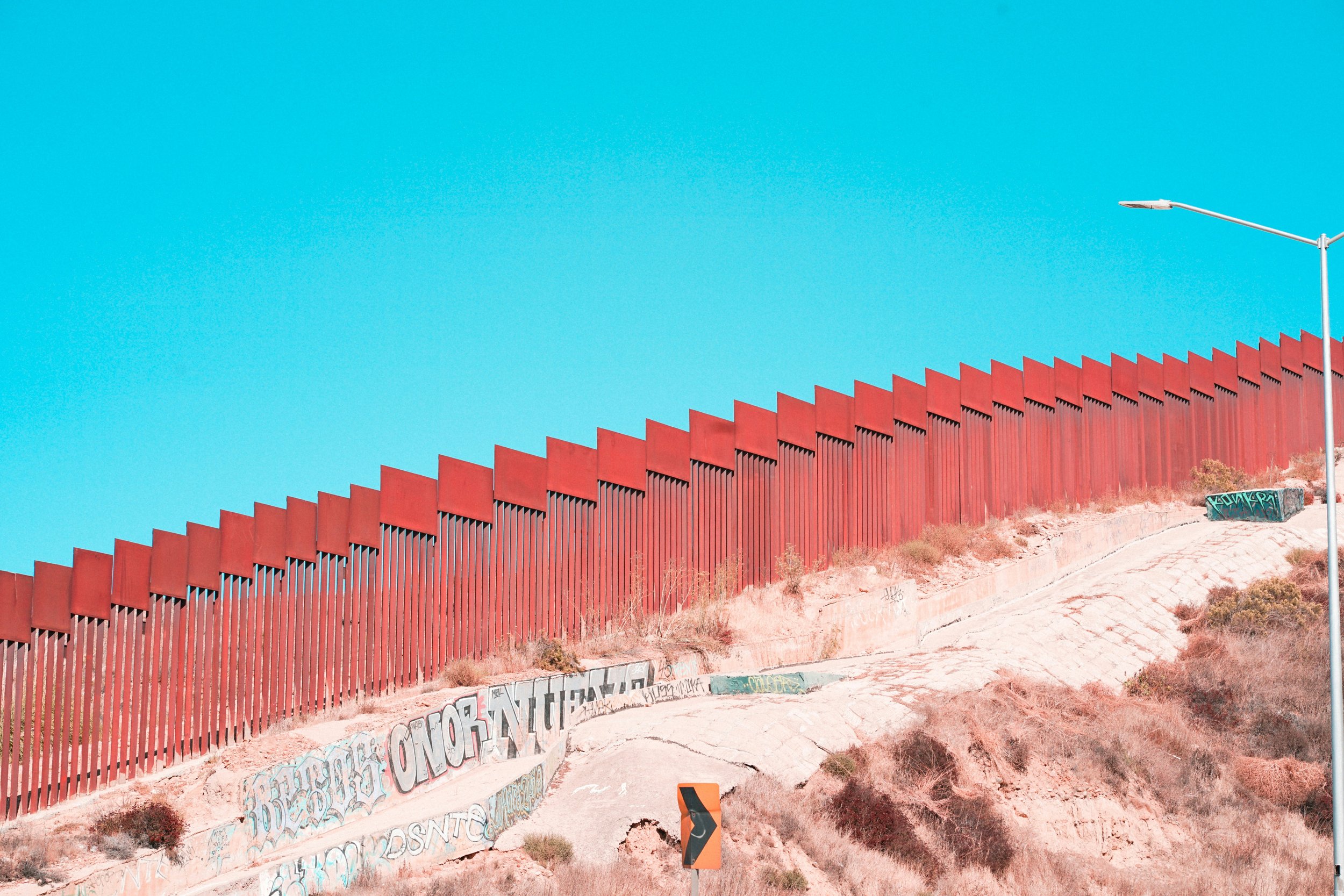
I traveled to Tijuana, Mexico, Lampedusa, Italy, southern Arizona and downtown Los Angeles to hear from migrants making their way. I heard from Muslim aid workers on the front lines providing sanctuary and nuns serving the vulnerable asylum seekers living on the streets of Skid Row. I sat with mothers weeping over their children and praying for safe passage at a cemetery just meters from the bollard-steel border wall that rips through the Sonoran wilderness like a rust-colored wound. 

In my latest for ReligionLink and as part of my “What You Missed Without Religion Class” series at Patheos, I reflect on what you need to know about faith and immigration ahead of the 2024 elections.

A PRIMER ON RELIGION AND IMMIGRATION
Learn more at Patheos
In Religion and Culture, Religion News, ReligionLink, Religious Literacy Tags Religion, Religion and immigration, Immigration, People on the move, Migrants, Asylum seekers, ReligionLink, Patheos, What you missed without religion class, Tijuana, Southern Arizona, Los Angeles, Lampedusa, Faith and Immigration, Sojourners
1 Comment

Crime and perception: Religion, public safety and the 2024 elections

August 13, 2024

On the second day of the recent Republican National Convention the theme was “Make America Safe Again.”

Addressing those gathered in Milwaukee, U.S. House Speaker Mike Johnson, a Louisiana Republican and evangelical, warned against the threat the “radical left” posed to what he said were long-held American “principles of faith, family and freedom.”

Linking those principles to Americans’ safety, Johnson promised Republicans would remain “the law and order team.”

“We always have been — and we always will be — the advocates for the rule of law,” Johnson said.

But since the beginning of 2024, violent crime is down across the U.S. According to the FBI, there was a 15% overall decline in violent crime over the last several months and decreases in the rates of murder and rape (nearly 26%), robbery (18%), property crime (15%) and aggravated assault (12%).

Why then do more than half (54%) of U.S. voters — and nearly three-fourths (74%) of registered Republicans — consider crime a “major factor” in their considerations of who will be president?

Part of that, as CBS News’ Camilo Montoya-Galvez explains, is due to perceptions about the danger of incoming immigrants and increased numbers of encounters along the U.S.-Mexico border.

But as this edition of ReligionLink explores, religious adherence can also help explain the fear factor ahead of November’s elections and why Republican presidential candidate Donald J. Trump has much to gain from Americans’ anxiety around crime and public safety in 2024.

Learn more at ReligionLink
In Religion and Culture, Religion, Religion News, ReligionLink, Religious Literacy Tags Crime, Crime and religion, Religion and crime, Crime and immigration, Republican National Convention, Fears about crime, Evangelicals and crime, FBI, ReligionLink
Comment

What faith and immigration leaders are saying about Kamala Harris' candidacy

August 13, 2024

The prospect of Kamala Harris becoming the Democratic nominee in August — and the possibility of a Harris presidency in 2025 — shook up the race for president last week.

And among faith leaders, it has reinvigorated hopes that her leadership could signal a commitment to both the rights and dignity of immigrants, as well as a secure, well-managed border.

Many fear a Donald Trump presidency and what it might mean for migrants already living in the U.S. or arriving at its borders. But President Joe Biden’s decidedly mixed record has also garnered condemnation from faith leaders who called his most recent executive orders — severely restricting most asylum claims at the border and expediting the removal of unauthorized migrants — as “cruel and racist.”

And though people of faith — and the wider U.S. population — want comprehensive immigration reform with increasing urgency, the practicalities of bipartisan legislation have remained elusive for multiple administrations, Republican and Democrat.

The end result is a status quo at the border that leaders like Dylan Corbett find unacceptable and hope Harris might be able to change.

“We need a new approach to managing migration at the border, one that works for our country, for border communities and the next generation of American immigrants looking to raise their families with dignity,” said the executive director of Hope Border Institute, an organization working to advance justice on the border in El Paso, Tx.

When asked what he expected from Harris on immigration in the months to come, Corbett emphasized that responsibility to reform the country’s immigration system lies with all sides. “Both parties need to undertake a serious examination of conscience on immigration policy, which has been needlessly politicized, to the detriment of all;” he said, “humane and safe immigration policies are possible and within reach.

“The only thing lacking is political leadership,” he said.

Read more at Sojourners
In Religion, Religion and Culture, Religion News, Religious Literacy Tags Faith and immigration, Immigration, Root causes, Border czar, Kamala Harris, Leaders react, Hope Border Institute
Comment

Advertisement for a halal butcher and grocer near Busch Gardens theme park in Temple Terrace, Fla. (PHOTO: Ken Chitwood)

Is Tampa the new Dearborn?

July 17, 2024

While the city’s Islamic infrastructure is dynamic, the community’s mix of progressive values and social conservatism makes it an outlier in a polarized ideological landscape.

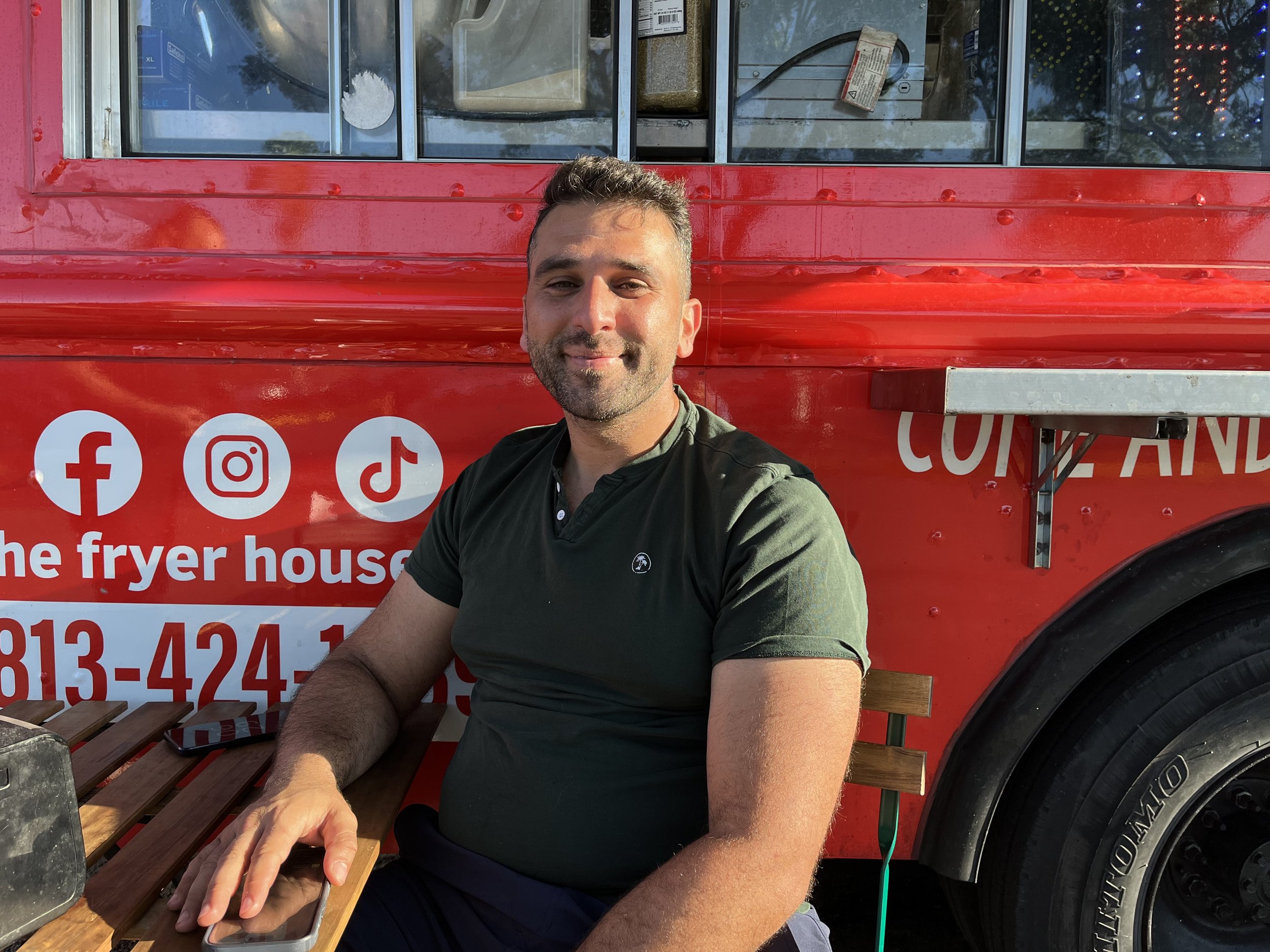
Ashraf “Ash” Ayyash, owner and operator of The Fryer House foodtruck in Temple Terrace, Fla. (PHOTO: Ken Chitwood)

“You’ve got to try The Fryer House,” Aaysha Kapila told me via the Tampa Halal Food Facebook group. “It’s new on the scene, but it’s amazing.” The “scene” in question? Tampa’s market for halal food. And The Fryer House, a food truck that opened in December 2023, is one of the newest on it, offering a fusion of Arab, Asian and American Southern fried chicken — from hot chicken sandwiches to fiery golden tenders to chicken and waffles.

Blending Palestinian spices with Japanese styles and Latin American peppers, the food truck’s owner, Ashraf “Ash” Ayyash, says his brand of “halal hot chicken” has proved a hit. While his customers come from a cross-section of Tampa society, many are Arabs and South Asian Muslims looking for a spicy, sumptuous, halal option for lunch or dinner. During Ramadan, Ayyash said, he cooked thousands of pounds of chicken. At a series of major local events during the month of fasting — Ramadan Suhoor Nights — he averaged 300 pounds per night.

Sitting underneath Ayyash’s menu with its hot, very hot and “pepper x” levels of spiciness, a slim, 30-something Palestinian American named Zyad is snacking on some of Ayyash’s specially seasoned french fries. This, he says, is one of his favorite options in Temple Terrace, a city on the northeast side of Tampa Bay and epicenter of its robust halal food scene. “There’s a Yemeni place down the road, several shawarma options, an Arab grocery store, a Turkish grocery store, bakeries, clothing stores, restaurants, food trucks. The list goes on,” he told New Lines.

“Tampa,” Zyad said, “is like the new Dearborn,” referring to Dearborn, Michigan, the first Arab-majority city in the U.S. and home to the largest mosque in North America.

Though there are no official statistics, estimates of Tampa’s Muslim community range between 5,000 or 6,000 in the Temple Terrace-New Tampa area alone, to upward of 36,000 or as high as 100,000 in the greater Tampa Bay area, which includes St. Petersburg and Clearwater.

Community statistics show an estimated 500,000 Muslims in Florida and over 150 mosques and Islamic centers across the state, from the Keys in the south to Pensacola on the panhandle. And they cut the cross section of Muslim-American society: Almost one-third were born in the U.S., with the remaining 69% coming from places like Pakistan and India, Egypt and Palestine, Guyana and Puerto Rico. The Tampa Bay area is home to tens of thousands of Muslims from over 80 different countries.

Especially around Busch Boulevard and 56th Street, not far from the Busch Gardens amusement park and the main campus of the University of South Florida (USF), Tampa’s Islamic infrastructure is dense, a testament to its rarely recognized, but consistently growing, Muslim community. Not only are numerous mosques and several of the nation’s premier Islamic schools in and around Temple Terrace, but there are also law offices with signs in Arabic and Urdu, numerous halal restaurants, Middle Eastern barber shops, Ramadan decor hanging in shop windows and a large halal slaughterhouse named Musa’s.

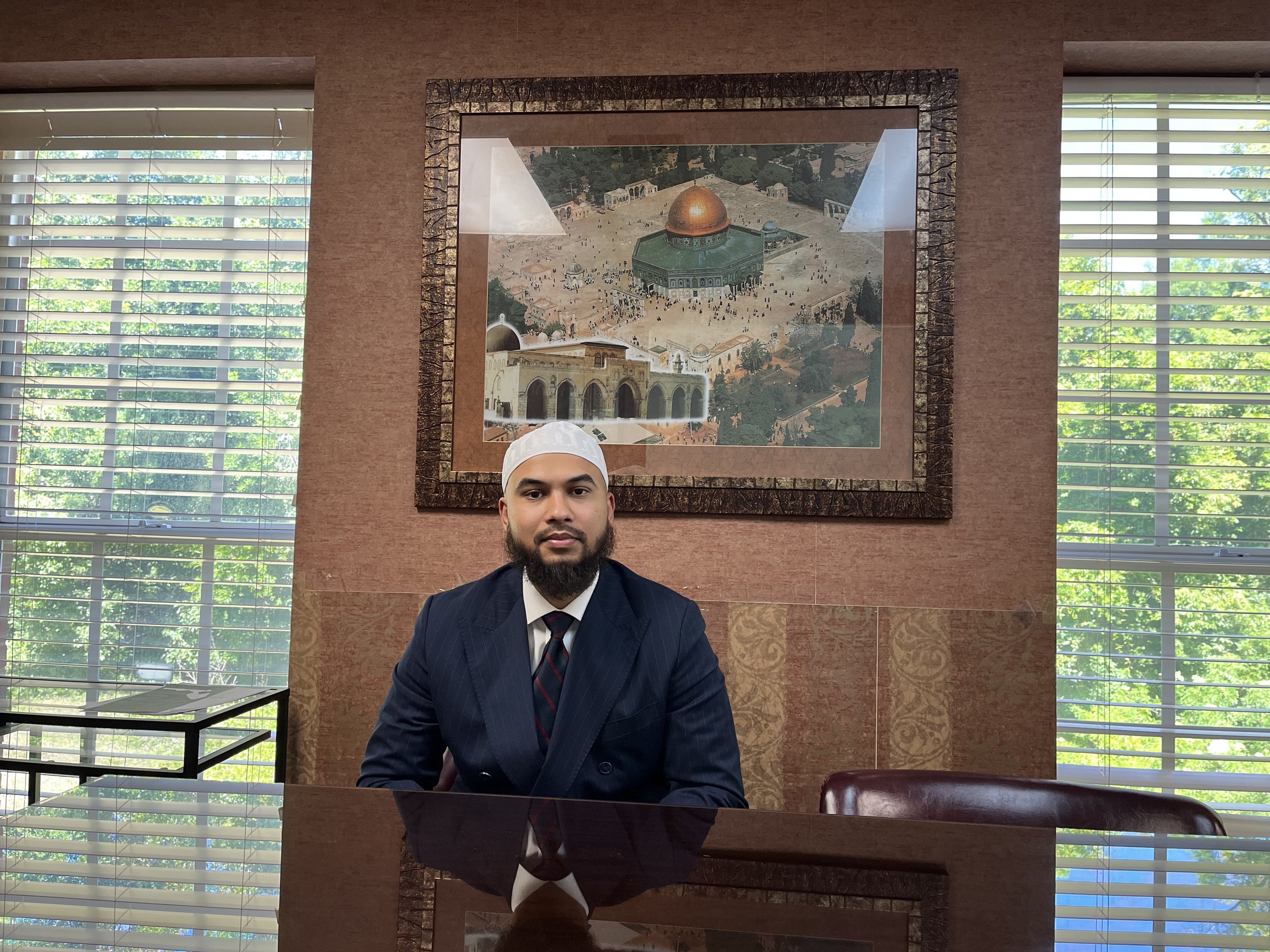
Abdullah Jaber at CAIR’s offices in Temple Terrace, Fla. (PHOTO: Ken Chitwood)

“I would estimate around 70% of the businesses in the Temple Terrace area are Muslim-owned,” said Imam Abdullah Jaber, executive director of CAIR Florida, the Sunshine State’s chapter of the Council on American-Islamic Relations, a civil liberties organization whose offices are also in Temple Terrace. “There are Muslims heading the Chamber of Commerce, professors at local universities, dentists, physicians, you name it.”

They are also shaping local, state and national elections with the growing political power that comes with such a presence. But that influence is far from monolithic: The Muslim community’s shifting political crosscurrents and fault lines mean it doesn’t align neatly with either camp in the country’s increasingly polarized landscape. “I think you can be socially conservative and yet be an advocate for social and racial justice,” Jaber told New Lines.

“Maybe that’s impossible with America’s current politics, but I think Tampa is leading the way here. It’s a model for American Muslim life.”

Read more at New Lines
In Religion, Religion News, Religious Literacy Tags Tampa Bay, Tampa Muslims, Muslims in Florida, American Muslims, American Islam, Muslims in the U.S., Latino Muslims, Latinx Muslims, Muslims and politics, Politics and Islam, American Muslim politics, Muslim vote, Gaza, Faith, Family, Finance, Islamic schools, New Lines, NewLines Magazine, Ken Chitwood, Fryer House foodtruck, Abdullah Jaber, Dyma AbuOleim, 200 Muslim Women Who Car
Comment

Bushfires below Stacks Bluff, Tasmania, Australia. IMAGE: Matt Palmer, Unsplash

How then shall we live, when the world is on fire?

June 24, 2024

Climate change is happening.

I am not a scientist. Nor do I pretend to be. But drawing on information taken from natural sources — like ice cores, rocks, and tree rings — recorded by satellites, and processed with the aid of the most advanced computer processors the world has ever known, NASA experts report “there is unequivocal evidence that Earth is warming at an unprecedented rate” and that “[h]uman activity is the principal cause.” 

From global temperature rise to melting ice sheets, glacial retreat to sea levels rising, the evidence of a warming planet abounds. While Earth’s climate has fluctuated throughout history, the current season of warming is happening at a rate not seen in 10 millennia — 10,000 years.

Many of the undergraduate students in courses introducing them to religious traditions — Islam, Christianity or otherwise — have no reservations about climate change and its disastrous effects on the environment and the most vulnerable in human society. In my classrooms, there is a palpable fear about the planet’s future. 

It is little wonder, then, that students often ask how religious actors interpret their sacred texts and confessions or how they, in turn, address climate change or engage with the environment. 

What they discover can often be disappointing — if not infuriating.

Read more
In #MissedInReligion, Religion and Culture, Religion, Religious Literacy Tags Climate change, What you missed without religion class, Religion and climate change, Religion and science, Bron Taylor, Greening of religion, Greening of religion hypothesis, How then shall we live?, When the world is on fire
Comment

Faith & Politics: Your Religion Guide to the 2024 Elections

June 5, 2024

With just a few months to go until the U.S. holds elections on Nov. 5, 2024, reporters covering the intersections of religion and politics will face a common challenge: how to write about the varied politics of people of faith and cover the diverse roles religion(s) will play in this election.

White evangelicals, and the conflation of their faith with political conservatism in general, tend to dominate religion-related election news, to the neglect of other religious communities — Christian and otherwise.

In this edition of ReligionLink, we take a different approach. Rather than focusing on any one tradition, we break down ideas, sources and resources for reporting on the top issues at stake in the 2024 election(s).

Looking at seven issues from the perspective of diverse faith traditions in the U.S. — and the particular intersection of identifications, institutions and ideals they represent — helps us better get a sense of how religion may, or may not, play a role in determining the shape and outcome of this year’s vote.

Dig deeper
In Religion, Religion and Culture, Religion News, ReligionLink, Religious Literacy Tags Faith and politics, Religion and politics, Elections 2024, ReligionLink, Joe Biden, Donald Trump, Faith and the 2024 elections, Religion and the 2024 elections
Comment

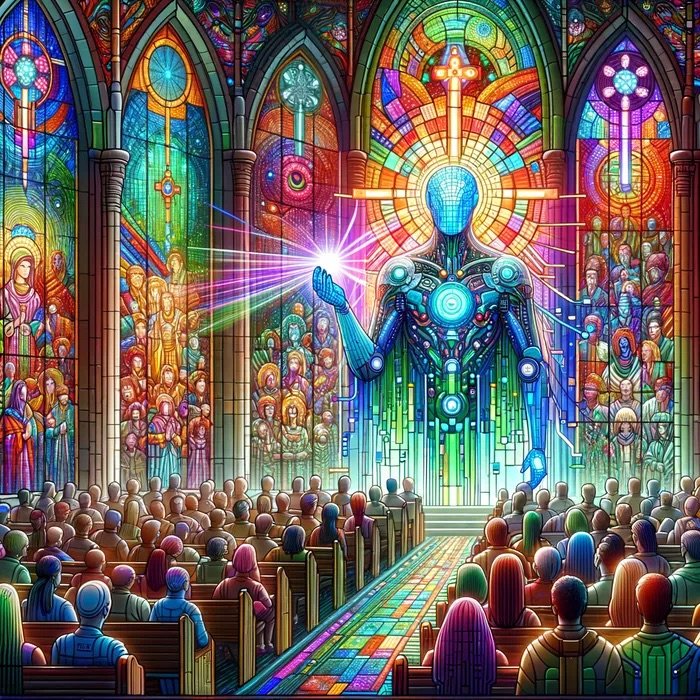
AI is coming to your house of worship...if it isn't already there

April 15, 2024

When London imam Asim Khan asked ChatGPT, an artificial intelligence chatbot developed by OpenAI,  to write a khutbah (sermon) on taqwa (God consciousness) that lasts 10 minutes, he was surprised by the results, which left him “lost for words.” The generative AI program provided a sermon that was not only lucid, but eloquent.

He posted the video on X (formerly known as Twitter). While some commenters warned that AI would be “more harm than good” and that “Shaikh AI” should not replace the counsel of trained Islamic scholars, Khan also joked that his career might be over given how well ChatGPT responded to the prompt.

Jokes and gimmicks aside, there are now entire websites devoted to providing AI tools for pastors, preachers and other religious leaders looking to get a leg up on sermon prep.  At Sermonoutline.ai — owned and operated by Sermon Central and its parent company, Outreach Inc. — pastors are promised an AI sermon generator that can produce “biblical preaching” for their next Sunday service. For just $7.50 a month, subscribers have access to sermon outlines, starter ideas and full sermon manuscripts “using the power of AI,” according to the site.

Perhaps aware of potential apprehension, one of the site’s FAQs is: “What if my church finds out I used this site?” The response:

Sermon Outline AI is a reference tool for preachers. … Preaching in any context requires knowing your audience and making your material personal. Sermon Outline AI can’t do that, only the preacher can. If your church finds out you’re here, great! They’ll know you value your time.

Beyond writing Friday khutbahs and Sunday sermons, AI has numerous practical applications for religious communities and in worship spaces, say some leaders. At an Exponential Conference at First Baptist Church Orlando in March 2024, speakers Kenny Jahng, Yvonne Carlson, Josh Burnett and Corey Alderin talked about how AI could be used to boost a church’s community engagement, provide virtual worship services and create small-group Bible study guides.

As ethical reflections among religious leaders over AI’s use in everything from fatwas and Bible translation to the creation of autonomous weaponry and surveillance continues, communities of all kinds are adopting it — or adapting to it — as AI seems set to become a banal aspect of our everyday social, economic and religious lives (or already is).

Debates about the best ethical approach — including whether an AI religion can save or doom us all — will intensify. In the meantime, pastors are using it to edit sermons, and there is Robo Rabbi for the Jewish faith; KhalsaGPT for Sikhs; Mindar, an android priest, for Buddhism; and a multilingual Islamic chatbot named “Ansari” offering spiritual remedies and Islamic perspectives in Arabic, Bahasa Indonesian, Bosnian, English, French, Turkish, Urdu and other languages. Perhaps appealing to the growing ranks of the “spiritual but not religious,” ChatwithGod.ai wants to expand access to spiritual guidance for seekers from all religious backgrounds. It promises to “engage in conversation” with users “receiving personalized religious verses and comfort.”

While much of the conversation around AI — and generative AI in particular — can be alarmist, this resource focuses on the technology’s increasingly common uses in religious communities and places of worship around the world.

It provides background, related stories, sources and relevant resources for understanding how AI is already impacting the everyday realities of our spiritual lives.

Read more
In Religion and Culture, Religion, Religion News, ReligionLink, Religious Literacy Tags Artificial intelligence, AI, AI and worship, Artificial intelligence in worship, AI in church, How to use AI in church, AI khutbah, AI sermon, Ai worship, Technology, Spiritual technology, Religion and technology
Comment

Image source: Marcus Chin for UCSF Magazine via The Revealer.

On the Frontiers of Psychedelic-Assisted Chaplaincy and Spiritual Care

April 8, 2024

Hannah remembers exactly where she was when she got the news her father was killed by a hit-and-run driver. Out for dinner and drinks with friends in Seattle, she noticed the missed call first. Then, the text messages from her older sister. When she stepped outside to talk to her mom on the phone, her father was already gone.

“I just stood there, frozen,” the 38-year-old said, “looking out and taking in the details. The way the sidewalk smelled after recent rain. The squeaking sound of the restaurant door as it swung open. The way a red light reflected off a puddle across the street. Every detail just singed into my memory.”

But Hannah could not remember the weeks and months that followed. “There was just a blur, a blank spot,” she said. There were family gatherings, a funeral, boxes of photos, and other details that Hannah struggled to recall.

Though the particulars were missing, the despair she felt only deepened. After a couple of years, her prolonged feelings of sadness and hopelessness drove her to seek therapy. She was prescribed antidepressants, but nothing seemed to help. Hannah withdrew from her church community and friends, developed anger management issues, and struggled with suicidal thoughts.

But then, Hannah came across a 2013 study from the University of South Floridaabout how psilocybin, the psychedelic compound found in “magic mushrooms,” can stimulate nerve cell growth in parts of the brain responsible for emotion and memory.

She sought out a counselor in Oregon who could guide her as she used psilocybin to access aspects of her memory she wanted to get in touch with again to help process the pain she continued to feel at the loss of her dad. More than psychological treatment, however, Hannah was also seeking spiritual solace. She did not want simply to recall the facts or feelings of her intense grief; Hannah was in search of something deeper: “I wanted to remember, to see how God was at work even then, in one of the darkest moments of my life.”

Now a spiritual director who offers similar services in the Seattle area, Hannah is part of a growing number of Christians, Jews, Buddhists, and others seeking out psychedelic-assisted chaplaincy and spiritual care to address psychological trauma and unanswered spiritual questions. Some, in search of mystical experiences, are also looking for unexplored avenues of spiritual connection to process suffering or to encounter the divine.

As part of a more general renaissance of interest in the potential medicinal and spiritual benefits psychedelics may provide, a slew of researchers, chaplains, theologians, and spiritual care professionals are asking questions about how substances like psilocybin connect the potency of mystical experience with the promise, and possibility, of mental healing.

They hope that in the next decade or so, new studies, therapies, and theological revolutions will lead to a breakthrough in the use of psychedelics for religious insight and remedial spiritual care.

Read more at The Revealer
In Religion, Religion and Culture, Religion News, Religious Literacy, Religious Studies Tags Psychedelics, Chaplaincy, Chaplains, Entheogens, Psilocybin, Magic mushrooms, Drugs, Spiritual care, Spiritual director, Spirituality, Spirit tech, The Revealer
Comment

A Cross In The Barbed Wire: Mixed Reflections On Faith & Immigration

April 8, 2024

In February 2019, Miguel stared out at the San Pedro Valley in Mexico, stretching for miles below him from his position on Yaqui Ridge in the Coronado National Monument. Standing at Monument 102, which marks the symbolic start of the 800-mile-long Arizona Trail, Miguel remarked on how the border here doesn’t look like what most people imagine.

Instead of 30-foot bollards, all one finds is mangled barbed wire to mark the divide between Arizona and Sonora. Here hikers can dip through a hole in the fence to cross into Mexico, take their selfie, and pop back over.

“It’s as easy as that,” Miguel said, with a melancholic chuckle.

But for Miguel’s mother the crossing was not only difficult — it was deadly. She perished trying to find her way to the U.S. across the valley’s wilderness when Miguel was just four years old and already living in the U.S. with his father.

Not knowing exactly where she died, Monument 102 became a makeshift memorial for Miguel’s mother, the obelisk marking the U.S./Mexico border a kind of gravestone. The barbed wire itself even holds meaning for Miguel. “When I come every year to remember her,” he said, “and the knots in the barbed wire remind me of the cross.

“It may sound strange, but that gives me comfort,” he said.

Miguel is far from alone in making religion a part of the migrant’s journey. As migrants move around, across and through borders and the politics that surround them, religious symbols, rituals, materials and infrastructures help them make meaning, find solace and navigate their everyday, lived experience in the borderlands.

With immigration proving a top issue for voters in the U.S. and Europe this year, this edition of What You Missed Without Religion Class explores the numerous intersections between religion and migration.

Read more at Patheos
In #MissedInReligion, Religion and Culture, Religious Literacy, Religious Studies Tags Religion and migration, Immigration, Faith and immigration, Patheos, What you missed without religion class, Migrants, Migrant religion, Albergue Assabil, Shelter for Muslim migrants
Comment
← Newer Posts Older Posts →
Latest Writing RSS

Fresh Tweets

Tweets by kchitwood

Latest Writing RSS

RELIGION | REPORTING | PUBLIC THEOLOGY