• Home
  • About
    • Overview
    • Borícua Muslims
    • Engaged Spirituality
    • The Muslims of Latin America and the Caribbean
  • Contact
Menu

KEN CHITWOOD

Religion | Reporting | Public Theology
  • Home
  • About
  • Books
    • Overview
    • Borícua Muslims
    • Engaged Spirituality
    • The Muslims of Latin America and the Caribbean
  • Contact
“The person who knows only one religion, knows none”
— Max Müller

This ain't your mama's paganism: understanding modern witchcraft, nature religions and ‘neopaganism’

April 5, 2022

As part of sweeping transformations in American religion and renewed interest in New Age spiritualities, modern paganism is tapping into a deep desire for self-empowerment, social engagement and reconnection with the natural world. 

Inspired by, or derived from, historical pagan and nature religions, modern paganism is an undeniably broad, collective category that covers a diverse range of groups that can differ greatly in belief and practice.

While Wicca and astrology have enjoyed a certain popularity for several decades, a wave of new publications has highlighted how personalized spiritual practices, home-brewed magic and shamanistic self-discovery are now enjoying their own renaissance. 

The latest edition of ReligionLink explores this new “neopaganism,” what some are calling a broader “re-paganization of religion.”

Learn more
In Religion and Culture, Religion News, ReligionLink, Religious Literacy Tags Paganism, Modern paganism, ReligionLink, Religion News Foundation, Religion News, Re-paganization of religion, Pagan religion, Wicca, Witchcraft, Tarot, Ashatru, Norse Reconstructionism, New Age, Heather Greene, The Wild Hunt
Comment

Going Hungry for God: Why Do People Fast?

March 31, 2022

“I wonder what it would be like to fast in Siberia,” my friend Mohammed asked.

Mohammed had always enjoyed Ramadan in the company of family and friends in Jordan — a Muslim-majority country in the Middle East. He was curious what it might be like to fast in places where Muslims were in the minority or where daylight hours extended late into the night, extending the fasting period beyond the limits he was used to.

According to Islamic tradition, fasting is required during Ramadan, the ninth month of its lunar calendar. In 2022, Ramadan is likely to start on April 2. For thirty days, those fasting are obligated to abstain from drinking, eating, or engaging in other indulgent activities (like sex, smoking, and activities considered sinful) from just before sunrise to sunset. Depending upon where you are in the world, that can mean fasting 10 or up-to-21 hours. It was the idea of fasting for such a potentially long time that prompted Mohammed’s ponderous question about fasting in Siberia.

Muslims are far from the only religious actors who fast. Bahá’ís fast during daylight hours during the first three weeks of March in preparation for the Naw-Rúz Festival. As this post goes to press, Christians the world over are still in the midst of their Lenten fasts and looking forward to Easter. Jews fast as part of Yom Kippur — the Day of Atonement — as a means of repentance and solemn preparation. Some Hindus regularly practice fasting as a means of willful detachment and devotion.

With such a wide range of similar aesthetic practices, one might wonder: why do so many different religious people choose to go hungry for god?

Read my latest post at Patheos
In #MissedInReligion, Religion and Culture, Religious Literacy, Religious Studies Tags Fasting, Ramadan, Going hungry for God, Patheos, Ken Chitwood, What you missed without religion class, Why do people fast?, Aesceticism, Asceticism
Comment

Did Muslims discover the "New World?"

March 14, 2022

Don’t you know that Muslims were the first to discover the New World?”

This is how Sheikh Youssef kicked off our conversation in Vega Alta, Puerto Rico. I was conducting research on Islam and Muslims in Puerto Rico and he wanted to make sure that I knew one thing before I went any further in my investigations. He quickly followed his initial incredulous question with a bold claim: “Muslims came here long before Columbus and Cortes and all the rest,” he said,“they were the first to come here and they did not colonize or destroy the place. That’s the difference between us and them.”

Sheikh Youssef is not alone in his reading of history. Far from it. Instead, his remarks reflect a widely held belief among Muslims — in the Americas and elsewhere — that long before Europeans set foot in Latin America, the Caribbean, or elsewhere in the American hemisphere, there were Muslim navigators, explorers, and settlers who arrived on these shores and who left evidence of their presence in maps, records, language, and cultural artifacts.

In the second chapter of my recent book The Muslims of Latin America and the Caribbean, I explore the claims, stories, the supposed evidence that supports them, and the ways in which Muslims utilize them as a means of claiming space and authenticity in the Americas today. 

Based on the available evidence, there is no reason to lend theories of “Muslim first contact” any credence or historical credibility.

And yet, the claims remain historically significant because they are just that: claims.

Before we can deal with the documented historical evidence about Muslims in the Americas arriving alongside and after European colonizers, it is important to first address claims such as Sheikh Youssef’s.

As evidence of pre-Columbian Muslim “discovery” of the “New World,” various advocates of the theory raise up the following:

  • Maps from the likes of Abu al-Hasan Ali ibn al-Husain al-Mas‘udi, Abu Abdullah Muhammad al-Idrisi al-Qurtubi al-Hasani as-Sabti (better known as al-Idrisi), or Ahmed Muhiddin Piri (better known as Piri Reis) that hint at lands and peoples beyond the Atlantic.

  • Pre-Columbian inscriptions, explorers’ accounts, and supposed linguistic parallels that point to West African presence in the Americas.

  • Secondary sources written by the likes of Leo Weiner (Africa and the Discovery of America) or Barry Fell (Saga America), neither of whom were trained historians.

Although the evidence is spurious — and the claims effectively erase the accomplishments of the Americas’ indigenous peoples and civilizations — the reference of it affords an opportunity to consider why it is that so many different cultures and countries claim that they were the ones to “discover” the Americas in in the first place.

In my book, I suggest that although the claims lack scientific proof, it is not in architecture, society, or genealogy that we should begin thinking about Islam and Muslim communities in the Americas, but in the realm of ideas, identifications, and historical claims. 

Whatever it is that is remembered in this narrative of Muslim first contact, it is not verifiable facts, or in any case not just facts. Claims of first contact are an attempt to underscore fluctuating, marginalized, and uncertain identities with historical primacy and critique those who are able to control the narrative of a region’s identity and history. In the case of the Americas, it is a means of pushing back against Eurocentric (and predominately Christian) frames that dominate our understanding of the hemisphere.

Even though the claims are not true, they illustrate the ongoing importance of the Americas in the global Muslim imagination and the ongoing importance of discussing and debating the place of Islam in the Americas. In the end, I suggest that these claims are less about confirming pre-Columbian Muslim presence in Latin America and the Caribbean and more about claiming the region as their own today.

Thus, any assessment of these claims needs to not only examine the available evidence, but perhaps more poignantly, explore the claims’ contemporary significance for Muslims across the hemisphere.

Fictions can be full of useful truths that do real work in the world, even though they are not true. To craft a sense of identity, of belonging, takes more than facts, it takes faith. To belong is, in a sense, to believe in more than what is simply historical fact. While we must distinguish between fact and fiction — and critique the myths we know we are making — we cannot dismiss fictions that take on a truth of their own in the lives of those who believe them, claim them to be true, and advance them as historical fact.

Read more in The Muslims of Latin America and the Caribbean
In Books, Religion and Culture, Religious Literacy Tags Muslims in Latin America, Muslims in the Caribbean, Muslims discovered America, Christopher Columbus, Did Muslims discover the New World?, Did Muslims discover America?, New World, Mansa Musa, Piri Reis, Al-Idrisi, Al-Masudi
2 Comments

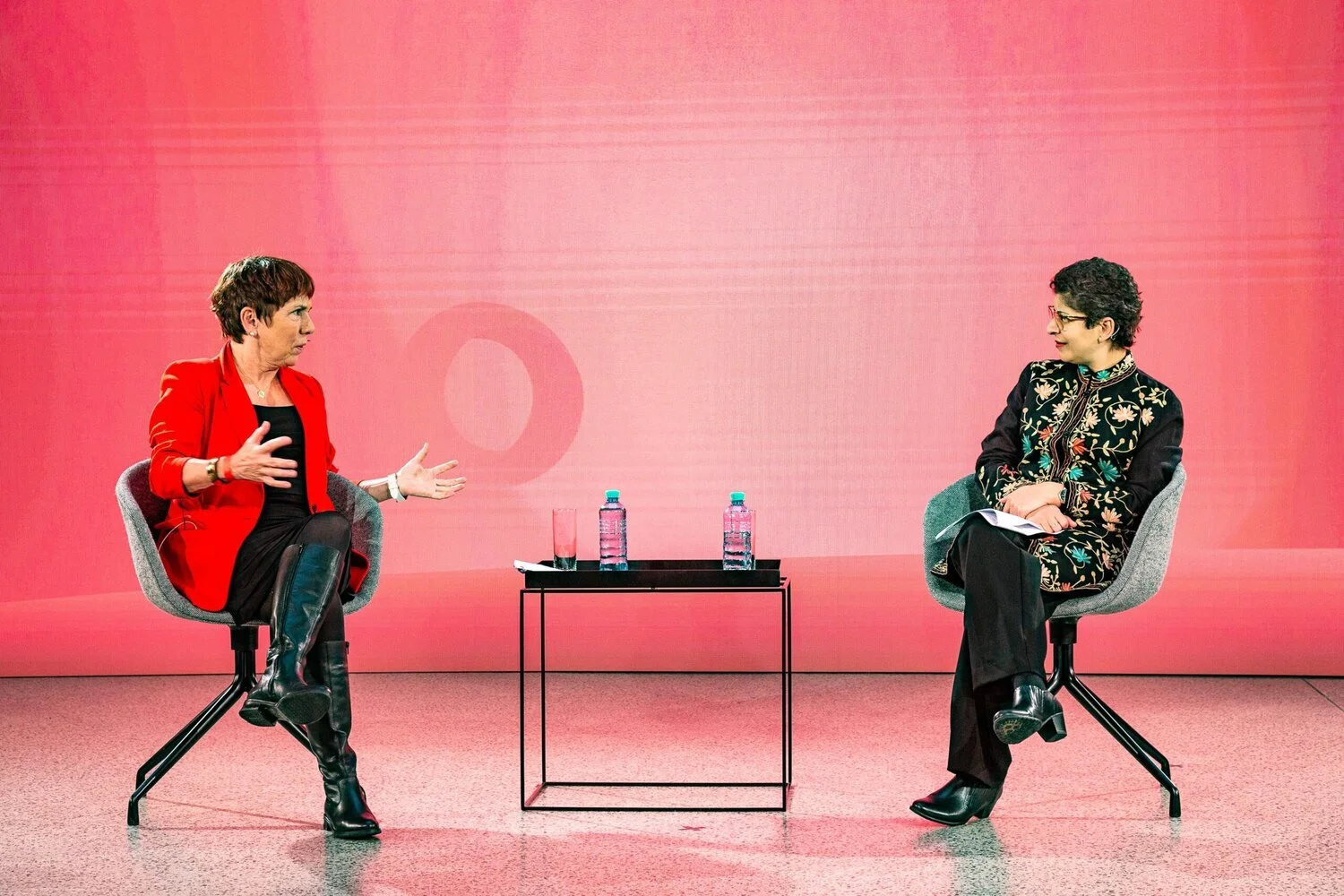
Image courtesy KAICIID International Dialogue Center.

Raising up women's voices across religious traditions

March 8, 2022

Women and girls are effective and powerful leaders and peacemakers, often playing a critical role in religious traditions across the world.  At the same time, and despite advances in gender equality, women and girls still face hurdles when it comes to having a voice in local, regional, and international religious bodies. 

On the occasion of International Women’s Day, I am sharing a few select stories that reflect how women and girls are involved in interreligious dialogue initiatives across the globe, and how their participation and leadership results in substantial and positive change. 

I invite you to explore their diverse experiences and critical perspectives on the opportunities, as well as the constraints, women and girls continue to face.

Alissa Wahid

The work of the Gusdurian Network Indonesia

Azza Karam

The Role Of Women In Faith And Diplomacy

Ela Gandhi

Serving humanity from a Gandhian perspective

KAICIID Women

Reflecting on Women’s Role in Interreligious Dialogue

In Interreligious Dialogue, Religion and Culture, Religion News, Religious Literacy Tags Women, Women Faith and Diplomacy, Women of faith, Muslim women, Religious women, Women and IRD, Women and interreligious dialogue, International Women's Day, Religion and International Women's Day
Comment

What is "Religion" Anyway?

March 3, 2022

In 2013, the Disciples of the New Dawn started posting highly offensive memes on Facebook. They attacked everyone from Pagans and steampunk fans to women who had C-sections.

Tapping into fears about religious fundamentalism and public obsession with “cults,” their vitriolic posts went viral.

As the posts were shared with increasing frequency, some started to wonder whether Disciples of the New Dawn were a real religious community or just a cabal of internet trolls goading us into digital outrage (it turns out, they were the latter).

When I teach courses on religious studies, I like to use the case of the Disciples of the New Dawn as an opportunity for students to wrestle with the concept of religion itself. It prompts them to consider questions like: what makes a religion real? Or, what makes a religion ”religious” at all?

While we may feel like “we know religion when we see it,” we generally struggle to be exact when it comes to determining what counts as religion. Even if we have a vague idea, defining religion feels like pinning jello to a wall.

Which makes things difficult. Because, before can begin to dig deeper into the topic of religion, we first have to define the object of our study.

So, what is this thing we call “religion” anyway?

Read more at Patheos
In #MissedInReligion, Religion, Religion and Culture, Religious Literacy, Religious Studies Tags Religion, Religious studies, Patheos, What you missed without religion class, Ken Chitwood, Defining religion, Disciples of the New Dawn, Hyper-real religions
1 Comment
Woman studying with books.

PHOTO: by Jeswin Thomas on Unsplash.

What you missed without religion class...

February 10, 2022

Odds are, you never took a “religious studies” class. 

If you did, it was probably a confessional course on a particular faith tradition. Maybe it was a unit in your high school’s social studies curriculum. At best, you took a “world religions” survey at college. 

Despite their benefits, none of these gave you the right tools to study religion. 

Which is weird, when you think about it. 

Because “religion is arguably the most powerful and pervasive force in the world.”

When I studied religion at the University of Florida, I learned that knowing something about religion helps us understand heaps about the world. Religious studies is about more than studying individual religions, but how religion functions as part of politics, science, economics, and society at large. 

As a scholar, newswriter, and wayward pastor, I’ve come to appreciate religious studies even more. I believe a basic literacy in “religion as part of the human experience” is key to having informed perspectives on modern life. 

In other words, I think you missed a lot without religion class. 

“What You Missed Without Religion Class” is here to help, demystifying the study of religion and discussing religion’s role in contemporary society.

Read more at Patheos
In #MissedInReligion, Religion, Religion and Culture, Religious Literacy, Religious Studies Tags Religion class, Religious literacy, Patheos, Religious education, Religious studies, Why study religion, What you missed without religion class
1 Comment

Photo: Marcel Melus via Unsplash.

Who are the exvangelicals?

February 8, 2022

Coined by Blake Chastain in 2016, the term “exvangelical” — or “exvie” — has come to encompass a wide range of individuals who have left evangelicalism, especially white evangelical churches in the U.S. 

Skeptical of institutions and unimpressed with status quo American Christianity, some have turned their back on religion. Others actively campaign against what they see as its abuses. Still others adopt more progressive versions of Christianity or simply do not self-identify as “evangelical” any longer, opting instead to go on a quest of self-discovery and deconstruction. Through hashtags such as #emptythepews, popular TikTok channels and a range of new platforms and publications, they are leaving loud, speaking out against evangelicalism on matters of politics, gender and race.

The latest edition of ReligionLink provides you with a range of resources and potential sources to understand how American Christianity’s traumas and political entanglements have triggered a crisis of faith for many.

Read the latest religionlink here
In Religion, ReligionLink, Religion News, Religion and Culture, Religious Literacy, Church Ministry Tags ReligionLink, Exvangelicals, American evangelicalism, American evangelicals, White evangelicals, Racism, Exvies, Blake Chastain, #emptythepews
1 Comment

Via NewLines Magazine: A Muslim man offers prayer on the occasion of Eid al-Fitr at a local mosque in Port-au-Prince, on June 5, 2019 / Chandan Khanna / AFP

Black Muslims' Enduring Legacy in the Americas

January 25, 2022

In St. Philip parish, on the easternmost tip of Barbados, there is a small, one-room, yellow and green “musalla.” With chipped, white wooden shutters, the prayer space looks like a mix between a chattel house and a beach kiosk, with accents of Islamic architectural flair.

Said to have been built by a local Black convert by the name of Shihabuddin at the front of his family residence, the room can fit six, maybe seven prayer rugs. Alongside four mosques, an academy, a research institute and a school, Shihabuddin’s musalla continues to act as a site of community connection for Muslims in the Caribbean island nation, despite Shihabuddin’s passing.

When one thinks of global Islam’s “representative sites,” as literary scholar Aliyah Khan calls them, images of grand mosques and significant shrines in Saudi Arabia, Palestine, Mali or Pakistan might immediately come to mind. And well they should. Yet, to overlook places such as Shihabuddin’s musalla — and other Islamic centers across the Caribbean, Latin America, the U.S. and Canada — as nodes in Islam’s worldwide networks would be to do a vast disservice to the numerous Muslims who call the hemisphere home.

In particular, it would be to sideline the significance of Black Muslims like Shihabuddin.

Beginning with the first Muslim to arrive with the Spanish in the 16th century, Black Muslims have been part of the American story, navigating enslavement, inequality and numerous other misrepresentations and marginalizations in the region for 500 years.

Today, their enduring legacy influences tens of thousands of Muslims across the region and around the globe.

Read the whole story at New Lines Magazine
In Religion and Culture, Religion, Religious Literacy, Religious Studies, Travel Tags Black Muslims, Shihabuddin, Musallah, Mosque, Islam, Muslims, Muslims in the Americas, Muslims enslaved, Muslim slaves, Barbados, Bahamas, Trinidad
1 Comment
Berkach’s mikveh — ritual bathing house — once mislabelled “Jewish swimming pool.” (PHOTO: Ken Chitwood)

Berkach’s mikveh — ritual bathing house — once mislabelled “Jewish swimming pool.” (PHOTO: Ken Chitwood)

The Little-Known Jewish History in the Heart of Germany

September 2, 2021

Berkach lies in the bucolic borderlands between the German states of Bavaria and Thuringia. Formerly divided by the hard boundary between former East (GDR) and West Germany, the one-time international frontier is now marked by an old watch tower, about a half mile outside the village.

But I’m not in Berkach today to chronicle its accounts of living on the fringes of the former GDR. Instead, I’m here to discover another significant aspect of the hamlet’s history, its once robust and significant Jewish life. 

As Germany looks back on 1,700 years of Jewish life in the country, dating back to a decree in Cologne in 321 they are recalling Judaism’s long, if complicated, history in central Europe. 

Visiting sites like Peter Eisenman’s Memorial to the Murdered Jews of Europe in Berlin or renowned Jewish museums in Frankfurt, Berlin, or Munich, one gets a sense of the enormity of what was lost in the Holocaust — in human lives, in culture, in knowledge, in history and heart. 

Yet, despite the ways each institution seeks to personalize the ambivalence of German Jewish life over the years, there is an intimacy and immediacy that is missed if those are the only places one goes. 

To get a sense of the absent presence that Germany continues to wrestle with, one must also explore smaller, provincial places like Berkach. 

Learn more about Berkach & its Jewish history
In #MissedInReligion, Religion and Culture, Religion News, Religious Literacy Tags Jewish life, Jewish life in Germany, Judaism, European Judaism, Holocaust, Mikveh, Berkach, Mühlhausen, Patheos, Germany
Comment
Photo by Noah Holm on Unsplash.

Photo by Noah Holm on Unsplash.

A Holy Calling: Dealing with Diversity Every Day

August 3, 2021

On a recent trip to Sweden, some friends asked me about my work as a theologian, pastor, religion newswriter and scholar.

They were, understandably, a bit confused about how it all fit together. To be honest, sometimes so am I!

They were also a bit concerned.

How do I avoid a conflict of interest as a journalist? How do I deal with my outsider status as an ethnographer working with Muslim minority communities? How do I reconcile my interreligious encounters with my calling as a theologian?

Great questions.

Last month, Cristina Ochoa interviewed me for the ATLA (American Theological Library Association) blog. To say the least, I was pretty excited. The ATLA — a membership association of librarians and information professionals, and a producer of research tools, committed to advancing the study of religion and theology — often featured in my early theological research at Concordia University Irvine and I continue to use its tools today.

The result is an exploration of how my various vocations work together. It’s also a look into how I see my efforts as a religion scholar, newswriter, and theologian as part of a larger calling toward advancing religious literacy.

Read the full interview here
In Interreligious Dialogue, Religion News, Religious Literacy, Religious Studies, Church Ministry Tags Vocation, ATLA, Theologian without borders, Religion scholar, Theologian, Newswriter, Journalist, Cristina Ochoa
Comment
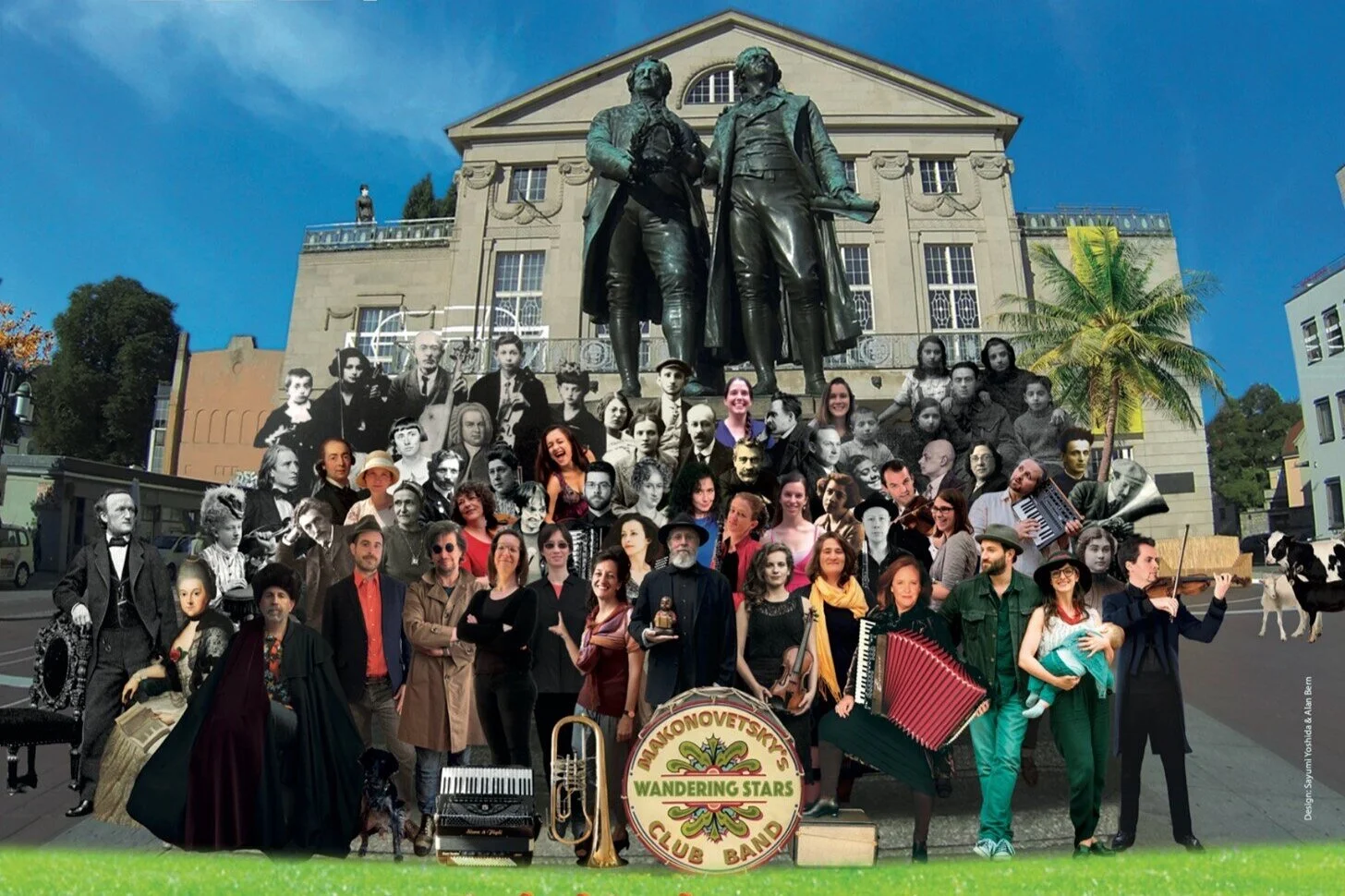
212240111_2676457632653303_6972110733926716022_n.jpg

Weimar: The Capital of Contemporary Yiddishland?

July 19, 2021

In a clear homage to the Beatles’ 1967 “Sgt. Pepper’s Lonely Hearts Club Band” album cover and its wonderful whirl of colorful visuals, the poster for this year’s Yiddish Summer Weimar (YSW) festival features a menagerie of cut-out visages: from Johann Sebastian Bach and Johann Wolfgang von Goethe, to wandering cattle and a bedecked bass drum reading, “Makonovetsky’s Wandering Stars Club Band.”

Together, the collage symbolizes the transcultural and time-spanning story of Yiddish culture and music — its progenitors and critics, its historical influences and contemporary performative interpreters.

At the center of it all stands Alan Bern.  

Bern playing the accordion. PHOTO: Yulia Kabakova, courtesy of Alan Bern

Bern playing the accordion. PHOTO: Yulia Kabakova, courtesy of Alan Bern

The Bloomington, Indiana-born composer, musician, educator and cultural activist made his way to Berlin, Germany in 1987. There, he helped found Brave Old World, a band described by The Washington Post as the first “supergroup” of klezmer music’s contemporary revival movement.

Klezmer music is an instrumental tradition of Ashkenazi Jews of Europe. Simply meaning “musician,” the word “klezmer” reflects, and conveys, its broader Yiddish roots.

A spoken language of a considerable portion of Ashkenazi Jews for centuries, Yiddish emerged in 9th-century Europe as a mix of German vernacular, written Hebrew, and Aramaic, Slavic, and Romantic linguistic influences and vocabulary. Meaning “Jewish” in the language itself, Yiddish is also the vehicle for a rich culture heritage of everyday Jewish life and celebration: proverbs, humor, idioms and music.

Over the last 30-odd years, klezmer – and Yiddish language and culture in general – has been enjoying quite the comeback.

Knoblauch Klezmer Band · Moustache

In the midst of this rejuvenation, Bern and Brave Old World were invited to conduct a workshop on Yiddish music in the central German city of Weimar as part of the European Summer Academy in 1999. The workshop was a wild success and Bern became the founding artistic director of what is now known as YSW — a five-week summer institute and festival for the study, creation and performance of Yiddish culture and music in the heart of Germany.

Today, it is one of the most widely recognized programs for the renewal of Yiddish culture in the world, receiving awards from the European Union and the German Music Council, among others. In 2016 Bern was awarded the Weimar Prize in recognition of his significant cultural contributions to the city.

For Bern, YSW is about more than showcasing Yiddish music; it’s about exploring Yiddish culture as a complex, and continually evolving, convergence of European and non-European customs. It’s also about empowering people for creativity and connection on a continent evermore marked by diversity and difference.

Read the full story at religion unplugged
In Religion and Culture, Religion News, Religious Literacy, Religious Studies, Travel Tags Yiddish Summer Weimar, Klezmer, Klezmer music, Alan Bern, Yiddishland, Germany, Holocaust, Judaism, European Judaism
Comment
Neighbors_of_Faith_Podcast_Logo6cf6k_300x300.png

The Value of Interreligious Engagement

June 22, 2021

While I was long interested in getting to know people of faith traditions other than my own, it was probably during my time serving at Arizona State University (ASU) that I came to appreciate the true value of interreligious engagement.

Working together with imams, rabbis, pastors, and leaders as part of the Council of Religious Advisors (CORA) at ASU, I learned how important it was for people of multiple faiths to cooperate for the sake of good will and dialogue on college campuses.

That’s why it was a true joy and special honor to be a guest on the “Neighbors of Faith” podcast, hosted by Rev. Bart Loos. Bart is a friend and colleague from SoCal, who currently serves at the University of California Los Angeles (UCLA). As part of his wider efforts there, he launched a podcast that puts him in conversation with leaders and learners of different religious traditions.

In this episode, we talk about the why, what, and how of interreligious engagement as I share some stories and insights from my work in that realm over the last decade.

Listen to the podcast here
In Interreligious Dialogue, Religious Literacy Tags Neighbors of Faith, Bart Loos, UCLA, ASU, CORA, Council of Religious Advisors, Interreligious dialogue, Interreligious engagement, Interfaith engagement
Comment
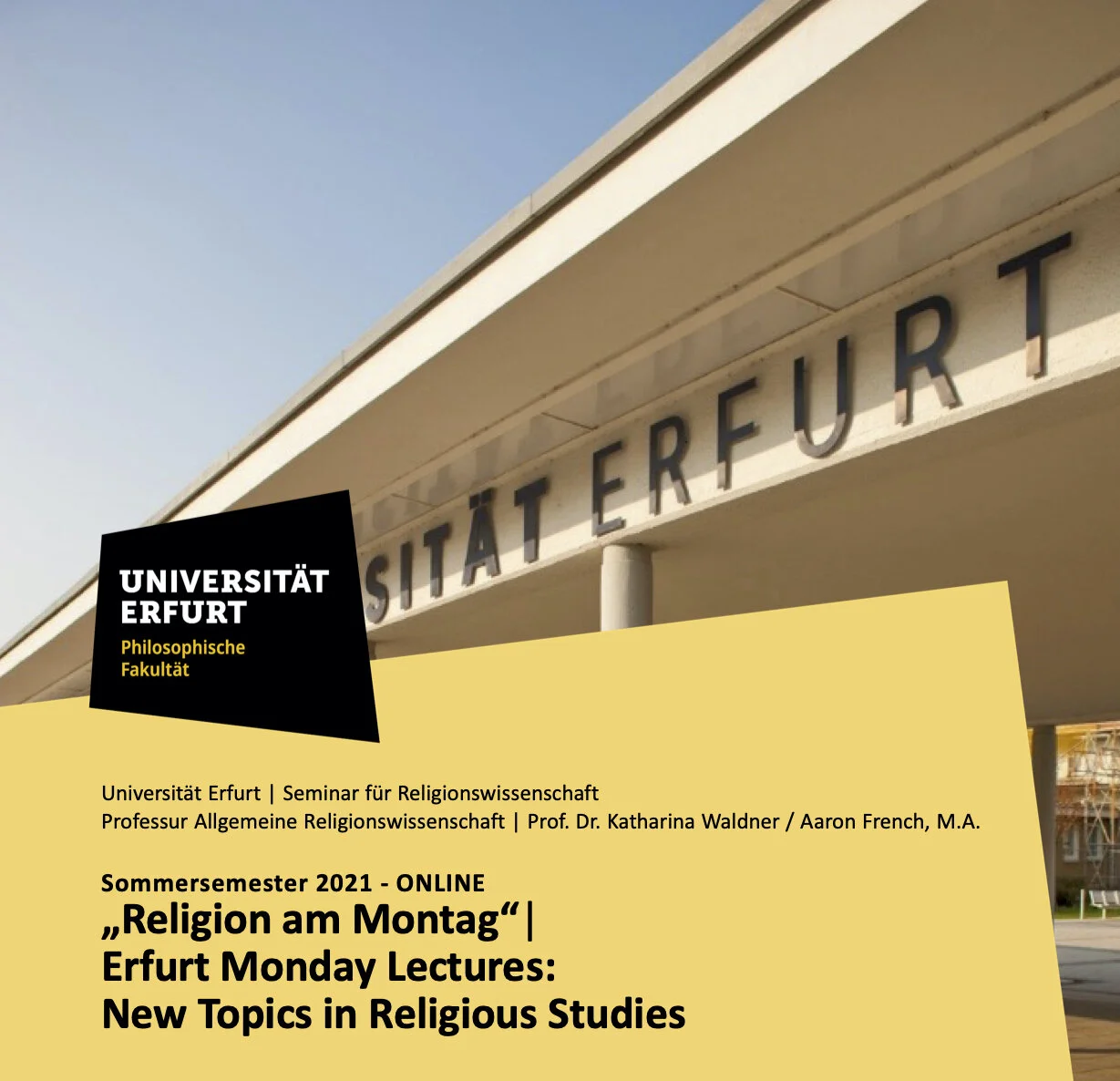
Monday_Lectures_.jpg

Public Lecture: What hath ethnography to do with religion journalism?

June 17, 2021

Diversity and difference continue to pose a pronounced challenge to the public understanding of religion.

For decades, both religion scholars and journalists have striven to address religious pluralism and advance religious literacy through a range of critical research and explanatory reporting. One shared aspect between them has been the use of immersive techniques in order to offer more nuanced, contextual, and longform narratives of the miscellany of religious traditions.

On the one hand, ethnographers of religion have produced textured analyses of religious individuals, socialities, rituals, and material cultures, further refining and complicating our understanding of what “religion” is and how it is lived in particular places. On the other hand, some religion newswriters are afforded the opportunity to take deep dives into religious actors’ lives and contexts and tell their stories in popular fashion via features, podcasts, and video stories.

Despite their differences, qualitative religious studies scholarship and religion journalism have more in common than usually acknowledged.

As part of the series "Erfurt Monday Lectures: New Topics in Religious Studies” at the University of Erfurt, I will share some insights and reflections as both an ethnographer and a journalist and how my research and reporting on religion has led me to explore questions related to the ethics, norms, and aesthetics of both fields and how they might work together to shine light on how religion and spirituality function in the lives of religious actors and socialities in a diverse array of locales and from multiple points of view.

The event will be Monday, 21 June 2021 at 5:00 pm Central European Time (11:00 am EDT/8:00 PDT). You can learn more about the event HERE, register ahead of time via e-mail, or simply attend the event at the link below (requires WebEx software).

If you have any questions, be sure to reach out to me as well: k.chitwood@fu-berlin.de.

Attend the event
In Religion, Religion and Culture, Religion News, Religious Literacy, Religious Studies Tags Uni Erfurt, Religion am Montag, Ken Chitwood, Religion journalism, Religion news, Ethnography, Ethnography of religion, Religionswissenschaft, Religious studies
Comment
PHOTO: Courtesy KAICIID.

PHOTO: Courtesy KAICIID.

Health Concerns in Religious Communities: Challenges and Approaches

June 15, 2021

During the course of the pandemic, religious leaders have often found themselves on the frontlines of the global health crisis. In addition to adapting rituals to new norms of social distancing and digital worship, religious leaders became humanitarian aid providers, medical responders, and local information experts.

Now, as the world focuses on vaccine rollout and returning to some sense of normalcy in the months and years to come, religious communities and leaders, as with society at large, have to confront challenges posed by mistrust of science or government, vaccine disinformation, and concerns. In some quarters over whether the vaccine aligns with religious values and law.

At an April 2021 workshop Sarah Hess, Sally Smith, and Melinda Frost of the Information Network for Epidemics (EPI-WIN), Health Emergencies Programme at the World Health Organization (WHO) shared their insights on the importance of working with religious communities during the crisis. They also shared some tools and best practices for religious communities to confront this all-embracing global health emergency.

Learn more about how religious communities can effectively address health emergencies
In Interreligious Dialogue, Religion and Culture, Religious Literacy Tags Global health emergency, Religion and medicine, Religion and science, Religion and health, COVID-19, Religion and COVID-19, KAICIID, World Health Organization, Information Network for Epidemics, Sarah Hess, Sally Smith, Melinda Frost, KAICIID fellows
Comment

Respecting their holy places as our own

June 8, 2021

As fighting continues in the Tigray region of northern Ethiopia, both an historic church that claims to house the “Ark of the Covenant” and one of sub-Saharan Africa’s oldest mosques recently came under attack, with hundreds killed in the violence.

This is one example of how religious sites are becoming increasingly vulnerable. Muslims have been murdered in mosques, Jews assaulted in synagogues, Sikhs, Christians, and others killed at worship, and religious cemeteries and sites vandalised across the globe.

To help prevent such violence and promote peaceful consensus, the World Organization of the Scout Movement (WOSM) and the International Dialogue Centre (KAICIID) co-sponsored the “United in Diversity: Preservation of Cultural and Religious Sites” webinar on 12 May 2021.

Speakers addressed the responsibility of religious communities to address the protection of not only their traditions’ religious sites, cultural heritage, and historical experience, but also those of others.

Each underscored what United Nations Secretary General António Guterres wrote in his preface to the United Nations’ Plan of Action to Safeguard Religious Sites: “Religious sites and all places of worship and contemplation should be safe havens, not sites of terror or bloodshed.”

From focal points of conflict to “places of exchange”

The Plan of Action was part of the UN's response to the 2019 attacks against mosques in Christchurch, New Zealand, which caused the deaths of 51 people, said Dr. Paul Morris, UNESCO Chair in Interreligious Understanding and Relations at Victoria University of Wellington, New Zealand.

The attack illustrated how sacred sites can become symbolic vehicles for expressing hatred, Morris said.

“Religious sites play a role in collective identity, mobilising communities, and in individual and communal cohesion and well-being,” he said. At the same time, however, “they can also become focal points of conflict and terror,” he added.

Morris hopes that the UN Plan of Action will not only protect sacred sites, but enhance their roles as “meeting points” and “places of exchange.”

Religious sites are a living heritage, or “treasures” that can “foster dialogue and respect for diversity,” he added.

Protecting sacred heritage in Thailand and India

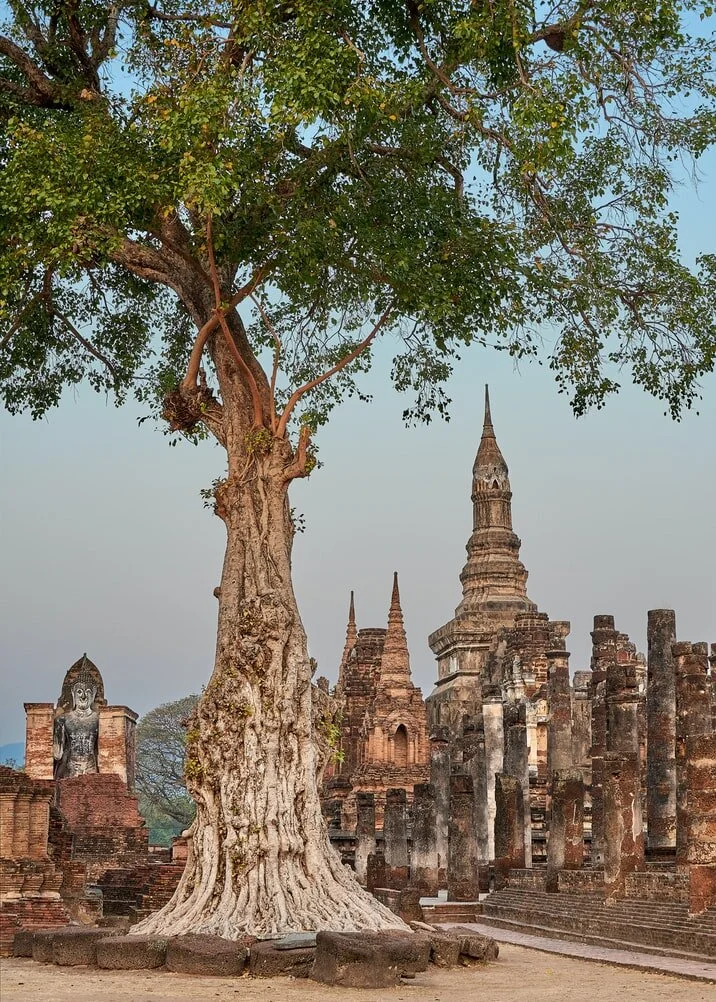
Lertchanta Ally Seeluangsawat, Scouts of the World Award (SWA) Coordinator for Thailand Kaengkrachan Riverside Scout Camp, shared with participants her experiences working with Scouts pursuing their SWA at Sukhothai, a historic town in the north of Thailand.

Sukhothai, the capital of the first Kingdom of Siam in the 13th- and 14th-centuries. (PHOTO: Peter Borter)

Sukhothai, the capital of the first Kingdom of Siam in the 13th- and 14th-centuries. (PHOTO: Peter Borter)

Scouts come to Sukhothai not only to learn about its history, but also to ensure its preservation: “They not only get information about a place, but also serve and help protect and sustain it,” she said.

Sukhothai – the capital of the first Kingdom of Siam in the 13th- and 14th-centuries – is one of the first UNESCO World Heritage Sites to benefit from the Scouts’ new World Heritage Recognition Achievement programme. The programme derives from a 2018 agreement between UNESCO and the WOSM through which Scouts learn to appreciate and help preserve World Heritage Sites globally.

Seeluangsawat explained that throughout the programme, she emphasises to the Scouts that Sukhothai is part of their heritage, towards which they owe a duty of care:  “I always tell them, ‘it is your duty to do something. If you do not do it, who will? If not now, when?’”

Scout Chetan Mogral's programme involves the preservation of a less tangible expression of heritage and tradition in India.

Mogral described how he works to preserve a sacred dance called barathyanatyam as well as a cultural folk fair known as Yakshagana. Together, they represent an important link between India’s past and present, he said.

“The protection of any kind of art — or site — is only possible when it is being passed on to the next generation,” said Mogral, “when people know the history and understand themselves as part of it.”

“Respect their holy places as our own”

Rabbi Ioni Shalom of the Latin American Jewish Congress told webinar participants that one of the greatest challenges involves learning to appreciate and protect the heritage of other cultures and religions as well as one's own.

DSC_0432.JPG

Ohel Jakob Synagogue in Munich, Germany. (PHOTO: Ken Chitwood)

 "If a place is sacred to someone else, how can I learn to have empathy with what someone else feels for that site? How can I appreciate why the ‘Other’ finds a place holy?” participants were told.

Shalom shared a story of his own journey of understanding in Israel and Palestine where he found in his interaction with Christians and Muslims along the way why they found places to be sacred through the prism of their own traditions: “Through the process, I not only learned how others felt, but we became friends,” he said.

“When you have this closeness to the other it is easier to understand, but also grow together,” he added. “So what happened there on that trip is that we not only understand the thinking of the other but also feel what the other felt.”

KAICIID Fellow Fatima Madaki closed the webinar by sharing how she attempts to achieve the same experience with Christian and Muslim youth in Nigeria.

Through “Building Consensus on the Protection of Holy Sites,” an interfaith peacebuilding project promoting the protection of holy sites from destruction and desecration in northern Nigeria, Madaki aimed to show participants how “places of worship need to be recognised as sanctuaries of peace for many.”

Madaki said she focused on helping people on both sides “know the value of what we are losing, that we are destroying more than a building.”

Through women and youth-led mentorship programmes, participants learned “that there is value in holding exchanges, working with one another, rather than against,” said Madaki.

“It is only if we experience and understand the ‘Other,’” said Madaki, “we can expand our perspective and respect their holy places as our own.”

In Interreligious Dialogue, Religion and Culture, Religious Literacy Tags Religious sites, Safeguarding religious sites, Holy places, United Nations Plan of Action to Safeguard Religious Sites, KAICIID, WOSM, World Organization of the Scout Movement, United in Diversity, Lertchanta Ally Seeluangsawat, Sukhothai, Chetan Mogral, Rabbi Ioni Shalom, Latin American Jewish Congress, Fatima Madaki
Comment
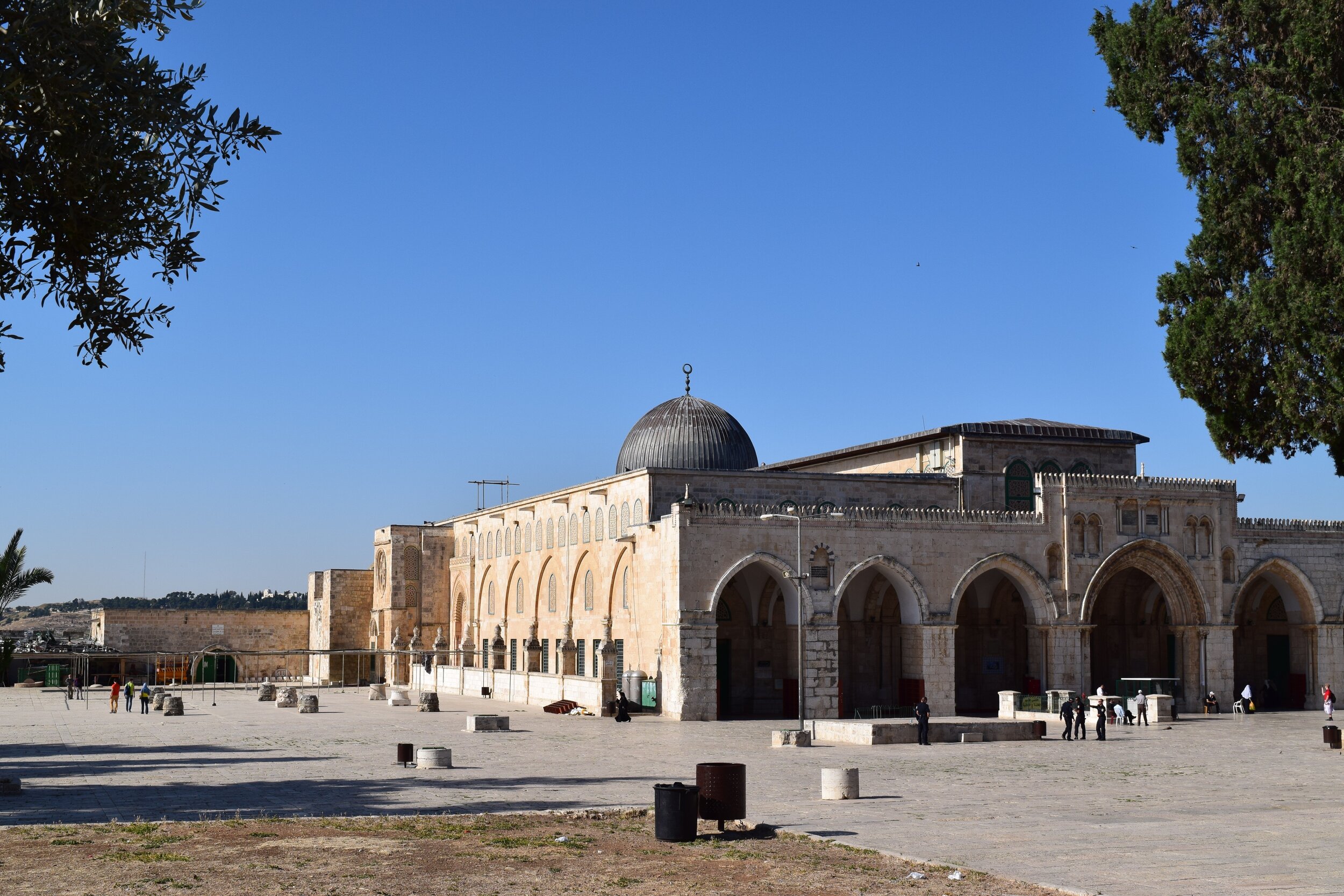
Masjid al-Aqsa, within the “Noble Sanctuary.” (PHOTO: Ken Chitwood)

Masjid al-Aqsa, within the “Noble Sanctuary.” (PHOTO: Ken Chitwood)

Why al-Aqsa mosque is so often the site of conflict

May 13, 2021

The violence that spread from Jerusalem to cities across Israel and the Palestinian territories, leaving at least 60 dead so far, has both historical and contemporary roots.

In recent weeks, tension has flared over the eviction of Palestinian families in Sheikh Jarrah, East Jerusalem, Israeli authorities blocking access to the important Damascus Gate plaza during Ramadan, and a march of thousands of Israeli ultra-nationalists through the city on May 6, 2021, in celebration of “Jerusalem Day,” which marks the capture of East Jerusalem in 1967. 

But the one incident that led to a significant escalation involved Israeli security forces firing rubber-coated bullets, tear gas and stun grenades at worshipers gathered at al-Aqsa mosque on May 7.

When I teach introduction to Islam, I include a discussion about al-Aqsa as part of the syllabus. That’s because Al-Aqsa has deep religious significance for Muslims around the world. But, it is also important to highlight its remarkable political relevance for Palestinians. These two facts often make it a focal point for conflict.

The night journey of Muhammad

The Masjid al-Aqsa, or simply al-Aqsa, means “the farthest mosque” or “the farthest sanctuary,” and refers to the lead-domed mosque within the sacred precinct of Haram al-Sharif – “the Noble Enclosure.” The precinct includes the Dome of the Rock, the four minarets, the compound’s historic gates and the mosque itself.

Mentioned in Sura 17, verse 1 of the Quran, the mosque is linked to the story of Muhammad’s Isra – the “night journey” from Mecca to Jerusalem – that in part confirms him as the last and most authoritative of the prophets for Muslims. The Quran says the prophet was “carried…by night from the Sacred Mosque [in Mecca] to the Farthest Mosque [al-Aqsa], whose precincts we have blessed.” 

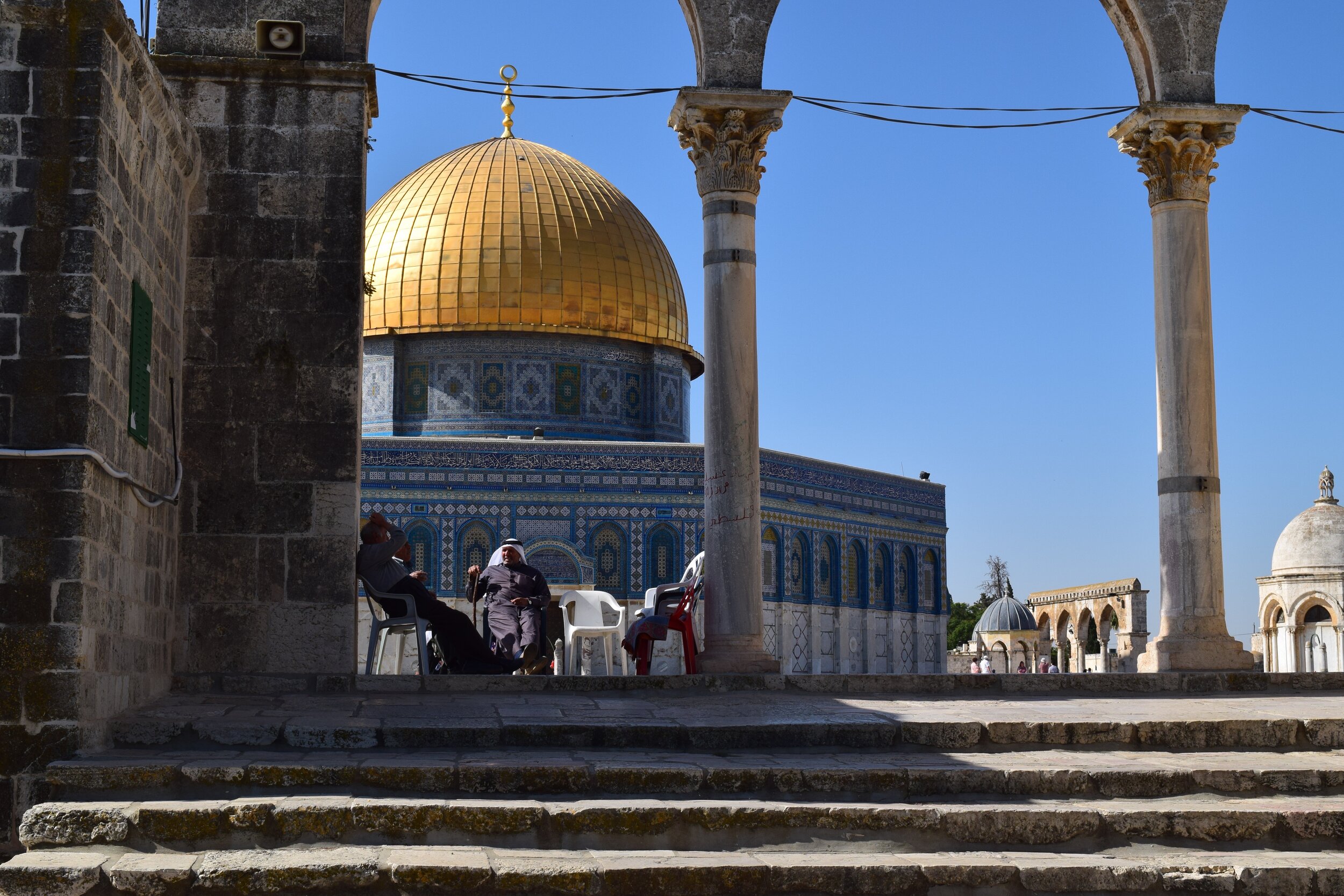
From there, it is believed that Muhammad ascended to heaven – called the Mir'aj. The Dome of the Rock – Qubbat as-Sakhra – is said to shelter the rock from where Muhammad physically ascended.

The mosque’s origins stretch back to the seventh century. It was first built in 637 C.E., just five years after the prophet’s death. It has been destroyed, rebuilt and renovated multiple times.

The current building largely dates to the 11th century and hosts daily prayers and Friday gatherings that draw large crowds. It lies adjacent to important Jewish and Christian religious locales, particularly the site of the First and Second Jewish Temples. 

At times, the Dome of the Rock – a shrine – and al-Aqsa – a mosque – have been confused as one and the same. While part of the same “Noble Sanctuary,” they are two distinct buildings with different histories and purposes. 

However, the term al-Aqsa is sometimes used to indicate the entire “Noble Sanctuary” complex. Originally, it is believed that the term “the farthest sanctuary” referred to Jerusalem as a whole. 

The Dome of the Rock, which shelters the rock from which Muhammad is believed to have ascended to heaven (PHOTO: Ken Chitwood)

The Dome of the Rock, which shelters the rock from which Muhammad is believed to have ascended to heaven (PHOTO: Ken Chitwood)

Place in Islamic history

After Mecca and Medina, the vast majority of Muslims worldwide consider Jerusalem the third holiest place on Earth. 

Referenced frequently in Islamic tradition and hadith – records of something the Prophet Muhammad said, did or tacitly approved of – it is believed that while in Mecca, Muhammad originally oriented his community’s prayers toward al-Aqsa.

In 622 C.E., the community fled Mecca because of persecution, seeking refuge in Medina to the north. After a little over a year there, Muslims believe God instructed Muhammad to face back toward Mecca for prayers. In Surah 2, verses 149-150, the Quran says, “turn thy face toward the Sacred Mosque [the Kaaba in Mecca]…wheresoever you may be, turn your faces toward it.”

Nonetheless, Jerusalem and its sacred locales – specifically al-Aqsa and the Dome of the Rock – have remained sites of Islamic pilgrimage for 15 centuries.

The ‘most sensitive site’ in conflict

Given its sacred significance, there was great concern about the precinct’s fate after Israel’s victory in the 1967 Arab-Israeli War and its subsequent annexation of East Jerusalem.

Although Israel granted jurisdiction of the mosque and complex to an Islamic waqf – “endowment” – Israel still commands access to the grounds and security forces regularly perform patrols and conduct searches within the precinct. Under the Preservation of the Holy Places Law, the Israeli government has also allowed entry to different religious groups – such as Christian pilgrims. 

Many Israelis respect the sanctity of the place as the holiest site in Judaism. In 2005, the chief rabbinate of Israel said it is forbidden for Jews to walk on the site to avoid accidentally entering the Holy of Holies - the inner sanctum of the Temple, God’s place of promised presence on earth. Nonetheless, certain ultra-Orthodox Jewish groups controversially advocate for greater access and control of the site, seeking to reclaim the historic Temple Mount in order to rebuild the Temple.

Described as “the most sensitive site in the Israel-Palestinian conflict,” it has frequently been host to political acts. 

Riot gear on hand near an entrance to the “Noble Sanctuary,” Jerusalem. (PHOTO: Ken Chitwood)

Riot gear on hand near an entrance to the “Noble Sanctuary,” Jerusalem. (PHOTO: Ken Chitwood)

For example, in August 1969, an Australian Christian named Dennis Michael Rohan attempted to burn down al-Aqsa, destroying the historically significant and intricately carved minbar – or “pulpit” – of Saladin, a treasured piece of Islamic art.

On Sept. 28, 2000, Israeli opposition leader Ariel Sharon and a delegation guarded by hundreds of Israeli riot police entered the precinct. This sparked protests and a violent crackdown by Israeli authorities, with multiple casualties. Many Muslims worldwide considered this a “desecration” of the sacred mosque, and the event helped ignite the Second Intifada, or Palestinian uprising. 

Tensions peaked again after an attack on Yehuda Glick, a controversial right-wing rabbi, in autumn 2014. In response, Israeli authorities closed down access to al-Aqsa for the first time since 1967. In March and April of that year, Israeli police used tear gas and stun grenades on Palestinians inside Al-Aqsa, prompting international outcry. 

Numerous other incidents between Israeli forces and worshipers have occurred at al-Aqsa in recent years. 

Controlled access to the site reminds Palestinians of their relative powerlessness in their ongoing land disputes with Israeli authorities. At the same time, attacks at al-Aqsa resonate with Muslims across the world who react with horror to what they see as the desecration of one of their most sacred sites. 

Defending al-Aqsa and fighting for rights to access it, I argue, have become proxy conflicts for both Palestinian claims and the need to defend Islam as a whole.

In Religion and Culture, Religion, Religion News, Religious Literacy Tags al-Aqsa, Dome of the Rock, Noble Sanctuary, Jerusalem, Palestine, Occupation of Palestine, Israeli-Palestine conflict
Comment
The 19th-century synagogue in Berkach, Germany. PHOTO: Ken Chitwood.

The 19th-century synagogue in Berkach, Germany. PHOTO: Ken Chitwood.

After 1,700 years of complicated history, Germany's Jews look to the future

May 7, 2021

Just a few steps down from Erfurt’s famous Krämerbrücke and its boutique shops, bespoke ice cream, and local charm, you’ll a mikveh (bath used for ritual purification) that dates back to the 13th-century. It’s a testament to the rich, and long, history of Jews and Jewish life in the central German city.

As I was standing in Erfurt’s mikveh a few weeks ago, I took a silent moment to reflect on the immensity of 900 years of Jewish history in the city.

Staring at the steps, I imagined the women who would descend them to bathe in the Gera river’s waters and wondered what their lives were like, what stories they could tell, what histories were embedded in the dusty sandstone and murky water of the memorial right in the midst of Erfurt’s old town.

I was humbled by the immensity of that history, the honor of standing in such a space and being given the opportunity to share such stories.

Mühlhausen citizens Nancy Krug, Pastor Teja Begrich, and Dr. Antje Schloms, pictured here in the town’s 19th-century synagogue, are part of honoring the history of Jewish life in the city. PHOTO: Ken Chitwood.

Mühlhausen citizens Nancy Krug, Pastor Teja Begrich, and Dr. Antje Schloms, pictured here in the town’s 19th-century synagogue, are part of honoring the history of Jewish life in the city. PHOTO: Ken Chitwood.

Thankfully, there are plenty of opportunities to learn about Jewish history in Germany — from well-known museums and monuments in Frankfurt and Berlin to lesser-known, but equally valuable, synagogues in places like Mühlhausen and Berkach.

But for this piece, I wanted to learn about more than history. And so, I spoke to Jewish leaders, researchers, historians, and other experts to learn what their history can tell us today and what Jewish life looks like in Germany now and in the near future.

The result is my latest piece with Religion News Service: “Germany celebrates a historic milestone of Jewish culture — while looking forward.” 

Read the full story here

*Many thanks go to the various people I spoke to for this piece. I am working on a couple of other articles related to this research, but for now I wanted to mention all the people who contributed background, provided coordination, or otherwise assisted with this piece: Kristin Luther with the city of Erfurt; Dr. Maria Stürzebecher, also with the city of Erfurt; Carolina von Stojentin with Thüringer Tourismus; Gundela Bach in the village of Berkach; Nancy Krug of the city of Mühlhausen; Pastor Teja Begrich of Mühlhausen; Dr. Antje Schloms of the Mühlhausen city archives, Prof. Dr. Annegret Schüle of Erinnerungsort Topf & Söhne; Prof. Dr. Carsten Schapkow of the University of Oklahoma; Alan Bern with Yiddish Summer Weimar; Helene Shani Braun in Berlin; Rabbi Alexander Nachama of the  Jüdische Landesgemeinde Thüringen; Manfred Levy, education director at Jüdischen Museum Frankfurt; Alexandra Husemeyer of the Tora ist Leben project; and Martin Kranz of the Achava Festspiele Thüringen.

In Religion and Culture, Religion News, Religious Literacy, Travel Tags Jewish life, German Jews, Judaism, European Judaism, Berkach, Mühlhausen, Berlin, Erfurt, Alte Synagoge, Neue Synagoge, Jews in Erfurt, Jewish life in Germany, Alexander Nachama, Teja Begrich, Gundela Bach, Helene Shani Braun, Annegret Schüle, Erinnerungsort Topf & Söhne, Carsten Schapkow, Manfred Levy, Alexander Husemeyer, Tora is Leben, Religion News Service
Comment
Photo courtesy USGS.

Photo courtesy USGS.

"There's no issue more important": Chief Rabbi Rosen on Climate Change and Environmental Justice

April 6, 2021

When it comes to the twin issues of climate change and environmental justice, Chief Rabbi David Rosen is uncompromising.

“There’s no issue more important,” he said in a recent interview with KAICIID. “Of all the very significant things that need to be done in our world, what is their value if we are going to destroy it all? Our responsibility is a critical imperative for the survival of life on earth itself.”

A former Chief Rabbi of Ireland and senior rabbi of the largest Orthodox Jewish congregation in South Africa, Rosen is a prominent interreligious leader. As such, he is the American Jewish Committee’s International Director of Interreligious Affairs and a member of the KAICIID Board of Directors.

Chief Rabbi David Rosen speaking at the Religions for Peace 10th World Assembly in Lindau, Germany (PHOTO: Courtesy RfP)

Chief Rabbi David Rosen speaking at the Religions for Peace 10th World Assembly in Lindau, Germany (PHOTO: Courtesy RfP)

Of all aspects of his work in interreligious dialogue and education, his greatest passion remains the care of the environment and the need to reform our lifestyles accordingly.

“As a religious practitioner, I believe that there is no issue today that is as compelling or imperative for religious people to be engaged with,” he said.

In addition to his work with KAICIID, Rosen has worked with Religions for Peace (RfP) and the Parliament of the World Religions on a variety of interreligious efforts aimed at combatting the calamitous effects of climate change. He frequently writes, speaks, and is actively engaged with multiple initiatives addressing the challenges posed by climate change.

Two of those initiatives are the Jerusalem-based Interfaith Centre for Sustainable Development (ICSD) and the Interfaith Rainforest Initiative — an international, multi-faith alliance that “works to bring moral urgency and faith-based leadership to global efforts to end tropical deforestation.”

Rosen's convictions arise out of a deep personal appreciation of the environment as a gift from God.

learn more here
In Religion and Culture, Religion News, Religious Literacy Tags David Rosen, KAICIID, Religions for Peace, Climate Change, Interfaith Rainforest Initiative, Environmental justice, Religion and environment
1 Comment
The azulejo tile work and inscription, “no victor except Allah” in the lobby of el Ateneo Puertorriqueño, Viejo San Juan, Puerto Rico. PHOTO: Ken Chitwood.

The azulejo tile work and inscription, “no victor except Allah” in the lobby of el Ateneo Puertorriqueño, Viejo San Juan, Puerto Rico. PHOTO: Ken Chitwood.

"No Victor but Allah": The Islamic Built Legacy of Puerto Rico

March 30, 2021

ولا غالبَ إلا الله

Wa la Ghalib Illa Allah

No hay vencedor excepto Allah. 

There is no victor except Allah. 

Walking past the pastel-colored façades of Viejo San Juan (Old San Juan), you might miss the arabesque arches and azulejo tile work that adorns buildings like the French restaurant at 311 Calle de Fortaleza or the elite cultural institution el Ateneo Puertorriqueño.

Both of these stunning buildings bear the remnants of a little-known, but resilient, slice of Puerto Rico’s history — that of how Islamic architecture came to shape the built environment of the island and other parts of the Americas during the Spanish colonial period and beyond.

The words above — “there is no victor except Allah” — are featured hundreds of times on the walls of the Alhambra in Granada, Spain. They can also be found on the façade of 311 Calle de Fortaleza or in the Ateneo Puertorriqueño’s lobby.

More than architectural curiosity, these vestiges of Islamic influence in Puerto Rican art, culture, and society become a strong identity referent for Puerto Rican Muslims who feel marginalized from more popular and sanctioned understandings of what counts as “Puerto Rican.”

This story forms a key part of a new podcast episode from “Kerning Cultures,” put together by Alice Fordham.

I got to consult on this project and am super excited that it is out in the world. I encourage you to listen to the podcast and learn more about how Puerto Rican Muslims make meaning through the island’s Andalusian and neo-Moorish architecture.

THANKS:

Thanks to Alice Fordham for reaching out about this piece and involving me in the process. It was an honor to contribute. Also, a huge shout out to Kemal Delgado and María (Maru) Eugenia Pabón. Kemal is one of the Puerto Rican Muslims I’ve learned much from over the last few years and Maru was a fellow participant in an in-depth Arabic language program in Amman, Jordan with my wife, Paula. Not only am I glad to see friends and colleagues produce such a beautiful, resonant story, but I am pleased to see the Puerto Rican Muslim experience find a broader audience. It’s a narrative I am humbled to share, in this way and more.

In Religion and Culture, Religious Literacy, Religious Studies, Travel Tags Kerning Cultures, No Victor but God, Puerto Rico, Puerto Rican Muslims, Kemal Delgado, Alice Fordham, Maru Pabón, Islamic, Islamic architecture, Nasrid, Andalusia, Andalusian, Andalusian tiles, Azulejo, Moorish, Moorish Architecture, Alhambrismo
Comment
unnamed.jpg

Spotlight on: Dr. Karoline Cook - Forbidden Passages: Muslims and Moriscos in Colonial Spanish America

January 13, 2021

Emigrants from the Atlantic world came to the Americas for various reasons, with many motives, and precipitated by myriad circumstances. Some were forced, some came to escape an old society or to build a new one, others came to acquire riches or set-up shop. Yet, as J.H. Elliott wrote in his tome Empires of the Atlantic World: Britain and Spain in America 1492-1830, “they all faced the same challenge of moving from the known to the unknown, and of coming to terms with an alien environment that would demand of them numerous adjustments and a range of new responses.” 

Furthermore, as Elliott continues, “to a greater or lesser degree, those responses would be shaped by a home culture whose formative influence could never be entirely escaped, even by those who who were most consciously rejecting it for a new life beyond the seas.” While the local context with its diverse ecological, material, political, socio-cultural, and religious environments shaped the contours of American colonization and conquest, the colonial world was simultaneously defined and influenced by its transatlantic nature. Significantly, the historical and legal dimensions of imperial statecraft conditioned the experience of various constituencies in even the most far-flung reaches of the American empires. 

It is within this transatlantic imperial nexus that Dr. Karoline P. Cook situates the narrative of Forbidden Passages: Muslims and Moriscos in Colonial Spanish America.

The following is an interview with Dr. Cook, lecturer in the history of the Atlantic world at Royal Holloway University of London about her previous and current work that provides multiple insights into the state of study on Islam and Muslim communities in Latin America and the Caribbean over the longue durée.

———————————————————————————————————————————————————————--

Why did you set out to write Forbidden Passages? Where did the process begin?

I became interested in Moriscos in the Americas when I was still an undergraduate student at Bryn Mawr College, researching my senior thesis on enslaved Moriscas who were tried by the Spanish Inquisition for practicing Islam. The summer before my senior year, I received a grant from Bryn Mawr to conduct research for my thesis at the Archivo Histórico Nacional (AHN) in Madrid, but first spent a couple of weeks in Seville with my family. In Seville I stopped by the Archivo General de Indias (AGI) to apply for an ID card that was required at the time for all researchers who wanted to consult Spain’s national archives. The archivists told me that I wouldn’t find information about Moriscos at the AGI because during the sixteenth and seventeenth centuries they had been prohibited from emigrating to the Americas. Because I was already familiar with the rich historiography on conversos who faced the same travel restrictions as the Moriscos, and who nonetheless settled in the viceroyalties of New Spain and Peru, I began to wonder whether the same might have been true of the Moriscos. This knowledge and the questions it raised prompted my interest in whether Moriscos emigrated to Spanish America and if so, what implications their presence could have for our understanding of colonial society. Upon graduating from Bryn Mawr, I was granted a Fulbright Fellowship to spend the following year in the Spanish archives to determine whether I could answer these questions. I found more sources than I had anticipated amongst the Inquisition records at the AHN and the Royal Audiencia records at the AGI, and I began applying to PhD programs to continue researching the topic.


In your opinion, how much tactical thought was behind the accusation of being a Morisco?

Accusations that someone was a Morisco or had Muslim ancestry were very tactical, often aimed at discrediting an opponent. They drew upon understandings of limpieza de sangre (blood purity) that could be invoked to prevent a rival from holding prestigious offices, practicing certain professions, or emigrating to the lands claimed by Spain in the Western Hemisphere. The reality was much more complex, and the accused could go to court to assert their status and negotiate their position in colonial society. This allowed for degrees of fluidity in the ways that individuals presented themselves. But it was also about access and the persistent vulnerability to accusation that would result in lengthy and expensive litigation.  


Are there any implications for today’s political landscape that we can draw from the colonialist’s fear of Moriscos undermining their agenda and the subsequent failure to exclude the latter from the ‘New World’?

The discourses invoked by colonial officials against Muslims and anyone they perceived to be a Muslim finds a great deal of resonance with Islamophobia and anxieties about emigration today. Trump’s ‘Muslim ban’ is one of the most recent examples, but this goes back much farther. My Fulbright year in Madrid coincided with September 11 and the US invasion of Afghanistan – when I returned home each evening after reading denunciations of Moriscos in the archives, I continued to read the newspapers full of reports of hate crimes against people perceived to be Muslims and generally heightened anxiety about Muslims who were viewed with suspicion and associated with terrorism in the media. These images have a much longer history, and it was one of the points I wanted to write about in my book.

Read a review of Forbidden Passages here

If there are any implications that can be drawn it is the insidious persistence of hate speech – the ways that negative images of Muslims and emigrants have been invoked for a variety of political agendas. It is important to recognize the types and patterns of anti-Islamic discourse and be attentive to such images in order to challenge them both verbally and legally before they can gain traction. The ways that the label ‘Morisco’ functioned in the context of local disputes can also tell us something about early constructions of race and racism, and the different forms that racism can assume in contexts that both pre-dated and extend beyond the 19th and 20th century examples.


If the numbers in the sources are reliable, what is your estimate of how many Moriscos came to the Americas?

This is a very difficult question and something I am still working on in the background, even if it wasn’t the focus or main interest of my first book. To date I have found approximately 200 references to Moriscos in the context of denunciations before the ecclesiastical and secular courts for practicing Islam in secret or having Muslim ancestry. I am continuing to gather references for a future book that will attempt to grapple with the question of the ways that individuals who did self-identify as Muslims in Spanish America during the early colonial period might have formed communities or ties with each other. This would include not only Iberian converts from Islam but also Muslims from the Maghreb and sub-Saharan Africa. 

That said, a focus on numbers alone can be problematic since it is often very difficult to determine who was or was not a Morisco, and such an approach risks replicating the concerns of inquisitors and colonial officials.


In the second half of the book you describe the Moriscos as providers of magical health services across all classes and castes. What implications do you see in this for understanding the colonial society as a whole?

There was a great deal of exchange at the local everyday level, where Moriscos were sought for remedies – their expertise was valued within their communities. We see this in a variety of contexts where multiple ritual specialists might be consulted if someone was ill or needed the intervention of a healer or a practitioner of love magic and divination. Morisco healers operated in the same local communities as indigenous and African healers, and alongside other broader Mediterranean traditions of healing. Inquisition denunciations could also operate as malpractice suits, but there were important differences between how someone denouncing a failed cure framed the event and the inquisitors’ propagandistic use of it in the context of pamphlets and autos de fe. Heightened political tensions or interpersonal rivalries created an environment where denunciations could occur. 

Read “From Disciples to Missionaries: The Trans-Continental Trajectory of the Khoja Shia Ithna-Asheri Community from South Asia to Latin America”

You use the term ‘Morisco’ for both, new Christian converts, and old Christians accused of descending from Moors. What was your reasoning behind this double connotation?

‘Morisco’ was a label that operated as a legal category with implications for someone’s rights and status. There is also little evidence that Moriscos in Spain referred to themselves by this label. I wanted to convey the tactical use of the term in disputes and lawsuits as well as highlight the multiple people who fell under this designation depending on the context. 


What has been the ‘afterlife’ of the book? In other words, what conversations has it inspired and what has it contributed to the study of Islam and Muslim communities in the Americas?

Since Forbidden Passages was published there has been more interest in the topic. It has inspired conversations about the presence of Muslim communities across the Americas. There are a number of young scholars now working on this topic from different perspectives, and it is gratifying to hear from them about their interests and their work.


If you would have the chance to rewrite the book today, what area would you include that is not covered in the first version?

I would write a lot more about Moriscas and gender generally. When I was researching Forbidden Passages I didn’t feel that I had adequate source material to do this well, but as time passes and I collect more sources I am increasingly incorporating gender analysis into my work.


What research project(s) are you currently working on?

I am working on two book-length projects, beyond the long-term project that I mentioned above that really won’t be ready to write for at least another ten years! My next book project examines constructions of nobility in the early modern Spanish Empire. I will focus on how a range of families who claimed descent from the Nasrid emirs of Granada, the Inca rulers of Peru, and the Mexica rulers of Tenochtitlan claimed noble status at a time when creole families in the viceroyalties of New Spain and Peru were also engaged in litigation regarding the perpetuity of their encomiendas, and they invoked and at times invented accounts of Christian-Muslim relations on the Peninsula in order to stake their claims. Broadly speaking I am interested in how such claims to noble status and representations of Muslims in the petitions and court cases can shed light on how ideas about race were taking shape in this period.

My other project is a microhistory that focuses on Cristóbal de la Cruz, a man who was born in Algiers and enslaved as a young boy after being captured on a fishing boat, taken to Seville and baptized. De la Cruz denounced himself before inquisitors in Barcelona, Seville, and Mexico City multiple times over a thirty-year period. I am comparing his testimonies between the 1650s and 1680s to analyse how he narrated his life story to inquisitors at the beginning of each trial, engaged them in theological debates, and recounted events and exchanges he had with Muslims and Christians in Spain, the Caribbean and in Mexico, all while expressing doubts about whether belief in Christianity or Islam would lead to his salvation. I have already written about De la Cruz in an article that appeared in The Americas in 2008.


To cite this article: “Spotlight on: Dr. Karoline Cook - Forbidden Passages: Muslims and Moriscos in Colonial Spanish America,” Latin America and Caribbean Islamic Studies Newsletter, Vol. 1, No. 2. (January 2021).

This article is part of the Latin American & Caribbean Islamic Studies Newsletter, Read more
In Religion, Religion and Culture, Religious Literacy, Religious Studies Tags Moriscos, Forbidden Passages, Karoline P. Cook, Islam in Latin America, Muslims in Latin America, Moriscas
Comment
← Newer Posts Older Posts →
Latest Writing RSS

Fresh Tweets

Tweets by kchitwood

Latest Writing RSS

RELIGION | REPORTING | PUBLIC THEOLOGY