• Home
  • About
    • Overview
    • Engaged Spirituality
    • Borícua Muslims
    • The Muslims of Latin America and the Caribbean
  • Contact
Menu

KEN CHITWOOD

Religion | Reporting | Public Theology
  • Home
  • About
  • Books
    • Overview
    • Engaged Spirituality
    • Borícua Muslims
    • The Muslims of Latin America and the Caribbean
  • Contact
“The person who knows only one religion, knows none”
— Max Müller

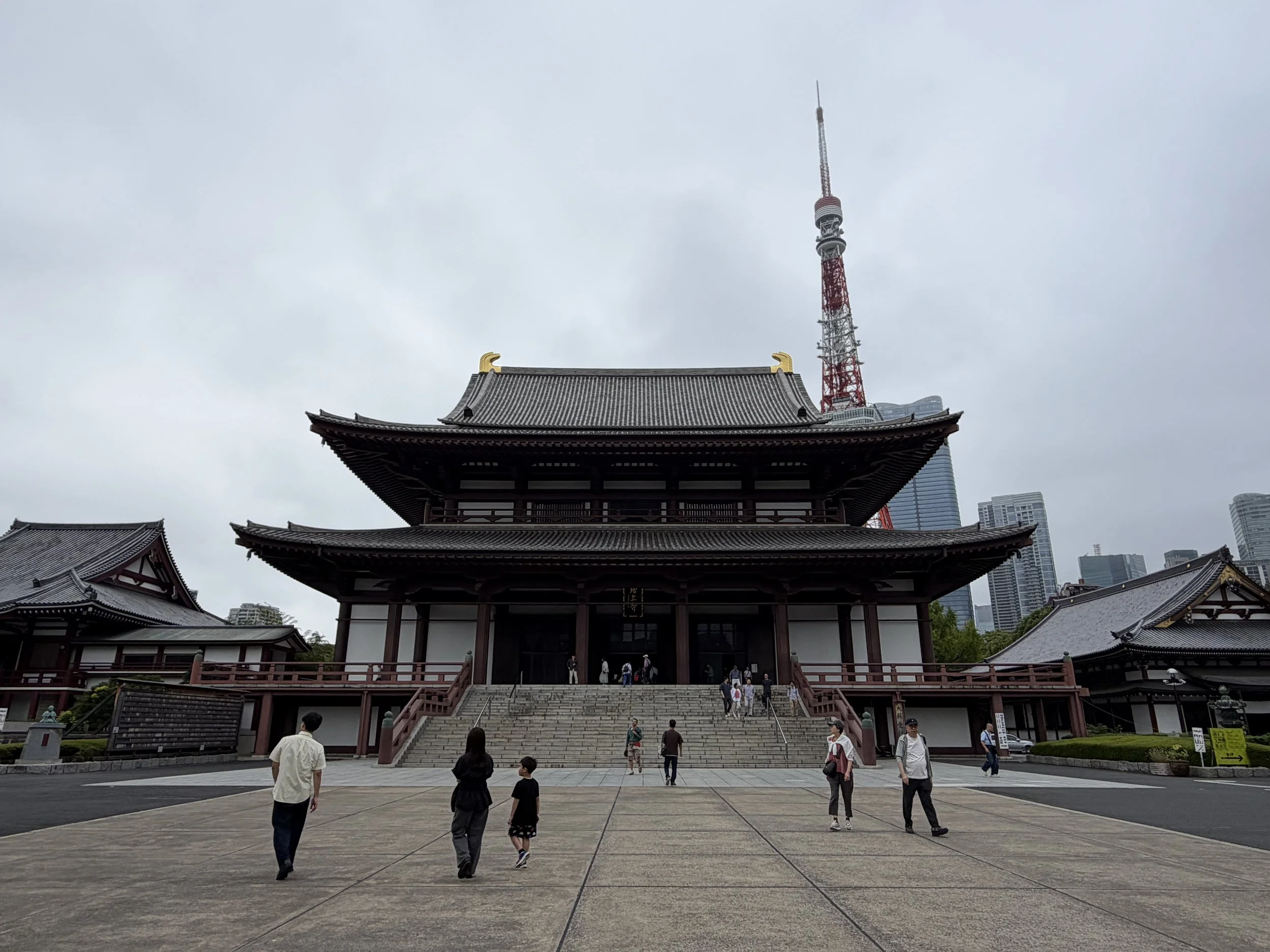
Tokyo’s Zōjō-ji Temple. PHOTO: Ken Chitwood

Why study religion -- even if you aren't religious

October 9, 2026

There is a question every student of religion gets asked at one point in time or another.

Whether posed by parents or friends, mentors or guidance counselors, it comes in some form of: “What are you going to do with that degree?”

It is, some would say, a reasonable question. We live in an age of majors, metrics and the constant specter of employability. The choice of what to study has become increasingly entangled with the question of what kind of economic life that study will produce.

Georgetown University's Center on Education and the Workforce found that, over the past 15 years, students have increasingly gravitated toward fields associated with higher-paying jobs, with degrees in computers, statistics and mathematics and health care more than doubling between 2009 and 2023.

But even that calculation is becoming harder to make with confidence. In a 2026 Gallup survey, 42 percent of bachelor's students said artificial intelligence had prompted them to think about changing their major, while 16 percent of currently enrolled students said they already changed their field of study because of AI's potential impact.

We are encouraged to choose fields that lead somewhere according to the logics of late-stage capitalism. Increasingly, however, the question is whether we know where that “somewhere” is going to be.

In such an environment, people studying any topic in the humanities — literature or history, philosophy or classics — are often asked to justify themselves by pointing toward a job title.

So, it begs the question, what do you do when you study religion?

Read more
In #MissedInReligion Tags Why study religion, Religious studies, Humanities, Religious literacy, #MissedInReligion, What you missed without religion class, Stuff You Missed in Religion
Comment
Woman studying with books.

PHOTO: by Jeswin Thomas on Unsplash.

What you missed without religion class...

February 10, 2022

Odds are, you never took a “religious studies” class. 

If you did, it was probably a confessional course on a particular faith tradition. Maybe it was a unit in your high school’s social studies curriculum. At best, you took a “world religions” survey at college. 

Despite their benefits, none of these gave you the right tools to study religion. 

Which is weird, when you think about it. 

Because “religion is arguably the most powerful and pervasive force in the world.”

When I studied religion at the University of Florida, I learned that knowing something about religion helps us understand heaps about the world. Religious studies is about more than studying individual religions, but how religion functions as part of politics, science, economics, and society at large. 

As a scholar, newswriter, and wayward pastor, I’ve come to appreciate religious studies even more. I believe a basic literacy in “religion as part of the human experience” is key to having informed perspectives on modern life. 

In other words, I think you missed a lot without religion class. 

“What You Missed Without Religion Class” is here to help, demystifying the study of religion and discussing religion’s role in contemporary society.

Read more at Patheos
In #MissedInReligion, Religion, Religion and Culture, Religious Literacy, Religious Studies Tags Religion class, Religious literacy, Patheos, Religious education, Religious studies, Why study religion, What you missed without religion class
1 Comment
Latest Writing RSS

Fresh Tweets

Tweets by kchitwood

Latest Writing RSS

RELIGION | REPORTING | PUBLIC THEOLOGY