Every year for the last several years, sometime between the last gray days of winter and the first real hints of summer, a familiar genre quietly bloomed across Western media.
You’ve probably seen it, even if you didn’t recognize the rhythm.
Ramadan Coverage Is Stuck on Repeat
A headline announces the beginning of Ramadan. A subheading explains that Muslims will fast from dawn until sunset. There’s a quote from a smiling imam or a woman in hijab about self-discipline.
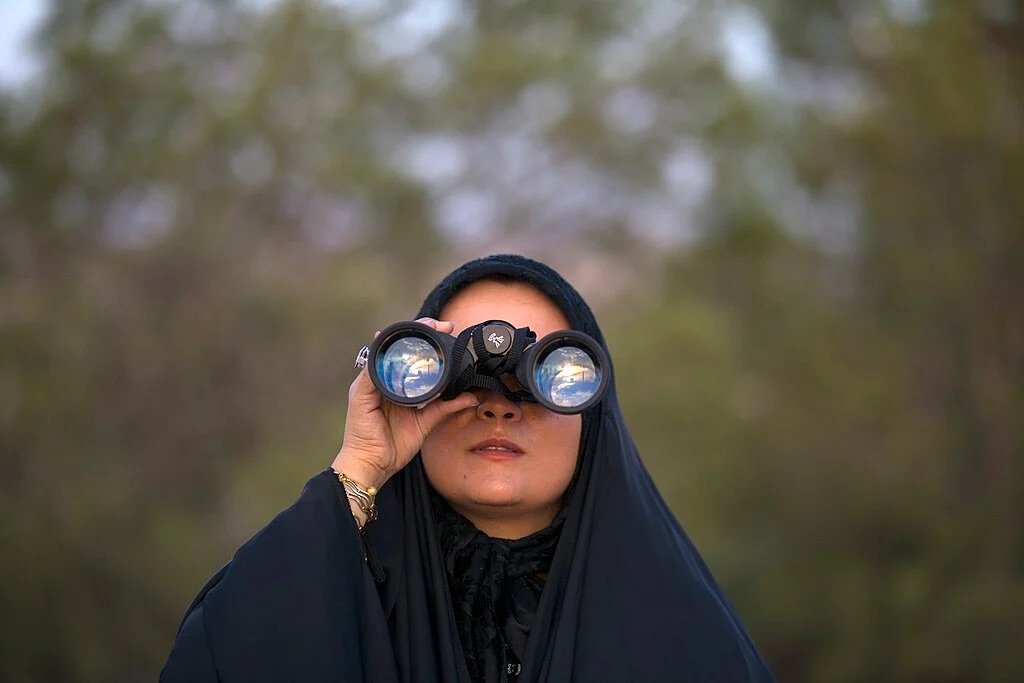
Sprinkle in a paragraph about charity and mix in an explanation of why there seem to be two “Eids.” Add a dash of photos, perhaps of a crowded mosque, maybe a tray of dates catching warm light at sunset. And, if the newsroom is feeling particularly adventurous, spice things up with the perennial debate over the sighting of the crescent moon.
Rinse. Repeat. And next year, why not even reprint the same story with a few calendar dates changed (as is too often the case with major outlets)?
In a media environment where the bulk of stories about Islam and Muslims are “resoundingly negative,” perhaps we should be thankful this isn’t malicious coverage. In fact, it’s usually well-intentioned. Editors want to mark an important religious holiday, and reporters want to be inclusive. Audiences seem to want a gentle cultural explainer rather than anything too dense or argumentative.
But the cumulative effect of this standardized script is that coverage of Islam during Ramadan gets weirdly flattened. It trades in familiarity, explaining the same things, in the same way, every year, as though Muslims themselves were static characters stuck in an annual ritual rather than living, breathing participants in an evolving religious tradition.
Skipping Beer During Ramadan
The most obvious repetition lies in the fixation on the physical aspects of fasting.
Year after year, readers are repeatedly told that Ramadan involves abstaining from food and drink between dawn and sunset. Sometimes there’s a note about refraining from smoking and sex. Occasionally, there’s a mention of spiritual reflection.
But the explanatory frame rarely moves beyond bodily discipline. Fasting becomes the defining fact of the month, something measurable, tangible and easily translated across cultures. It’s the religious equivalent of counting calories – a practice that can be described without needing to venture too deeply into politics, ethics, or economics.
Or, for that matter, exploring the seeming derivations from general rules.
Although Ramadan fasting is often described as a single, shared discipline observed by nearly two billion Muslims worldwide, on the ground, it tends to look more like a patchwork of locally negotiated practices.
For instance, in Bosnia and Herzegovina (or the wider Balkans), where beer is deeply embedded in social life, some Muslims approach the month less as a total moral overhaul than as a socially meaningful pause – skipping alcohol for Ramadan even if other everyday habits continue.
Elsewhere, believers quietly adjust their fasting around shift work, exams, political scrutiny, or secular public norms, finding ways to honor the spirit of the month without stepping outside the demands of their social worlds.
Ramadan in Jakarta is not Ramadan in Johannesburg. Observance among jet-set professionals in Dubai differs from that of recent immigrants in Paris, which differs again from the practices of Sufi communities in Tunis or Salafi congregations in Leicester. There are generational differences, gendered debates, class-based distinctions, political disagreements and theological rivalries as well — all shaping how the month is interpreted and lived.
As anthropologist Samuli Schielke observes, the month often becomes less about perfect consistency than about navigating the tension between aspiration and reality; between the desire to be good and the complicated conditions in which that desire has to be lived out.
Date Plates and Deep Debates
And then there are the visuals. Newsrooms love a recurring image bank, and Ramadan delivers in spades…or, perhaps, dates.
You can practically storyboard the coverage in advance with tightly packed rows of worshippers bowing in unison, lantern-lit streets, lavish iftar spreads glistening with syrup and steaming tea, and children peering skyward in hopes of spotting the crescent moon.
These images do real cultural work. They make Ramadan legible to non-Muslim audiences by translating it into familiar visual cues of festivity and devotion.
But they also become visual shorthand that substitutes deeper exploration. The crowded mosque flattens the diversity of Muslim religious practice. The delicious meal stands in for the complexity of ritual observance.
Ramadan is presented as a time of community, generosity and shared humanity. Stories highlight charity drives, interfaith Iftar dinners, food banks and neighborhood gatherings.
None of this is wrong, per se. Charity is a central pillar of the celebration. Communal meals matter deeply. But the tone of uplift can obscure the more nuanced, or even uncomfortable, dimensions of Ramadan as lived experience.
For some Muslims, the month is spiritually exhilarating. For others, it is socially isolating. Some approach fasting as an act of joyful devotion, others struggle with health concerns, work schedules or family obligations.
Some communities debate intensely over how the month should be observed. Others contest the authority of those who claim to define it for them. And in a time of intensified immigration regimes and re-entrenched identitarian nationalisms, some community members have been adamant about keeping quiet about events or gatherings, rather than drawing any unwanted attention.
These tensions rarely make it into the annual explainer.
The Stories Left to Tell
A recent conversation with a colleague who works in radio encapsulates this dynamic.
As she sought to put together a short news clip on Ramadan for a national program, she found herself getting bored with the stories she saw. Checking with Muslim sources, she discovered they were too. Rather than re-producing another staid report, she opted instead to skip it entirely.
But this begs the question: What might better coverage look like?
For reporters, the first step is to resist the tyranny of the annual calendar peg.
Ramadan need not be covered solely as a seasonal, feel-good lifestyle feature. It can be an entry point into stories about labor rights (how do shift workers manage fasting?), climate change (what happens when Ramadan falls during increasingly extreme summer heat or in northern environments where winter days are particularly short?), migration (how do displaced communities maintain ritual continuity?), adaptations within broader economic registers (why are “Ramadan calendars” popping up across Germany, where chocolate-filled Advent calendars are a fixture of the Christmas calendar?), or digital culture (what role do apps, social media, digital Quran recitation, and online sermons play in shaping contemporary observance?).
In other words, Ramadan can be reported not just as a religious practice but as a social phenomenon deeply embedded in broader political and economic worlds.
Second, journalists should diversify their sources. Instead of returning each year to the same community leaders or spokespeople, they might seek out voices that complicate the narrative: women negotiating expectations around domestic labor, Muslims of differing abilities adapting fasting practices, or young activists linking Ramadan ethics to environmental justice.
The goal is not to manufacture controversy but to reflect the genuine plurality that already exists within and across Islam.
For readers, especially the religion nerds among them, it might mean asking questions when an article emphasizes communal harmony without addressing any conflicts that might be simmering beneath the surface. Or, when it celebrates charitable giving, consider how economic inequality shapes who gives and who receives. When it notes the sighting of the crescent moon, remember that this is not just an astronomical observation but a site of legal and political negotiation.
In short, Ramadan is not merely a time when Muslims fast. It is a practice produced through social, historical and cultural processes – through debates over authority, adaptations to modern life and encounters with state institutions and market forces.
Treating it as such would move coverage beyond the repetitive and into something genuinely illuminating.
And who knows? Next February, we might finally see a Ramadan story that surprises us.