
As President Joe Biden looks to the 2022 midterm elections -- and sees prophecies of a Republican surge -- perhaps the above has become his personal, as well as political, petition.
Whatever the Catholic President's prayers, and whether or not Republicans or Democrats come out on top, religion is sure to shape the results.
Fallout from multiple Supreme Court decisions and results from recent primary elections have shaken up the prospects for candidates on both sides of the aisle. Changes in access to abortion services, questions around notions of religious liberty and dramatic decisions impacting the interpretation of the Constitution's "Establishment Clause" are at the front of voters' minds along with religious takes on the rising cost of living, climate change and crime rates.
In this edition of ReligionLink, you will find important background, relevant stories, and numerous experts to help you understand the 2022 midterms and their religion angle with balance, accuracy, and insight.

Recession religion
The stock market is down. Gas prices are up. Rents, food prices, and mortgage costs are spiking. Interest rates are continually on the rise. Crypto is crashing.
If that were not already enough, analysts fear rising inflation and the stock market’s bear market growl could signal global recession.
In the midst of economic turmoil, it might be tempting to flip past the religion page and turn straight to business, finance and market reports. But that would be to miss the many intersections between religion and the economy that will be relevant to these storylines in the months to come.
Here are just some of the stories you might discover: Buddhist monks protesting on Sri Lankan streets in the midst of unprecedented economic crisis. U.S. churches buying up medical debt to relieve the burden on low-income families. A Sikh gas station owner in Phoenix selling petrol at a discount. Financial experts considering Islamic finance as a potential strategic growth market in the midst of global upheaval.
And let’s not forget that according to a 2016 study, the so-called faith economy contributes around $1.2 trillion (USD) of socioeconomic value to the U.S. economy every single year. That is more than Google, Apple, Amazon combined!
As financial news continues to come hard and fast, portending potentially precarious times ahead, the latest edition of ReligionLink provides background, example stories and potential experts and resources to help you explore angles related to religion, the economy and global financial markets.

Photo by Wilco de Meijer on Unsplash.
Let there be nuclear light?
Christians wrestle with questions about radioactive accidents, technology, and replacing fossil fuels
By the end of 2022, Germany is set to decommission the last of its three nuclear reactors. But for local Christians, debates around nuclear energy will continue to have their own half-life.
By December, Germany is pulling the plug on its last three nuclear power plants — Isar 2, Emsland, and Neckarwestheim II — as part of the country’s Atomausstieg, or “nuclear power phase out.”
Amidst the shutdown, evangelicals on both sides of the Atlantic are wrestling with the potential risks, rewards, and responsibilities of nuclear power. Discerning whether there is a Christian case for nuclear energy is not as simple as turning on the lights. At issue are questions about nuclear power’s potential to destroy life and poison the earth through toxic waste.
Robert Kaita, 69, who worked for the Princeton Plasma Physics Laboratory for 40 years, said, “as human beings created in God’s image, we have tremendous power to create and destroy, to give life and to take it.
“Nuclear energy isn’t inherently evil,” he said, “but we have to go beyond technical problems and consider the moral ramifications of what we are doing.”
Indeed, as Germany shuts down its nuclear energy program, it is perhaps ironic that nuclear energy was invented in its capital, Berlin. In what is now the Hahn-Meitner building on the campus of Freie Universität Berlin (FU Berlin), chemists Otto Hahn and Fritz Straßmann utilized Lise Meitner’s theories to discover nuclear fission on December 17, 1938. The splitting of nuclear atoms (fission) not only came to provide the basis for usable energy, but also the explosive force of the atomic bomb.
Following World War II and the monumental, if monstrous, demonstration of fission’s power, Germany’s nuclear energy program kicked off in the 1950s. Its first power plants followed in the 1960s. Already, German anti-nuclear movements organized resistance to nuclear power’s proliferation.
Local accidents and international disasters further propelled the anti-nuclear movement in the 1970s and 80s. Between 1975 and 1987 small scale incidents in Germany led to local contamination, radiation emission, and worrisome fires. Then, the Chernobyl accident occurred in 1986 and fears of nuclear fallout became mainstream.
Located in what is now Ukraine, Chernobyl lies around 775 miles from Germany’s eastern border. When the reactor was destroyed, radioactive waste spewed across swathes of Europe, including Germany. It not only threatened lives, but water and food supplies. Wild mushroom samples in German forests still show signs of Chernobyl’s radioactive contamination signature to this day.
For Markus Baum, 59, Chernobyl was a decisive crossroads.

PHOTO: Courtesy Yosh Ginsu on Unsplash.
Apocalypse now? When religion and natural disasters collide
As the Atlantic hurricane season begins, meteorologists are watching the Gulf of Mexico with increasing concern. A current of warm, tropical water known as the Loop Current is causing forecasters to fear “monster hurricanes” and a generally intense tropical storm season.
Hurricane Katrina, which went on to famously devastate large swaths of Louisiana and Mississippi, including New Orleans, crossed just such a Loop Current before making its harrowing landfall in 2005.
Extreme weather events like Katrina, climate convulsions and other natural disasters such as fires, earthquakes or tornadoes have inspired a range of religious reactions from the fearful or affected faithful.
Some interpret them as a form of divine retribution and look for scapegoats upon which to place the blame. Others turn to religion as a form of “positive religious coping,” taking comfort in a higher power. Still others spring to action, providing critical support in the aftermath or offering prophetic hope for the future.
With the hurricane and tornado seasons already upon us, post-summer wildfires looming on the horizon, global famine forecasts and potentially cataclysmic climate instability to come in the near future, this edition of ReligionLink explores the fascinating and often unsettling connection between natural disasters and religion.
Background
Experiencing something between sublime terror and numinous indescribability, when humans come face-to-face with volcanic eruptions, floods, earthquakes or epidemics they often seek to explain their upturned worlds in religious terms.
Examining Americans’ experience with tornadoes over the years, historian Peter J. Thuesen wrote that reactions range between abject fear and awestruck fascination. “In the tornado, Americans experience something that is at once culturally peculiar and religiously primal,” he wrote. Exposing them to mysteries “above and beyond themselves,” the tornado whips up a “vortex of theodicy and the broader question of whether there is purpose or chaos in the universe.”
Likewise, historian Philip Jenkins said that time and again, the languages of apocalypse, persecution and judgment have been used to understand climate catastrophes. Looking back over the long term, Jenkins wrote that disasters and climate change often result in “far-reaching changes in the nature of religion and spirituality.”
Astute religion newswriters have taken notice. Given the increasing intensity of natural disasters brought on by changes in climate conditions and the ominous threat of other cataclysms always a possibility, stories about the intersections between natural disasters and religion are featuring more and more in our reporting.
Although religion is not “the only aspect of human affairs that is transformed during climate-driven disasters,” Jenkins wrote, “it is a very significant one, especially because this has so often been the primary means through which human beings have interpreted the world they see around them.”
Taking a look at the resources available through the link below, these stories chronicle a mix of terror, trembling and spiritual searching. They feature narratives of renewed passion and inspiring commitment, scapegoating and persecution, apocalyptic expectations and mystical interpretations. Above all, they show how the convergence of faith and disaster is an area ripe for more nuanced, in-depth religion reporting.

Elders Wyatt Smith and Joshua Obrist stand in front of the Church of Jesus Christ of Latter-day Saints ward in Dahlem, Berlin.
Mission Berlin: The Church Of Jesus Christ Of Latter-Day Saints And Its Nearly 170 Years In Germany’s Capital City
A tireless desire to share their message with the people of Berlin — and Germany as a whole — has helped the Church of Jesus Christ of Latter-day Saints’ mission in Berlin persevere over the years, up to the present day.
Despite criticism, shrinking numbers and the challenges of working in a diverse metropolitan area considered the atheist capital of Europe, numerous young church members fulfill their mission in Berlin and believe the city is rich with opportunity.
“Sure, we face difficulties, get tired or get nervous sometimes, but it’s all worth it to be able to represent Jesus Christ,” said Elder Wyatt Smith, 21, a missionary from Utah.
In the U.S., members of the faith have had a long on-again, off-again relationship with popular culture and the country’s religious mainstream. With the recent release of FX’s “Under the Banner of Heaven,” starring Andrew Garfield and based on the eponymous best-selling book by Jon Krakauer, Mormons — a colloquial term based on the church's sacred Book of Mormon — of various kinds have been thrust back into public conversation in a not-so-flattering light.
In Berlin, that relationship has perhaps been even more tenuous and tense. From resistance to their message and rejection by the Kingdom of Prussia in 1853 to their current mission to serve refugees fleeing the conflict in Ukraine, the church there has faced difficulties large and small.
Across the years and various challenges, the church has persisted. Today, there are 39,456 church members across 149 congregations in Germany as a whole.
Young Latter-day Saints in Berlin have shaped their mission to the city, and in turn, the city has shaped the church and its efforts to reach one of the most secular urban communities in contemporary Europe.
Elder Joshua Obrist of Switzerland, 24, partners with Smith in Berlin’s Steglitz district to share the church’s message, “the restored gospel of Jesus Christ,” sometimes on the street to passers-by.
On buses and trains, in front of cafés and kiosks, Obrist and Smith talk to anyone and everyone who has a moment to discuss questions about life, death and the ultimate meaning of the cosmos.
After five hours out on the streets, Obrist and Smith are on a bus headed back to the church’s ward — local congregation — in Berlin’s Dahlem neighborhood. But they are not yet done for the day. Starting around 6:30 a.m., a typical day in the life of church missionaries is relentless.
“We don’t really have time off,” Smith said. “We start early in the morning studying the Scriptures, catch up with contacts on Facebook, rehearse some conversations we might have that day, do our mission work and maybe have some evening meetings, but we aren’t done until around 9:00 p.m.
“And even though we have Mondays off,” he added, “we are still wearing our name tags if we go out.”
Asked if this schedule proved exhausting, Smith replied, “Not really. This is a calling for us, one we only get to know for a small window in our life.”

“Music Breaks All Borders,” reads Zouiten’s T-shirt as he holds a microphone to accompanying percussionists riffing off one another during a Berlin performance. Zouiten, 37, has also trained on piano, violin and classical guitar, and he is currently studying ethnomusicology at the Hochschule für Musik FRANZ LISZT Weimar in his pursuit to “continually propose new musical perspectives.”
Berlin's Transcultural Jam
“If Berlin and its music scene is something, it’s actually seeing people with their very diverse intersectional identities, and it’s celebrating that.”
It’s a damp, cold October night in Berlin, but along Hauptstraße in the Friedenau district, inside the famed Zig Zag Jazz Club, the crowd waiting for Alaa Zouiten is lively, chattering and warm.
A fire-red glow reflects from the lights near the stage where the Morocco-born ‘ud player begins plucking a few of his instrument’s strings. Clinking glassware and the hum of conversation subsides into concentration.
“I love the transcultural approach in music, and that means there are no boundaries between music and cultures,” says Alaa Zouiten. Morocco-born and, since 2009, Berlin-based, the ‘ud virtuoso and music educator is among the more than 135,000 Arab-identifying residents of the city helping make Berlin one of the world’s hottest centers of creative arts. Zouiten cites the fusions in his own music as Moroccan, Amazigh, African, Jewish, North African and Andalusian. “Together it all sounds really organic,” he says, “In that moment, the listener says, ‘We’re all pretty close, and we have more similarities than differences.’”
Zouiten’s first song comes as a rapid-fire arrangement that at once showcases his virtuosity, flitting between styles he refers to as flamenco arabe and urban jazz. After that, his band joins him: a Spanish percussionist, a French bassist, a Canadian violinist and a pianist from Lebanon. Midway through their opener, Zouiten pauses to let his audience know it’s about to hear something new.
“We are trying a mix of different styles of music up here,” he says. “I hope it’s OK.”
Cheers erupt. One woman near the front calls out, “It’s more than OK. It’s geil!”—a German slang compliment that falls between “cool” and “sick.”
Reflecting on the audience’s enthusiasm, Zouiten elaborates as he strums and talks, strums and talks.
“I am neither a purist Arab ‘ud player, nor a jazz composer, nor a traditional flamenco artist,” he says, continuing to pad his thoughts with notes that will lead into the next song. “Just the fact that I’m from a country like Morocco, with its Arabic, Amazigh, Islamic, African, Jewish and Andalusian influences, makes the answer more difficult.”
Like his band, his music and the city he now calls home, Zouiten is surrounded by a comingling of cultures and the resulting exchange of geographic collateral.
“While I was looking for a label for my music, some called my music Oriental Jazz. Others called it Arabic Andalusian fusion,” he says. “I was constantly dissatisfied with all these names, until finally I came to the right term. My music is about a plaisir transculturel, or transcultural enjoyment.”
Music has never been about just one thing, he says. Throughout the Middle East, North Africa and the Mediterranean, music has always been rich with both tradition and the eclecticism that comes with movements of peoples. In Morocco, for example, where French and Arabic are spoken both independently and fused into a dialect, there’s a complex soldering and even reconciling of identities that often presents in music. Moroccans, like people elsewhere, understand nuanced cultural representations, which in their region light up a spectrum of Arab, Italian, French, Amazigh and Andalusian influences that have all at different times borrowed from and given to other styles.
Today, through artists like Zouiten, Arab music continues evolving through a nuanced cultural dialogue in one of its newest nerve centers: Berlin. Arab-influenced, Arab-produced, and performed by a mix of Arabs, Germans, and others who have come together in this global fulcrum of connections, people, tones, rhythms, ideas, and instruments from the Arab world are converging with others in Berlin, creating new combinations that not only resonate with the city itself, but radiate outward across Europe, the Middle East, and beyond.
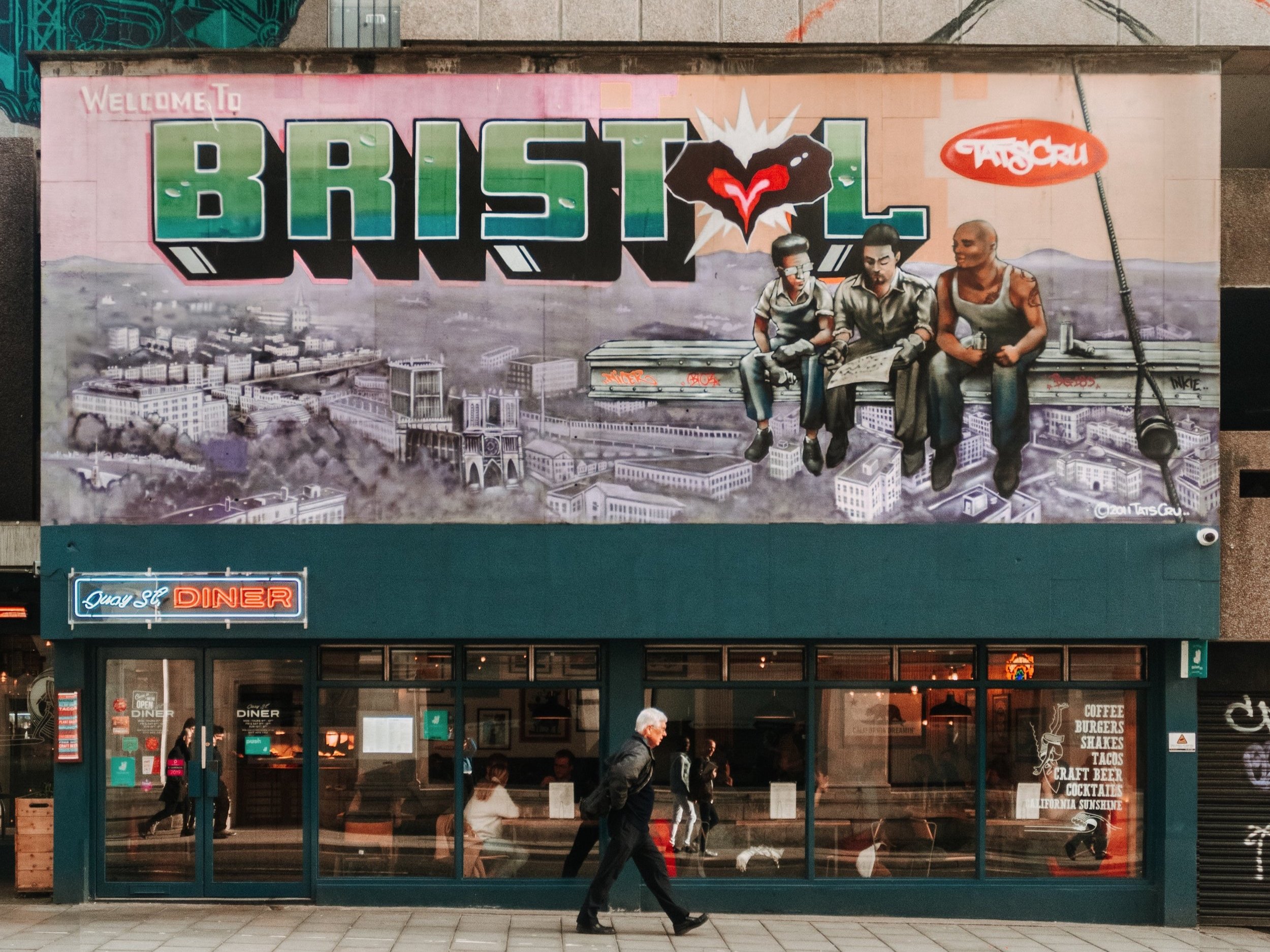
Photo by Martyna Bober on Unsplash.
The churches are willing, but the bureaucracy is weak: UK Christians welcome refugees amid frustrations with immigration process
When Wai Lin Wong arrived in Bristol from Hong Kong in April 2021, one of the first things she did was look for a new church.
“I logged onto Facebook; I searched Google,” she said, “and found churches with webpages translated into Chinese, groups of other Hong Kongers, and sanctuaries full of people like me.”
That happened a lot, said Mark Nam, an Anglican priest in Bristol. As the Chinese government clamped down on the democratic freedoms of the former British colony in 2020, thousands of Hong Kongers fled to the UK thanks to a visa programthat allows them to live and work in Britain with a pathway to full citizenship.
Hundreds of churches announced they would welcome the Hong Kongers with open arms. They did. And cities like Bristol have since seen their churches swell with newcomers, Nam said. Anglican parishes, Chinese Protestant churches, and evangelical congregations all grew dramatically in the last year.
“It’s been wonderful to see the welcome,” Nam said last year.
In recent months, UK Christians responded to another influx of refugees, this time from Ukraine.
The Sanctuary Foundation, which supports potential sponsors and assists the government in rolling out its Homes for Ukraine program, said over 2,000 churches, businesses, and schools plugged into their programming or volunteered to help in some way since March.
But in both cases, along with the surge of compassion, support programs, and congregational growth, there have come a host of challenges—from bureaucratic inertia to worrying signs of prejudiced double standards.
Sanctuary Foundation’s founder Krish Kandiah, who has been working with refugees since the 1990s, said his organization has been seeing churches welcome thousands of newcomers from Hong Kong, Afghanistan, Syria, and Ukraine.
The outpouring of generosity by congregations, individuals, and local organizations has been immense. Amid the rush from Ukraine alone, more than 1,000 UK churches stepped up to host refugees, he said.
However, enthusiasm on the part of Britain’s churches has not always been met with efficiency or empathy by their government.
Image via Unsplash.
Religion on the docket: U.S. Supreme Court decides on cases with religious ramifications
Perhaps NPR’s Nina Totenberg put it best when she said the docket for the 2021-2022 U.S. Supreme Court term is “a humdinger with major cases involving the biggest social issues of the day.”
With a notably altered composition after the addition of three Trump appointees, the court now features six reliably conservative members. With that makeup, SCOTUS is set to decide on significant social controversies related to abortion, the separation of church and state, government surveillance and normative clarity around the scope of free expression.
The news cycle on these cases started back in October as oral arguments began and three decisions were already issued. The churn of news is picking back up again as some cases are just now being argued and other rulings are handed down.
Just as this edition of ReligionLink was about to go to press, the decision on Shurtleff v. Boston came out. Then, quite dramatically a draft opinion from Justice Samuel Alito was leaked to Politico, wherein he writes that the 1973 Roe v Wade decision legalizing abortion is “egregiously wrong.” The leak is unprecedented and if the draft is issued as a majority ruling, it would overturn the constitutional right to abortion in the U.S.
The latest edition of ReligionLink will get you up to speed with background explainers, resources and experts for covering the most relevant, religion-related cases the Supreme Court is set to decide on this term — or for which it already issued judgment.
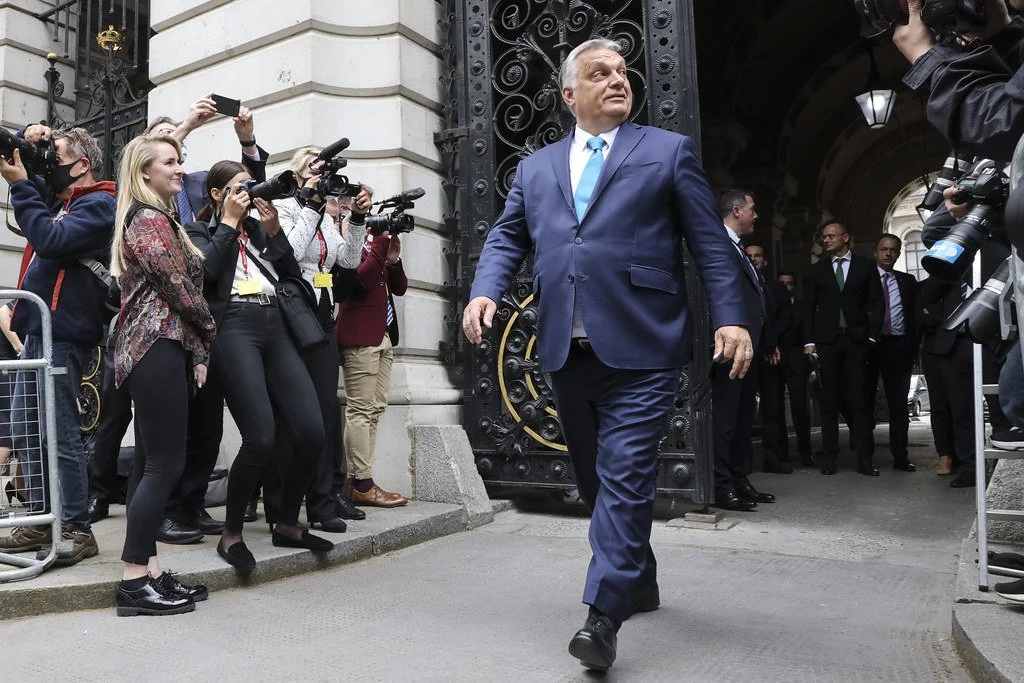
Hungarian Evangelicals Thank God for Viktor Orbán Victory
Szófia Boros voted for Victor Orbán. The young evangelical mother of two has her misgivings about the man who has been accused of undermining democracy—curtailing press freedom, undercutting the independent judiciary, and changing election rules to give an advantage to his political party, Fidesz.
But in the end, it was pretty simple to support him for reelection on April 3.
“Evangelical Christians support the majority of Orbán’s policies and positions, even if we don’t really admire the way he goes about his politics,” she said. “I voted for him because he is a conservative Christian standing up against a liberal Europe.”
Evangelicals aren’t a big or politically organized voting bloc in Hungary. Only a few evangelical groups are established enough to achieve recognition from the national government, including the Baptist Union, the Hungarian Methodist Church, the Hungarian Pentecostal Church, the Church of the Nazarene, and the charismatic Faith Church, whose pastor endorsedOrbán during a Sunday service.
About half the people in the country consider themselves Catholic, a quarter has no religious affiliation, and 16 percent—including Orbán—identify with the Reformed Church in Hungary, which is part of the mainline World Council of Churches and affiliated with the Presbyterian Church (USA).
Eighty percent of the country identifies as Christian, but only about 15 percent of Hungarians attend church on a weekly basis.
But a lot of Hungarians, it turns out, feel like Boros. They wanted a conservative Christian prime minister committed to defending what they see as a Christian culture and its Christian values.

This ain't your mama's paganism: understanding modern witchcraft, nature religions and ‘neopaganism’
As part of sweeping transformations in American religion and renewed interest in New Age spiritualities, modern paganism is tapping into a deep desire for self-empowerment, social engagement and reconnection with the natural world.
Inspired by, or derived from, historical pagan and nature religions, modern paganism is an undeniably broad, collective category that covers a diverse range of groups that can differ greatly in belief and practice.
While Wicca and astrology have enjoyed a certain popularity for several decades, a wave of new publications has highlighted how personalized spiritual practices, home-brewed magic and shamanistic self-discovery are now enjoying their own renaissance.
The latest edition of ReligionLink explores this new “neopaganism,” what some are calling a broader “re-paganization of religion.”

Church in Velankanni, Tamil Nadu, India.
In India, attacks on Christians signal wider, worrying trends for religious minorities
Vigilante lynching mobs. State-sponsored harassment. Vandals defacing houses of worship.
According to recent reports, Muslims, Christians, Sikhs, and other religious minorities in India are being confronted by renewed and increased attacks.
In July 2021, the London School of Economics and Political Science, through research commissioned by the persecution watchdog Open Doors, reported that religious minorities in India are facing “imminent existential threat.”
The most prominent source of this anti-Muslim, anti-Christian, and anti-Sikh sentiment is Hindutva, a type of Hindu nationalism that advocates for the transformation of constitutionally secular India into an ethno-religious state based on Hindu supremacy.
Hindutva should be distinguished from Hindu religious traditions, some of the world’s most ancient religious texts and practices, as well as to traditions that are present throughout every part of the globe today.
Along with other religious minorities, Christians are believed to have allegiances that lie outside India — or having adopted the religion of colonial rulers — and thus are not “true Indians” according to Hindutva activists and advocates. Wanting to purify India of their presence, there has been an increase in violent rhetoric against, and orchestrated attacks on, Christians in recent years.
Increased pressure, attacks
In December, Al Jazeera reported that human rights groups recorded more than 300 attacks on Christians and their places of worship from January to September 2021 alone. On February 25, 2022, a 35-year-old pastor was assaulted and tied to a post at a roadside in South Delhi. He was accused of forcing conversions on Hindus by his attackers.
Christians account for around 2.3% of India’s population and are the nation’s third-largest religious group after Hindus and Muslims. Despite Hindutva-inspired allegations that Christianity is alien to India, it is believed that the religion could have taken root in the region some 2,000 years ago. Withhigher concentrations in some small, northeastern states like Nagaland, Mizoram, and Meghalaya, Christians are found throughout India, with significant populations in southern states like Tamil Nadu and Kerala as well as the northwestern state of Punjab.
Rev. Dr. D. Christu Das, principal of Concordia Theological Seminary, Nagercoil, India (CTSN), said that Lutherans are among those facing state-sponsored pressure and orchestrated persecutory actions by local authorities. Although almost half of Christians are Catholic, there are around 4 million Lutherans in the country, making them India’s third largest Christian community and its second largest Protestant denomination after the Assemblies of God.
In particular, Christu Das is concerned about anti-conversion bills, which ban changing one’s faith identification. These laws, said Christu Das, provide pretense for religiously motivated violence.
Proponents of these laws accuse Christians of using money, power, and undue influence to force people into conversion. Some charge Christians with wanting to “convert all Hindus.” Connecting Christianity to European colonialism, one advocate of anti-conversion laws say that Christians have a “fanatical urge to destroy all global religious diversity in the name” of their religion.
The regions where Christians face the most resistance and persecution are states where the Bharatiya Janata Party (BJP), a Hindu nationalist party, is a major player in state government. Although that can change every five years due to elections, state authorities both within and beyond the BJP often willingly ignore attacks or implicitly — sometimes explicitly — encourage their proliferation.
Across India’s history as an independent nation, several states have passed “Freedom of Religion” laws to restrict religious conversions. More recently, anti-conversion laws have been passed in Himachal Pradesh (2006 and 2019), Jharkhand (2017), and Uttarakhand (2018). In November 2019, citing supposedly rising incidents of forced and fraudulent conversions, the Uttar Pradesh Law Commission recommended enacting a new law to regulate religious conversions. This led state governments in Uttar Pradesh and neighboring Madhya Pradesh to police religious conversions in the states in 2020 and 2021 respectively.
The World Evangelical Alliance (WEA) — in concordance with the Evangelical Fellowship of India (EFI) — said, “These laws claim to merely purge the use of force, fraud, and inducement from religious persuasion in the interest of public order. But these vague and overtly broad legislations are in fact based on a long-time propaganda by right-wing Hindu groups against Christian and Muslim minorities.”
To Christu Das, this means that these laws go against the universal human rights declaration and the guarantees of religious freedom contained therein. Believing that in a modern, globalized world, conversion from one religion to another is common, Christu Das said that people should be allowed to change their faiths according to their personal choice and not be coerced one way or another.
“Religious transformation is a human rights issue”

“Religious transformation is a human rights issue,” he said, “conversion to any religion and profess and practice of any faith is a fundamental constitutional right to every Indian citizen.
“So the anti-conversion bills, banning conversion, are against the fundamental rights of every citizen of India.”
Standing under a streetlight at around 8:00 pm local time, Aneeta (not her real name) said she has seen the steady rise of anti-Christian sentiment in her own lifetime. A college student in the state of Andhra Pradesh, Aneeta said that high school friends and their families began treating her with more disdain in recent years.
“They started to call me names, to chide me for my faith, to accuse me of being anti-Indian,” she said.
While the interactions never rose to the level of violence, she is concerned they might. Depending upon the politician elected, the popular mood, or the discourse online, throwaway comments can turn into open cruel quite quickly.
Looking down at her phone, she said, “you see everything online these days: the reports of violence against Christians, the horrible things people say on social media, blaming Christians for everything from colonization to COVID-19.”
Scholars like Edward Anderson, Arkotong Longkumer, and others have identified how the internet and social media has provided “a new space where Hindutva actors can flourish.”
Reports indicate that when Hindutva hooligans attack Christians, they often try to snatch victims’ and witnesses’ phones, to stop them from recording the incidents. At the same time, they produce their own videos to spread disinformation, stir up hatred, and promote their agenda.
Moreover, during the pandemic, Christians have been deliberately overlooked in the local distribution of government aid and have even been accused of spreading the virus.
For Thomas Schirrmacher, secretary general and CEO of the WEA, the way forward for Christians facing anti-conversion laws, attacks, and other limits on their religious freedom, is to work together with people of other faiths.

Leading Christians into “conversations, cooperation, and witness,” Schirrmacher works closely with leaders from other religious traditions to try and guarantee the rights of all.
In conversation with Muslims, Hindus, and others, Schirrmacher said evangelical Christians should willingly wade into the world of interreligious dialogue to provide protections for various religious minorities and guarantee the right to convert from one faith to another as a basic human right.
Christu Das also sees the pressure facing Christians in India as a shared problem for all people of faith. “All religious minorities are impacted by these laws,” he said, “Sikh, Muslim, Jain, Paris, Anglo Indians, Christians, Buddhists, and Zoroastrians.”
He said that the Indian constitution earmarks freedom of religion as one of its peoples’ fundamental rights.
“Everyone should have the right of freedom of thought, conscience and religion, only subject to limitation for public safety, order, health, and to protect the fundamental rights and freedoms of others,” he said, “that’s a treasure of our constitution.”
“Religious freedom preserves India’s diversity, where people of different faiths, worldviews, and beliefs can peacefully live together without fear of punishment,” said Christu Das.
These attacks on Christians, he said, are more than the persecution of a particular faith, but an attack on all Indians and their fundamental freedoms.

“God puts us here especially for such moments”: Christians Respond to War in Ukraine
[BERLIN] As explosions reverberated across Ukrainian cities like Kyiv and Kherson, CNN’s cameras captured a small group of Christians praying in the middle of a square in the eastern city of Kharkiv.
It was February 24, 2022, and Russia had begun its long-feared invasion of Ukraine. Correspondent Clarissa Ward surmised the prayerful pause encapsulated the moment’s “desperation.”
“Right now, there is truly a sense of having no idea what is coming down the pipeline,” Ward said, “what is in store for the people of Ukraine in the coming hours and the coming days.”
Since that fateful hour, Russia’s invasion has only expanded in scope and the horrors of war have been evermore evident in Ukraine — apartment complexes decimated by missiles, refugees streaming into neighboring countries like Poland and Romania, locals preparing for door-to-door fighting.
Christians can be found on all sides of the conflict. Both Russia and Ukraine have deep, diverse Christian histories and significant Christian populations. Now, as the conflict continues into its fourth week, churches are acting as emergency shelters in Poland, some pastors and prelates are advocating for peace, others are adding fuel to the fire. Christians are fleeing for their lives, fighting on the front lines, and coming to the aid of those in need.
According to the Pew-Templeton Global Religious Futures Project, Ukraine is 85.8% Christian. Three out of every four Ukrainians are Orthodox, about 5% are Catholic, and just over 1% are Protestant — including Baptists, Lutherans, and Pentecostals.
“We are still the church, even as we flee, even as we fight.”
Among them is pastor Kostyantyn Tyschchenko. Tyschchenko convenes a house church in Kyiv — Ukraine’s capital — and said his small flock are now scattered like sheep. “Some have fled to Poland or Romania, others have sought shelter in their basements, some have collected weapons and are preparing to fight,” he said, “we are no longer a church in the normal sense.”
And yet, Tyschchenko said, “we are still the church, even as we flee, even as we fight.”
“If diplomacy cannot bring peace, then we must turn to prayer.”
Amidst the chaos of war Tyschchenko has been texting with the people he once gathered around his kitchen table to break bread and pray with. He sends them verses of encouragement, pictures from his daily devotions — mainly from the Psalms — and tries to send hope amid despair.
The most difficult guidance he is sharing with his flock right now? To pray for Russian President Vladimir Putin. “Despite everything, we must pray for him to stop what he is doing and choose peace.
“If diplomacy cannot bring peace, then we must turn to prayer,” he said.
Elsewhere in Ukraine, Christians are persevering despite the onslaught. Reporting for Christianity Today, journalist Jayson Casper wrote that in Irpin — nicknamed Ukraine’s “Wheaton” — Christians are facing a serious siege as the city lies between Russian forces and the country’s capital.
Home to numerous international Christian ministries, from Youth With a Mission to Samaritan’s Purse, Child Evangelism Fellowship, the International Fellowship for Evangelical Students, and Youth For Christ, Irpin is an evangelical hub in Ukraine. While many local Christians have fled, some have chosen to remain, calling their service in the city their “new ministry.”

Image via Wikimedia Commons.
Christians in the U.S. have close ties with Ukraine
The number of international Christian ministries in Irpin is a stark reminder of the close ties that U.S.-based Christians have with the eastern European country. Alissa B., of California, remembers the time she spent, and the people she met, in Kyiv and Irpin back in 2011.
“The people there were some of the most hospitable, thoughtful people I’ve known,” she posted while making an appeal on Facebook, “I’ve started this post so many times over the past few weeks, but words never seem to do it justice.
“My heart aches alongside my Ukrainian friends and their families,” she said.
Kelly Young’s connection to Ukraine began in 2014 when the Houstonian became the big sister through adoption to a sibling group of three Ukrainians. While there, her family stayed with locals who sacrificed their time and resources to host them while they finalized the adoption. In 2016, Young returned to Ukraine with her ministry partner Leah McGowan, who were afterward inspired to found New Song International (NSI).
NSI serves and cares for children with medical and special needs. Based in Zakarpattya (Transcarpathia) in Ukraine’s far west, NSI partners with a network of organizations and individuals across the country. Working on establishing a community resource center and alternative care facility before the war, Young and McGowan said, “in some ways, everything has come to a screeching halt.”
In other ways, however, “it has ramped up our efforts to meet immediate needs,” they said, “now, we are just doing whatever we can for families whose needs we are hearing about every day. “Every morning, we get a flood of texts or messages from someone looking to make a connection and meet a need. Our organization has put together a crisis relief fund to support our board members and partners on the ground taking in refugees and helping at-risk families. “We are doing everything we can to support those individuals and organizations in this time of great need,” said Young and McGowan.
Responding to refugee needs
For its part, the Lutheran Church Missouri Synod (LCMS) has been working with local ministry partners in Ukraine and other countries in Europe to care for those fleeing the conflict. Rev. James Krikava, the LCMS’s associate executive director of Eurasia and Asia Operations, has been in touch with Bishop Serge Maschewski of the Evangelical Lutheran Church of Ukraine (ELCU).
In neighboring Romania, Rev. Sorin-Horia Trifa of the Confessional Lutheran Church in Romania is serving at the Siret Border Point distributing food and water as well as providing transport to refugees. Calling on U.S. Christians to support their work on the border, Trifa said, “many Americans cannot come here, but we are here already, we can do this.”
“We didn’t want to leave, but after the shelling started, we knew we had to make a decision quickly.”
Reflecting on what it means to be the church in such chaotic times, Trifa said, “God puts us here especially for such moments.”
That was also the sentiment expressed by Oleg Preobrazhensky. Standing at Berlin’s main train station with a blue and yellow sign with “two adults, three children” written in Cyrillic, Preobrazhensky believes he and his family are particularly summoned for a time such as this. “Look, we’re Russian. We know it is not easy for Ukrainian families to trust us or want to stay with us,” he said, “but before we are Russians, we are Christians. Christ calls us to welcome the stranger, especially at times like this.” After just a few minutes, Preobrazhensky is hailed by a family fresh off the train. They do not care he is Russian, they just care that he is here to help.
One of those headed for sanctuary in Germany is Andriy. On the train from Berlin to Frankfurt, Andriy is traveling with his wife, daughter, and two grandchildren. Originally from Sevastopol [in Russian-annexed Crimea], they decided to escape Ukraine before the invasion got too bad.
“We didn’t want to leave, but after the shelling started, we knew we had to make a decision quickly,” he said. Andriy and his family first made their way to Poland. Then to Berlin. Now, they are on their way to Frankfurt, Germany to stay with some of his wife’s distant relatives. They don’t know how long they will be there, but Andriy said he was thankful they have a place to go.
Echoing Tyschchenko, Andriy said, “the most difficult thing for us right now is to not hate Putin and the Russian people, but to pray for them.
“It is difficult, but that is our calling as Christians — to love our enemy, to bless those who hate us, to pray for those who mistreat us, who persecute us.”
*This report was written in collaboration with Lutheran Hour Ministries.

Image courtesy KAICIID International Dialogue Center.
Raising up women's voices across religious traditions
Women and girls are effective and powerful leaders and peacemakers, often playing a critical role in religious traditions across the world. At the same time, and despite advances in gender equality, women and girls still face hurdles when it comes to having a voice in local, regional, and international religious bodies.
On the occasion of International Women’s Day, I am sharing a few select stories that reflect how women and girls are involved in interreligious dialogue initiatives across the globe, and how their participation and leadership results in substantial and positive change.
I invite you to explore their diverse experiences and critical perspectives on the opportunities, as well as the constraints, women and girls continue to face.

Alissa Wahid
The work of the Gusdurian Network Indonesia
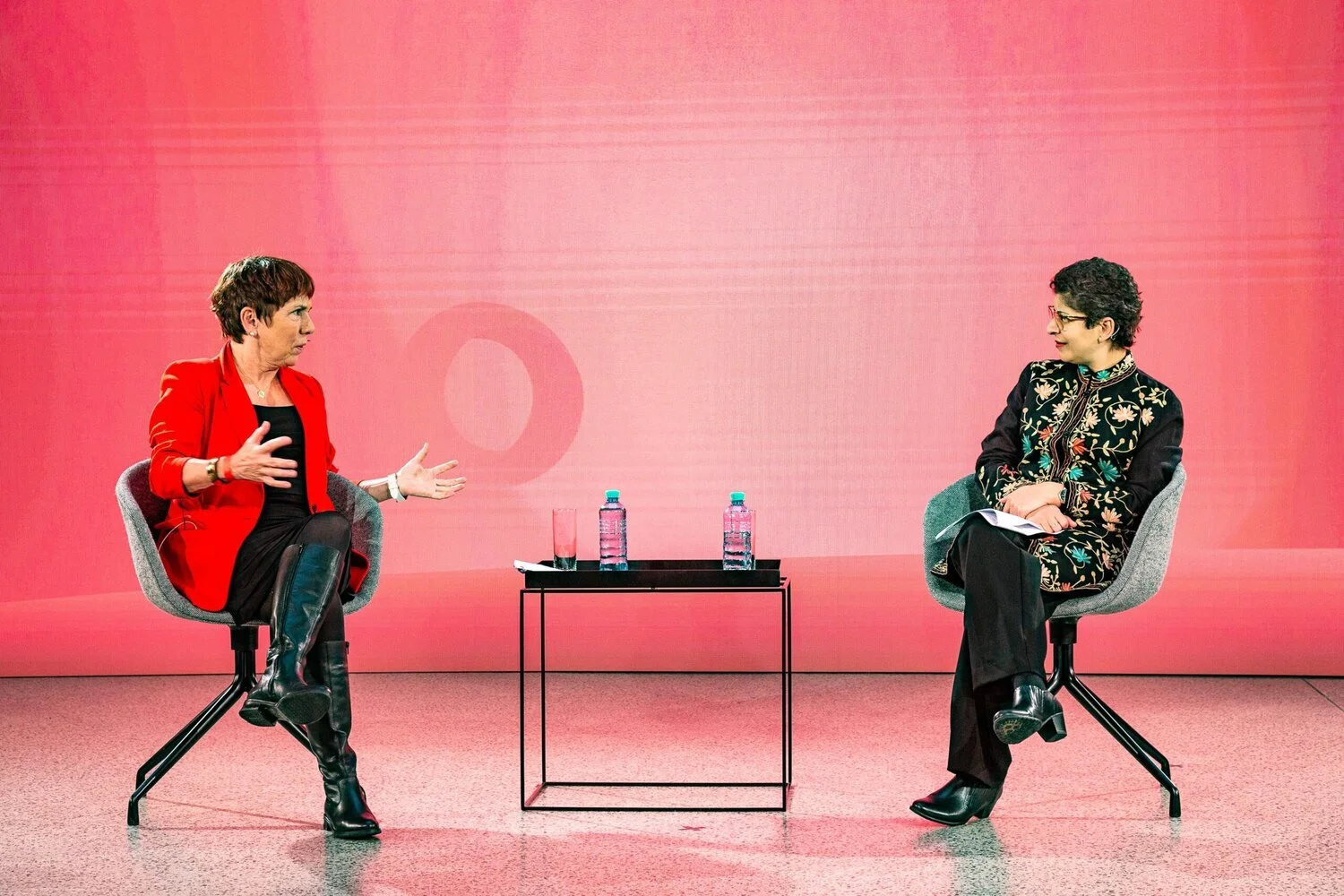
Azza Karam
The Role Of Women In Faith And Diplomacy

Ela Gandhi
Serving humanity from a Gandhian perspective
KAICIID Women
Reflecting on Women’s Role in Interreligious Dialogue

As Russia invades Ukraine, reporters explore religion's role in the conflict. (PHOTO: ReligionLink via Unsplash)
War in Ukraine: covering the conflict's religious contours
Religion often plays a role in violent conflicts. Entangled with ethno-national, economic and territorial issues, religious actors, leaders and institutions can exacerbate and ameliorate both the causes and course of a conflict. While some religious actors provide care and appeal for peace, others contribute to the brutality and provide faith-filled fuel to already tenacious confrontations.
The warfare currently engulfing Ukraine is no exception. Religion played a role as the specter of Russian invasion grew over the last several years. Now, after Russian forces began their aggressive assault on Feb. 24, 2022, religious communities within Ukraine, Russia and across the globe are responding.
“While the secular media tries to guess Vladimir Putin’s motives in Ukraine, one important aspect of the current situation has gone largely ignored: religion.”
The latest edition of ReligionLink gives you a rundown of all the headlines, experts, and background research on the religious contours of a war whose impacts will reverberate around the world.

Photo: Marcel Melus via Unsplash.
Who are the exvangelicals?
Coined by Blake Chastain in 2016, the term “exvangelical” — or “exvie” — has come to encompass a wide range of individuals who have left evangelicalism, especially white evangelical churches in the U.S.
Skeptical of institutions and unimpressed with status quo American Christianity, some have turned their back on religion. Others actively campaign against what they see as its abuses. Still others adopt more progressive versions of Christianity or simply do not self-identify as “evangelical” any longer, opting instead to go on a quest of self-discovery and deconstruction. Through hashtags such as #emptythepews, popular TikTok channels and a range of new platforms and publications, they are leaving loud, speaking out against evangelicalism on matters of politics, gender and race.
The latest edition of ReligionLink provides you with a range of resources and potential sources to understand how American Christianity’s traumas and political entanglements have triggered a crisis of faith for many.

Four candles lit by four representatives from four religious traditions: Jewish, Muslim, Protestant, and Catholic. PHOTO: KAICIID
Rabbi & Imam Attend Holocaust Remembrance Ceremony at Auschwitz-Birkenau
At a time of increased antisemitism, anti-Muslim hate, and xenophobia in Europe, it is a powerful moment when a rabbi and an imam stand side-by-side in solidarity, with Holocaust survivors, one another, and on behalf of Europe’s Jews and Muslims.
On Thursday, 27 January Rabbi Michael Schudrich, Chief Rabbi of Poland and Imam Adham Abd El Aal, representative of the Grand Mufti of Poland in Warsaw, did just that at the International Holocaust Remembrance Day (IHRD) ceremonies at Auschwitz-Birkenau, a Nazi death camp where more than 1.1m people, mostly Jews, were killed.
The pair are part of the Muslim Jewish Leadership Council-Europe (MJLC), an organization founded to serve the need to free members of religious minorities from prejudice, false claims, discrimination, and violence.
Seventeen years ago, on 1 November 2005, the United Nations (UN) General Assembly designated 27 January as IHRD. The yearly commemoration marks the liberation of Auschwitz-Birkenau in 1945 and is meant to remember and honor Nazism’s many victims. It is also intended to educate people about the Holocaust, prevent further genocide, and denounce all forms of “religious intolerance, incitement, harassment or violence against persons or communities based on ethnic origin or religious belief.”
Due to the ongoing COVID-19 pandemic, this year’s IHRD ceremony at Auschwitz-included only a handful of guests, mostly survivors and local leaders from the religious and political spheres. Among those who gathered at the memorial in Birkenau were Rabbi Michael Schudrich, Chief Rabbi of Poland, Imam Adham Abd El Aal, representative of the Grand Mufti of Poland in Warsaw, the Roman-Catholic Bishop Roman Pindel, the Orthodox Bishop Atanzy and Bishop Adrian Korczago from the Polish Evangelical-Augsburg Church.
On the importance of the MJLC’s presence at the event, Schudrich said, “What happened in Auschwitz was a Jewish tragedy. It was a human tragedy. But all of humanity needs to learn the lesson: the world cannot be silent when mass murder and genocide has taken place. Therefore, we must speak out together. It’s our responsibility,” he said.

ReligionLink: Seven religion stories for 2022
When I met Mary Gladstone, ReligionLink’s Assistant Editor, back in 2012 I knew that someday I wanted to help put the publication together.
Why? Because ReligionLink is the ultimate resource for journalists reporting on religion.
A service of the Religion News Association and its Foundation, the monthly newsletter delivers free tools and tips for writing about religion with balance, accuracy and insight. Our source guides and story ideas provide insight into headlines on specific faiths and topics from around the world.
Ten years later, I am proud to announce that I am ReligionLink’s new Editor!
Now, I’ll be part of putting together comprehensive source guides and story ideas on the most timely and controversial issues in religion and ethics.
For my first edition, I tried my hand at a bit of religion news “prophecy.”
From The New York Times to The Economist, pundits and news “prophets” have been predicting that 2022 will be the year of “adjusting to new realities.” This not only means adjustments in daily life, but broader shifts in politics and technology, economics and, of course, religion.
My first edition of ReligionLink explores seven issues that may deserve attention this year, including resources and potential sources to help you cover them:
Democracy, autocracy and … aliens
Major SCOTUS decisions
Endemic religion
Religious communities and climate change
The continuing rise of “spirit tech”
Religious economies
International sporting events and human rights

Persecution or Proper Protection? In Finland, a case looks set to probe where religious freedom ends and other human rights begin
In August 2021, church leaders, families, and politicians gathered for Juhana Pohjola’s consecration as Bishop of the Evangelical Lutheran Mission Diocese of Finland (ELMDF).
Under tents protecting them from the late summer sun, participants celebrated Pohjola’s investiture. They also shared concerns about the heat he and others faced outside the tents’ sheltering canvas.
That’s because Finland’s Prosecutor General Raija Toiviainen is charging Pohjola, 49, along with Päivi Räsänen, 61, a member of the Finnish parliament in attendance at the consecration, with criminal incitement against a minority group.
According to the prosecutor, Räsänen has fueled intolerance and contempt of LGBT people three times: in comments she made on a nationally syndicated talk show on Finnish state-supported radio; in a 2019 tweet where she quoted Romans 1:24–27 to criticize the Evangelical Lutheran Church of Finland (ELCF)—one of Finland’s two national churches—for its affiliation with Helsinki Pride; and in a 23-page booklet that Räsänen wrote titled Male and Female He Created Them.

Juhana Pohjola.
Pohjola is being charged for publishing Räsänen’s booklet, which argues against same-sex marriage, contrasts LGBT identities with the Christian notion of what it means to be human, and describes same-sex attraction possibly as being inherently sinful and possibly the result of a “negative developmental disorder.” It was released in 2004 by Luther Foundation Finland, the legal entity behind the ELMDF.
For the Prosecutor General, Räsänen’s comments violate the equality and dignity of homosexuals, potentially fueling intolerance and contempt toward the LGBTQI community and thus transcend the limits of free speech and religion.
Some of Pohjola’s and Räsänen’s allies, however, frame the trial as persecution, an attack on the proclamation of the “pure Gospel.”
Although human rights organizations and religious communities often share common cause, there are issues of moral conviction that can become points of divergence, said legal scholar Farrah Raza. The debate over “normative clarity” around conditions placed on religious freedom when beliefs or practices are deemed to be at variance with other fundamental human rights — such as LGBTQI rights — is one such instance, she said.
The question becomes whether the specter of persecution becomes a rhetorical tool used to exclude and suppress other groups’ basic rights. The friction, said Raza, is not between “religion” and “human rights” per se, but how the two are respectively interpreted and applied, she reasoned.
Beyond Finland’s particular politics — or the question of whether or not it rises to the level of “persecution” — this case, due to begin on January 24, 2022, has caught international attention and is being viewed as a precedent-setting example of how secular states might draw the fault lines between religious freedom and the protection of human rights.
December 2021 Book Giveaway!

Looking to get that religion nerd in your life something unique for the holidays?
Interested in exploring the vibrancy and diversity of Muslim life and experiences in Latin America and the Caribbean?
In the market for an effective sleep aid? ;)
Well, I’ve got extra copies of my new book The Muslims of Latin America and the Caribbean and I’d like to give one away!
To enter to win a copy sent to the address of your choice, simply do any of the following between now and December 14, 2021:
1) Sign up for my Religion+Culture E-Newsletter;
2) Sign up for the Latin America and Caribbean Islamic Studies Newsletter;
3) Share news about the book and/or the book giveaway and tag me on Facebook, Instagram or Twitter.
Entries are open until December 14. Multiple entries allowed.
Questions, comments, or conundrums? Send me a note.


Photo: noonsony77 via KAICIID
In Southern Thailand, a Muslim and a Monk Find Friendship, Seek Peace
On Tuesday, 28 September, Southern Thailand’s Chanae District was rocked with violence, as a roadside bomb causing a one-metre-deep crater injured four police officers and killed two, according to the Bangkok Post. The bombing was the most recent manifestation of a little-known conflict that continues to rage in the region.
Although the conflict has intensified in the last two decades, there is a long history of dispute between Buddhists and Muslims in Southern Thailand. Stretching back to the early 20th-century, when ethnic Malay were forcibly incorporated into Siam, the sectarian conflict has persisted as both sides fought over values, language, customs, and resources.
Recognising the need to build trust after more than a century of intermittent violence, Ven. Napan Santibhaddo Thawornbanjob and Kriya Langputeh, decided to work together to counteract predispositions toward suspicion and violence between their communities.
Since meeting in 2017, they have worked together to convene community visits and provide dialogue training for Buddhists and Muslims in Southern Thailand.
They believe the connection they’ve formed, and their efforts at replicating that relationship, not only provide a path toward positive peace, but can inspire others to walk a similar road in facing challenges in their own communities.