• Home
  • About
    • Overview
    • Borícua Muslims
    • Engaged Spirituality
    • The Muslims of Latin America and the Caribbean
  • Contact
Menu

KEN CHITWOOD

Religion | Reporting | Public Theology
  • Home
  • About
  • Books
    • Overview
    • Borícua Muslims
    • Engaged Spirituality
    • The Muslims of Latin America and the Caribbean
  • Contact
“The person who knows only one religion, knows none”
— Max Müller

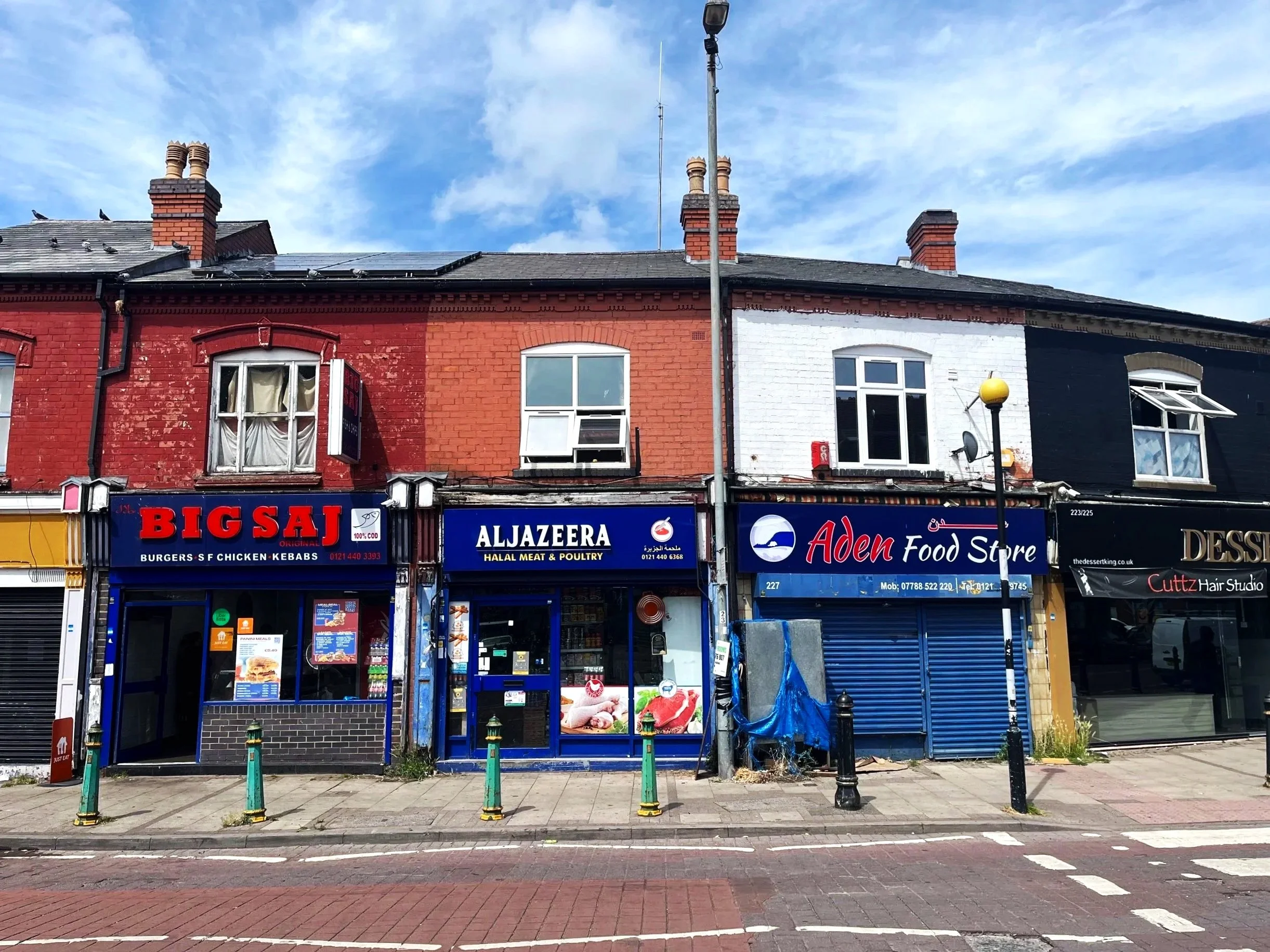
Photo by Ken Chitwood.

Who Speaks for Britain’s Muslims?

May 7, 2026

Is the current political climate about the failure of Muslim representation—or the impossibility of it given the state of UK politics?

On a cold, breezy February night in Manchester, Hannah Spencer, a plumber-turned-politician, did something no Green Party candidate had ever done.

As intermittent rain fell, the results came in and she’d won a Westminster by-election, giving her a seat in Parliament before the next United Kingdom general election in 2029.

Spencer not only defeated her rivals; she also increased the Green Party’s share of the vote by nearly 30 percent from two years prior. In doing so, she secured the progressive party’s first ever by-election victoryin what was a Labour Party stronghold.

In the days after, rival campaigns and commentators rushed to explain how Spencer, who is not Muslim, won in a constituency with a significant Muslim population. Some pointed to grassroots organizing around Gaza and disillusionment with Keir Starmer’s increasingly centrist Labour Party. Others suggested a broader realignment on the political left and a fracturing of the country’s “Muslim vote.”

Then there was the defeated Reform UK candidate, Matthew Goodwin, who polled second. Losing by nearly 12 percentage points, Goodwin told reporters the result showed “a coalition of Islamists and woke progressives” had “dominated” a constituency that some predicted might even swing so far as to support his right-wing populist party. Others suggested Muslim voters had been instructed how to vote or even engaged in fraud, as if the thousands of ballots cast across southeast Manchester were evidence of coordination and corruption rather than people’s political will.

To those who spent weeks canvassing for Spencer, the accusations sounded less like analysis than Islamophobic sour grapes. They had done what political activists everywhere do. They organized, argued, persuaded and, ultimately, showed up to vote for the candidate they felt spoke best to their needs.

But beyond Manchester, the by-election, its results, and the dispute that followed captured a broader, persistent tension in British politics. For decades, Britain’s Muslims have been active participants in the country’s political life—as candidates, campaigners, donors, and voters capable of swinging close contests. At the same time, and at least since the 1990s, successive governments have struggled, or flat-out declined, to engage Muslims’ political demands on their own terms, showing reluctance to address issues such as Islamophobia, foreign policy concerns, or the recognition of representative bodies like the Muslim Council of Britain (MCB).

Now, as Britain’s Muslims are more politically engaged, and fragmented, than ever ahead of another cycle of elections, a long-running, nagging question remains. The issue is not simply who speaks for Britain’s Muslims, but whether the country’s political system is prepared to listen—and whether meaningful representation is even possible in the UK’s current political climate.

Read the full story
In Religion, Religion and Culture, Religion News Tags British Muslims, UK Muslims, UK politics, Scotland Muslims, UK and Islam, Islam in the UK, Islam in England, Islam in Europe, Muslim politics, British Muslim politics, Muath Trust, Amanah Centre, Birmingham, Manchester, Muslim Council of Britain, The Revealer, Jehangir Malik, Abdallah Adnan, Muslim Engagement and Development, Shahin Ashraf
Comment
Image courtesy Ismaeel Nakhuda/AramcoWorld Magazine

Image courtesy Ismaeel Nakhuda/AramcoWorld Magazine

The magnificent tale of Moroccan acrobats in 19th-century England

May 10, 2021

Mohamed “Mo” Salah, the 28-year-old Egyptian professional footballer, is idolized by fans across the globe for being a goal-scoring machine for Liverpool Football Club in the English Premier League and Egypt’s national squad. But beyond his adept dribbling and scintillating scoring, the “Egyptian King” has left his mark on Liverpool in other ways. 

Researchers from Stanford University in the U.S. claimed that as a visibly Muslim, and very successful, footballer, Salah has helped humanize Islam not only in Liverpool, but in Britain writ large. They called this the “Mo Salah Effect.”

Even so, they suggested, the effect isn’t limited to Salah. They wrote that other “celebrities with role-model like qualities have long been thought to shape social attitudes.” 

Preston, UK, journalist Ismaeel Nakhuda poses beside the gravestone that gives the acrobat’s full name, Achmed Ben Ibrahim. (Photo courtesy Ismaeel Nakhuda/AramcoWorld Magazine)

Preston, UK, journalist Ismaeel Nakhuda poses beside the gravestone that gives the acrobat’s full name, Achmed Ben Ibrahim. (Photo courtesy Ismaeel Nakhuda/AramcoWorld Magazine)

For instance, about an hour’s drive outside of Liverpool lies the small city of Preston. There, around the turn of the 20th-century, a traveling Moroccan acrobat named Ali — known as Achmed ben Ibrahim — was part of a prominent community of Muslims that left their mark on Victorian British society. 

In fact, before there was a “Mo Salah Effect,” one might say there was an “Achmed ben Ibrahim Effect,” or, at the least, a “Moroccan acrobat effect.” 

The connections between the two Muslim athletes — Salah and Achmed — is a story that involves a traveling troupe of Moroccan acrobats, a Liverpudlian lawyer, and a mysterious grave located on the margins of a middle-class Lancashire cemetery.

It is also the story of the evolution of Muslim life in England and the cosmopolitan transformation of a port city like Liverpool, and how the early arrival of immigrants helped pave the way for the likes of Mo Salah to act as cultural humanitarians today.


Read the full story here
In Religion and Culture, Religious Studies, Travel Tags Mohamed Salah, Liverpool, Mo Salah Effect, Achmed bin Ibrahim, Ismaeel Nakhuda, AramcoWorld, Preston, Moroccan acrobats, Islam in the UK, Islam in England
Comment
Latest Writing RSS

Fresh Tweets

Tweets by kchitwood

Latest Writing RSS

RELIGION | REPORTING | PUBLIC THEOLOGY