• Home
  • About
    • Overview
    • Borícua Muslims
    • Engaged Spirituality
    • The Muslims of Latin America and the Caribbean
  • Contact
Menu

KEN CHITWOOD

Religion | Reporting | Public Theology
  • Home
  • About
  • Books
    • Overview
    • Borícua Muslims
    • Engaged Spirituality
    • The Muslims of Latin America and the Caribbean
  • Contact
“The person who knows only one religion, knows none”
— Max Müller

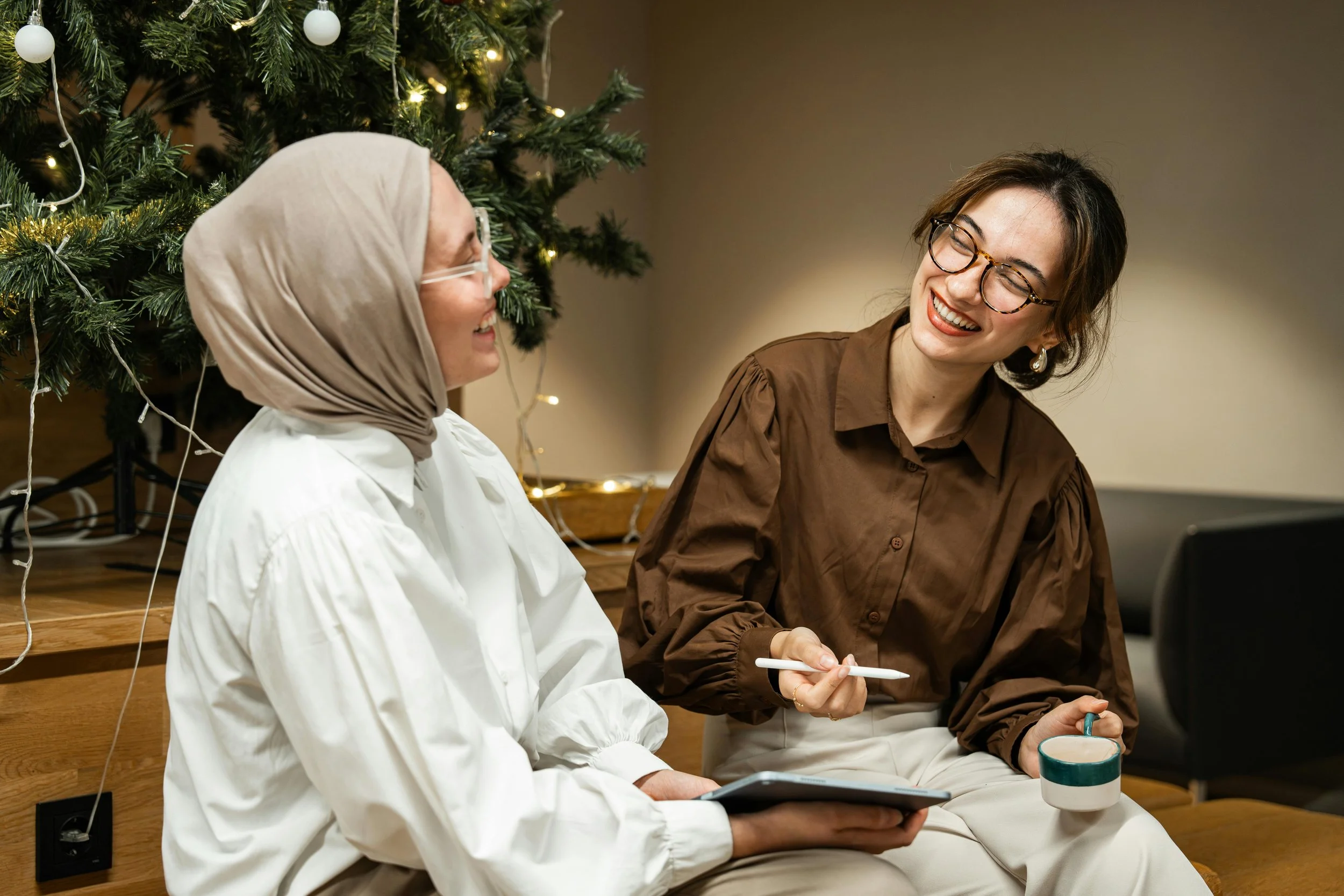
Wishing my Muslim friends a Merry Christmas

December 22, 2025

Every December, around the time I begin searching for the box of Advent candles and untangling the lights we swore we’d store neatly last year, I also make my way through digital holiday greetings. And Tuesday, as I whipped through a fresh batch of e-mails, I came across one from my dear friend Mohammed. 

The subject line? “Merry Christmas.” 

His is not the only Christmas greeting I’ll receive from Muslims this year. In fact, numerous contacts and colleagues from Cairo, London, Dubai, Bridgetown, and Minneapolis will send me seasonal salutations for a holiday they themselves will not celebrate…at least not religiously. 

Some hearing of these exchanges might tilt their head in inquiry: Why would Muslims wish me a Merry Christmas? Isn’t the holiday distinctly Christian, defined by the celebration of Jesus’ birth — a figure Muslims understand differently than Christians? 

Those questions are precisely what makes the greeting worth offering, and worth reflecting on.

A Shared Story, Told in Different Ways

Muslims do not celebrate Christmas as a religious holiday. But they do honor the birth of Jesus. 

The Quran devotes an entire chapter (or surah) to Mary (Maryam), recounting her labor pains, her fear and isolation, the miraculous birth of her son. Jesus (Isa), son of Mary, is mentioned a total of 25 times in the Quran, revered as a righteous prophet, a messenger, a “sign for humanity” (Q 19:21; 21:91), and as the “Spirit from God.” (Q 4:171)

While the Quran denies Christian beliefs about his crucifixion and resurrection (and surely, this accounts for major differences between the two traditions), Muslims believe that Jesus was conceived miraculously (Q 3:45). So, even if Muslims do not mark December 25 with a liturgical celebration, the story Christians celebrate is not foreign to them. It is part of their sacred narrative. And this means that Jesus — and by extension Christmas — can act, in the words of Jordan Denari Duffner and in the spirit of her book Finding Jesus Among Muslims, as a “bridge rather than a boundary” between Christians and Muslims. 

A Very Muslim Christmas?

That bridge can be particularly visible in December, when the Nativity story is central to Christian worship, and when Muslim reverence for Jesus and Mary quietly parallels that of Christians. 

For example, Christmas in Egypt is a vibrant national event, especially among Coptic Christians who mark the holiday on January 7th. The season is marked, however, by both Muslim and Coptic Christian communities with decorations, festive meals and gifts. Muslims widely participate by exchanging greetings, visiting Christian friends and generally enjoying the festive atmosphere in decorated malls and public spaces, viewing it as a shared cultural holiday. 

In Bethlehem, Muslims walk through Manger Square during the tree-lighting ceremony, standing shoulder-to-shoulder with Christians. One friend of mine made a special trip back to Bethlehem to join her Christian neighbors in the celebrations, particularly important this year as the tree-lighting returned for the first time since December 2022 and the start of the War in Gaza 10 months later. Attending these events becomes a shared act of memory and solidarity, she said, with Muslims, Christians, and others in Palestine recalling how the original Nativity narrative mirrors Palestinian realities of occupation, displacement and struggle, featuring refugees (Mary, Joseph, Jesus), an oppressive empire (Rome) and massacres (of innocents), finding resonance in modern experiences in Bethlehem and Gaza, where Jesus would be “born among the oppressed.”

In Barbados, Muslim families will join neighbors for festive meals, decorate their houses with lights and serve together in the community. And thanks to the long history of Muslim professionals and businesspeople from Bengal and Gujarat in the Eastern Caribbean, they also serve as essential suppliers for a festive Bajan tradition: refreshing house decor with buying new curtains from stores like Abed’s on Swan St. In a sermon (khutbah) during the holiday season in 2024, an imam advised Muslims to not get carried away but encouraged them to remember the true wisdom (hikma) of the season: that Isa’s miraculous birth shows the power and might of Allah.  

Recently, on a trip to Dearborn, Michigan, which has a significant Muslim population, I was reminded of how much locals love the holiday. A nativity scene is proudly displayed in its Peace Park and at City Hall, across the street from the Arab American National Museum. Festive displays, from Santa and reindeer to Christmas trees and more, can be found in restaurants, salon and other local businesses across town. 

One can find examples from numerous contexts, from Britain to Uzbekistan, Indonesia to Kenya, where Muslims engage with Christmas in ways that revolve around the season’s jolly vibes, personal relationships, shared ritual meals of lamb, chicken or biryani, the giving of small gifts to friends, neighbors, or coworkers, volunteering, or enjoying the lights, music, and markets. 

From Suspicion to Hospitality

Of course, Muslims themselves navigate Christmas in diverse ways. Some embrace the season fully. Others participate selectively, enjoying the warmth of the holidays while staying clear of religious rituals. Still others avoid the season altogether, with an eye to holding firmly to a distinct, and countercultural, religious identity.

And crucially, as the imam in Barbados reminded his community, participation remains cultural, not theological. Muslims maintain clear boundaries around worship, avoiding practices that conflict with Islamic teachings about Jesus’ divine status.

This diversity is not evidence of confusion but a reminder that Islam, like Christianity and other religions, is not monolithic. It is a global, textured, and differently-lived tradition in Cairo and in London, in Tashkent and in Bridgetown.

But the shared reverence of Jesus can create space, perhaps unexpected for some, for common ground. Seeing it as such, Christmas becomes not a point of contention, but a season in which Christians and Muslims can adopt a “hermeneutic of hospitality” toward one another, assuming goodwill rather than suspicion. Through this lens, Muslims’ participation in Christmas is not a religious endorsement but a sign of belonging, an expression of what Duffner calls the “lived reality of interfaith friendship.”

One of Duffner’s most challenging insights, however, is that fear often shapes Christian attitudes toward Muslims more than any theology of hospitality. Fear creates boundaries where God invites connection. Fear distorts our ability to see Muslims’ goodwill for what it is. Fear makes us suspicious of greetings that might otherwise deepen friendship. Her antidote is simple but demanding. It is to adopt a posture of generosity, to listen before judging, to welcome rather than withdraw.

Why I Wish My Muslim Friends a Merry Christmas

Christmas, from my perspective as a Christian, embodies a message of radical, divine hospitality, with God coming near in vulnerability and offering hope to the marginalized and oppressed. In turn, I believe the holiday invites, and challenges, Christians to embrace the season as a powerful moment to practice those very virtues.

So yes, when my Muslim friends send me Christmas greetings, I send them back. Not because we believe the same things about Jesus. We don’t. But because the season’s themes of charity, generosity, hospitality and a hoped-toward, longed-for peace, resonate across our traditions. And because many Muslims, in their own way, already participate in the festive rhythms December brings.

Perhaps the most surprising gift of Christmas, as Duffner reminds us, is that when my Muslim friends wish me a Merry Christmas, I find Jesus among them — not as a point of division, but as a bridge of goodwill, reverence and shared humanity.

And that, I believe, is worth celebrating.
In Church Ministry, Interreligious Dialogue, Missiology, Religion, Religion and Culture, #MissedInReligion Tags Christmas, Muslims and Christmas, Jesus Islam, Islam and Jesus, Muslims and Jesus, Christian-Muslim relations, Christian-Muslim dialogue, Islam and Christian-Muslim Relations, Jordan Denari Duffner, Finding Jesus Among Muslims
Comment

Photo via Christianity Today

Despite criticism, Sweden church continues to advocate evangelism of Muslims

October 13, 2025

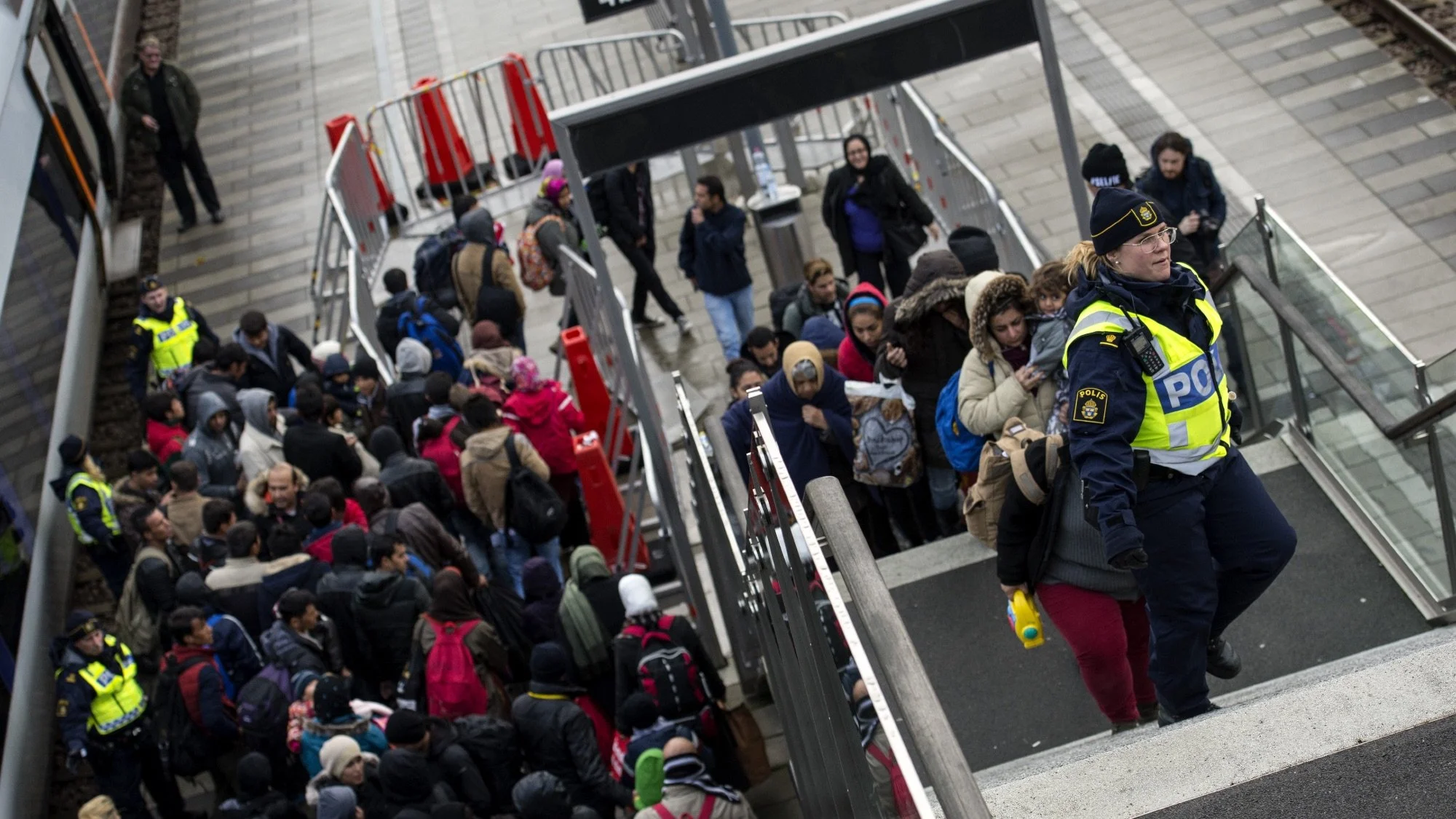
Joakim Lundqvist never thought he would be pastor to hundreds of people named Muhammad. 

And yet, in the wake of Europe’s influx of asylum seekers from conflict zones in Muslim-majority countries including Syria, Afghanistan, and Iraq, he and his church, Livets Ord (Word of Life) in Uppsala, Sweden, saw their own dramatic increase in newcomers—many of them Muslim.

In the last ten years, Lundqvist said Word of Life has seen more than 900 Muslims convert to Christianity and 450 graduate from the charismatic megachurch’s Bible school.

Founded in 1983 by Ulf Ekman, the church has grown into a significant force within the charismatic movement, with thousands of members in Uppsala and international centers around Europe and in Russia, the Middle East, and Asia. 

As debates around immigration in Europe have resurged in recent days, rhetoric remains emotionally charged across the continent. Populist voices continue to frame migrants—particularly Muslims—as a threat to European identity. Mainstream political leaders urge more nuanced dialogue with an appreciation for multiculturalism and respect for the tradition of human rights.

Read more at CT
In Church Ministry, Missiology, Religion and Culture, Religion, Religion News Tags Asylum, Asylum seekers, Sweden, Church, European missions, Evangelical missions, Muslim converts, Islam, Christian-Muslim relations, Islam and Christian-Muslim Relations, Joakim Lundqvist, Word of Life Church, Livets Ord
Comment

Peacebuilders Reflect on Pope Francis’ Impact on Christian-Muslim Relations

May 13, 2025

When Pope Francis died on April 21, aged 88, tributes not only poured in from politicians and representatives of the world’s 1.3 billion Roman Catholics, but also from leaders of different religious traditions.  

Justin Welby, the former archbishop of Canterbury who became leader of the Anglican church the same year Francis became pope, said Francis was “an example of humility” who “constantly reminded us of the importance of serving the poor, always standing with those who faced persecution and hardship.” 

The Dalai Lama said he was an example of service to others, “consistently revealing by his own actions how to live a simple, but meaningful life.” 

Chief rabbi Pinchas Goldschmidt, president of the Conference of European Rabbis, remembered Francis for his, “unwavering dedication to promoting peace and goodwill worldwide.”  

The tributes from numerous global religious leaders and communities are a testimony to Francis’ interreligious engagement during his 12-year papacy — and the primacy he placed on values like mercy, dialogue with the marginalized, interdependence and the shared urgency of working for the common good.  

Throughout his papacy, Francis regularly called on people of faith to practice interfaith dialogue, friendship, and collaboration. He himself also engaged in numerous trips, consultations and one-to-one dialogues throughout his 12-year papacy.   

But in the days since his death, I also heard from numerous practitioners in the field of Christian-Muslim dialogue who spoke of the particular, and personal, impact Pope Francis had on them.  

Read more
In Interreligious Dialogue, Religion and Culture, Religion, Religion News Tags Pope Francis, Pope Francis + Muslims, Christian-Muslim relations, Islam and Christian-Muslim Relations, Christian-Muslim dialogue, interfaith, Interreligious engagement, Interreligiöse, Interreligious dialogue, Jordan Denari Duffner, Al-Azhar, Catholicism, Roman Catholic Church, Pope, Catholic dialogue
Comment

PHOTO: Carsten Behler via Christianity Today

God's Talker: Thomas Schirrmacher hopes to lead Christians into conversations, cooperation with other religious communities

November 9, 2021

The first thing you notice about Thomas Schirrmacher’s home are the books.

Stuffed into shelves, stacked in piles, and even teetering on top of the toilet, they range from edited collections of Jewish history to works such as Mark Noll’s The Scandal of the Evangelical Mind.

Schirrmacher is the recently elected secretary general and CEO of the World Evangelical Alliance (WEA). He is also the author of scores of books himself.

Of note on Schirrmacher’s bookcases, however, is a title not written by him but in his honor: God Needs No Defense: Reimagining Muslim-Christian Relations in the 21st Century.

Opening with an essay on “humanitarian Islam” by former Indonesian president Abdurrahman Wahid, the edited collection of essays, statements, and treatises—including an essay by Schirrmacher’s wife, Christine, who is a professor of Islamic studies—covers issues related to Christian-Muslim relations and religious freedom.

The volume is a testament to Schirrmacher’s vision: a world where, as the editors said, “Muslim and Christian believers reach across racial, religious, cultural, and political lines to strive for the equal rights and dignity of every human being.”

The authors said Schirrmacher is a man who is driven intellectually, emotionally, and theologically to work with a diverse range of partners in addressing some of the world’s most pressing issues.

The challenge now is to rally global evangelicals to do it with him.

Read the Full Profile at Christianity Today
In Church Ministry, Interreligious Dialogue, Religion and Culture, Religion News Tags Thomas Schirrmacher, World Evangelical Alliance, Bonn, Christian-Muslim relations, Islam and Christian-Muslim Relations, Global Christianity, interfaith, Interfaith relationships, Interreligious engagement, Interreligious dialogue
Comment
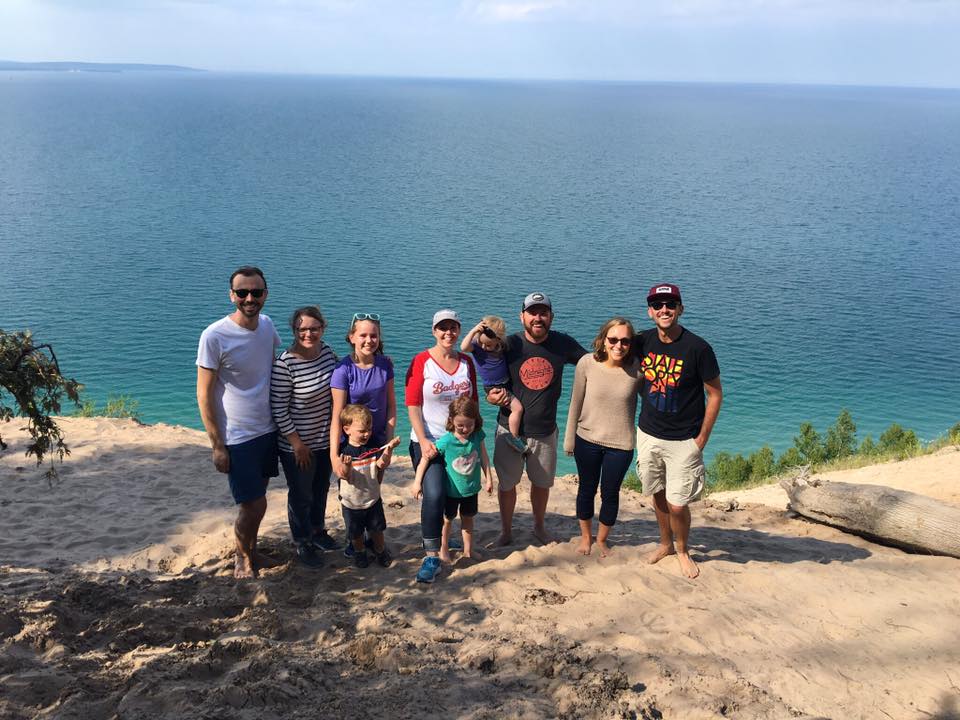
With family and friends at Camp Arcadia in 2017.

With family and friends at Camp Arcadia in 2017.

Join me this summer to reimagine Islam and Christian-Muslim relations in Michigan!

April 18, 2019

What do you think of when you think of “Islam?” Whom do you picture when you think of Muslims? How might we envision ways to love our Muslim neighbor despite what we see in the news? How do we deal with the stunning diversity of the world and its presence in our lives via the rapid and constant movement of ideas, people, technologies, and religious practices?

This summer (June 22-29, 2019), I will be leading a one-week “dean and lecture” program posing, exploring, and unpacking these questions and more with participants at Camp Arcadia in Michigan.

Beyond considering the ways Christians have imagined Islam past and present, these sessions will aim to challenge what we think we know about Muslims, and invite us to reimagine our relationship with Islam and Muslims alike.  In addition, we will use the “case” of Muslim-Christian relations to re-imagine how we think about, live alongside, and engage with “others” in general.

I will be joined in the “dean and lecture” program by Heather Choate Davis, who will be presenting “God’s Visionaries: Seeing the Big Picture.” Heather is a writer, speaker, theologian, liturgist, and servant based in Los Angeles. In 2013, she received her MA in Theology from Concordia University Irvine, and is now completing a two-year intensive training in Christian Formation and Spiritual Direction.

I encourage you to consider attending and registering for Family Week 1 to join Heather and me at Camp Arcadia.

Camp Arcadia, located in Northwest Michigan, is a non-profit, Lutheran, family resort and retreat center on the sandy shores of Lake Michigan. Arcadia exists to provide a setting for families and individuals to enjoy a vacation together and be renewed in spirit, mind and body – enjoying the beauty of the lake surroundings and the community of fellow campers.

During a family week you might square dance, play basketball, shuffleboard, softball, tennis or soccer, create a craft, participate in a talent show, compete in family games or shoot archery. Every member of the family will be engaged spiritually through the daily morning study, presentations, and worship.

Each of the family weeks at Camp Arcadia is unique in that different speakers bring their knowledge and style to the program. While adults are in their program, children (age three through college) are engaged in their own study and activities led by our program staff. A nursery for those under three is also available. Daily programming also features activities (athletic, craft and nature) for children and adults to do on their own or in family groups.

You will find places at Arcadia to be by yourself, have intimate conversations with others, and be with small and large groups of people.  At Arcadia, you will find the time to experience each of these types of community.

Plus, maybe we can grab a meal or two together in the canteen. I hope to see you there.

Learn more or register for Camp Arcadia


In Church Ministry, Religious Literacy, Travel Tags Camp Arcadia, Islam, Christian-Muslim relations, Islam and Christian-Muslim Relations, Others, Globalization, Dealing with difference
Comment

Somalis as Samaritans: Reflections on Christian-Muslim Relations in Kenya

February 22, 2017

A few years ago I had the opportunity to travel to Kenya and interact with the local evangelical Lutheran community. During my time there, and in subsequent interviews and conversations, I talked to them about Somalis, al-Shabaab, and their perspective on Christian-Muslim relations. 

Recently, I published an article entitled, "Somalis as Samaritans: A Glimpse into Christian–Muslim Relations in Eastern Africa from the Perspective of Evangelical Kenyan Christians," with the journal Islam and Christian-Muslim Relations. 

Here's an excerpt: 

“Long considered – perhaps naïvely – a relative oasis of Christian–Muslim calm, Kenya is seeing increased tension and conflict, mainly exacerbated by al-Shabaab militants, Kenyan military and Christian mobs. Concomitantly, the media and popular sentiment often vilify Somalis. This goes back to government agitprop during the ‘Shifta War’ of the 1960s. Among evangelical Christians, however, attitudes toward Somalis can prove more ambivalent. Drawing on interviews conducted with both Kenyan evangelical Christians and Somali Muslims, this article seeks to examine the theological shift among Kenyan evangelicals wherein they have re-cast Somalis as Samaritans and in doing so have made their primary approach to this conflict one of evangelization, not open hostility. This shift is due to a confluence of factors including community context, economic pragmatism and religious motivations, and the focus on evangelism does not necessarily preclude peace-building. What this article aims to present is a glimpse into the outlook of Kenyan evangelicals toward Somalis, particular Somali Muslims, and discuss these attitudes in the nexus of factors mentioned above. The article will reveal how, by re-casting the Somali ‘villain’ as Samaritan, some Kenyan evangelicals maintain boundaries and foster new identities in East Africa for the sake of a longed-for peace.”
— "Somalis as Samaritans: A Glimpse into Christian–Muslim Relations in Eastern Africa from the Perspective of Evangelical Kenyan Christians," Ken Chitwood Islam And Christian–Muslim Relations Vol. 28, Iss. 1,2017

If you'd like to read the entire article, please click the link below for a free copy. Only the first 50 respondents will be able to download the entire article free of charge. 

Find the Entire Article Here
In Religious Studies, Religion, PhD Work Tags Islam and Christian-Muslim Relations, Kenya, Islam in Kenya, Evangelical Kenyan Christianity, Christian-Muslim relations
Comment
Latest Writing RSS

Fresh Tweets

Tweets by kchitwood

Latest Writing RSS

RELIGION | REPORTING | PUBLIC THEOLOGY