• Home
  • About
    • Overview
    • Borícua Muslims
    • Engaged Spirituality
    • The Muslims of Latin America and the Caribbean
  • Contact
Menu

KEN CHITWOOD

Religion | Reporting | Public Theology
  • Home
  • About
  • Books
    • Overview
    • Borícua Muslims
    • Engaged Spirituality
    • The Muslims of Latin America and the Caribbean
  • Contact
“The person who knows only one religion, knows none”
— Max Müller

Getty Image (NurPhoto), via Christianity Today.

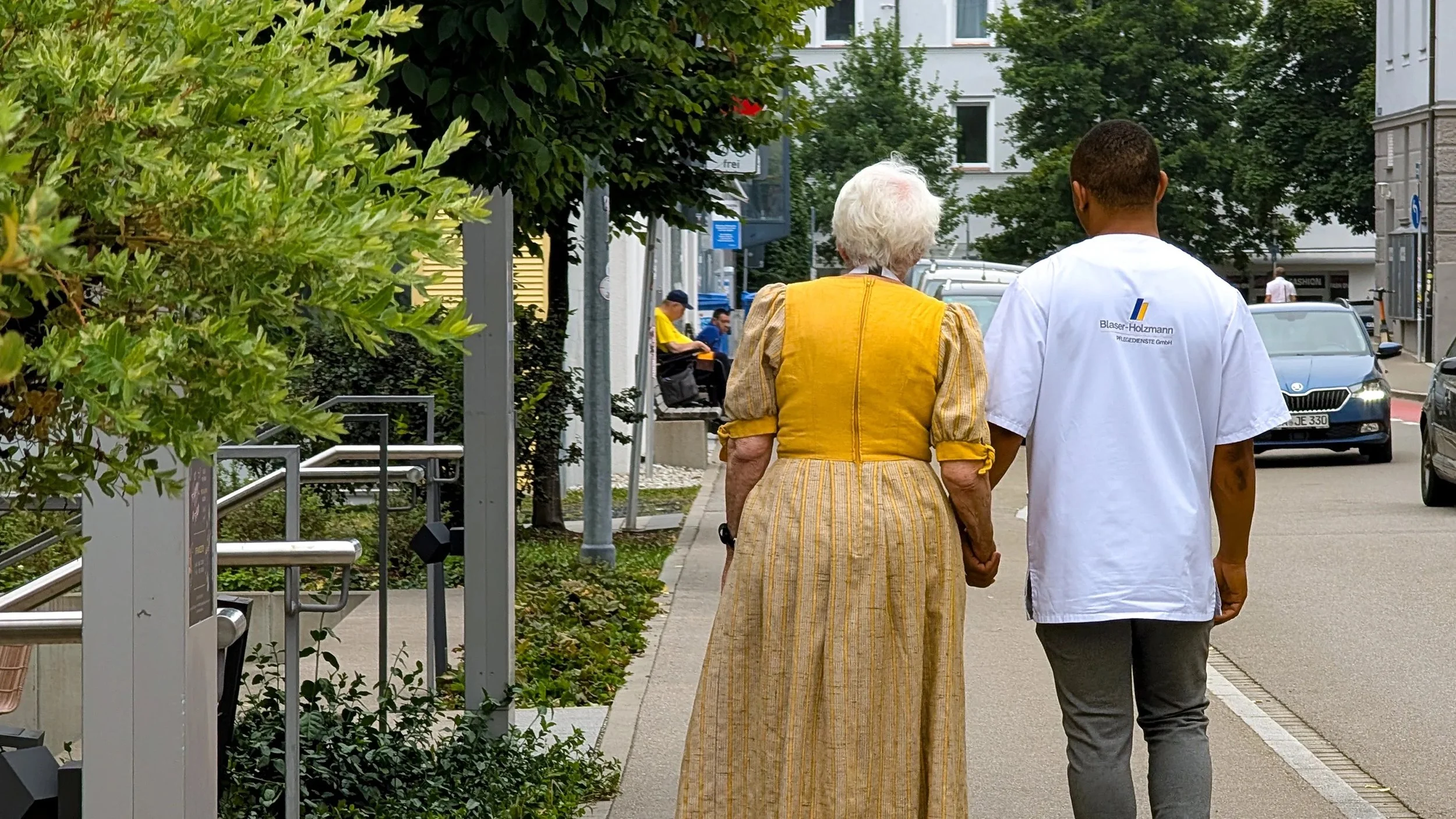
Migrants Fill the Gap Caring for Germany’s Aging Population

May 18, 2026

At the Immanuel Senior Care Center in Elstal, about 18 miles outside Berlin in the German state of Brandenburg, 26-year-old Sharoon Masih moves between the kitchen and the common room carrying trays of food with a generous smile and the willingness to strike up a conversation.

Officially, Masih works as a service assistant, serving meals, helping residents with personal hygiene, and providing general care. But his job frequently also requires meeting relational needs. “The elderly people are always inviting me over,” he said. “They want to talk. They want to tell stories.”

And sometimes they want to hear his.

From Pakistan’s Punjab province, Masih arrived in Germany in 2018 as an asylum seeker after facing persecution for his Christian faith. Before starting his position in Elstal in 2021, he faced a period of instability, including a denied asylum application and the threat of deportation as he awaited his appeal. Through a local church in Berlin, he found both spiritual and practical help.

A pastor encouraged him to pray, wait, and entrust his future to God. Within weeks, a connection led him to the care home. Within a month, he had a job. Within a year, he had secured residency.

Masih said his journey has shaped the way he approaches his work today. The sense of being a stranger in a new land helps him connect with residents who often feel like strangers themselves—isolated in their rooms, distanced from family, and navigating the numerous psychological, emotional, and physical dislocations that can come with old age.

“My experience taught me what it means to be alone,” Masih said, “but God used that experience and led me to this profession to be a bridge.”

In stories like Masih’s, two of Germany’s most notable demographic shifts converge as its growing aging population meets its freshest newcomers. Among the refugees and migrants filling the role of caregiver to older adults are many Christians like Masih, from Eastern Europe, Africa, Asia, and elsewhere. They’re not only providing for physical needs but also bringing their faith, culture and spiritual presence into Germany’s care homes.
Read more
In Church Ministry, Religion, Religion and Culture, Religion News Tags Germany, German Christians, Migrants, Migrants in Europe, Elderly care, Migrants in elderly care homes, Migrant Christians in elderly care homes, Elderly care Germany
Comment

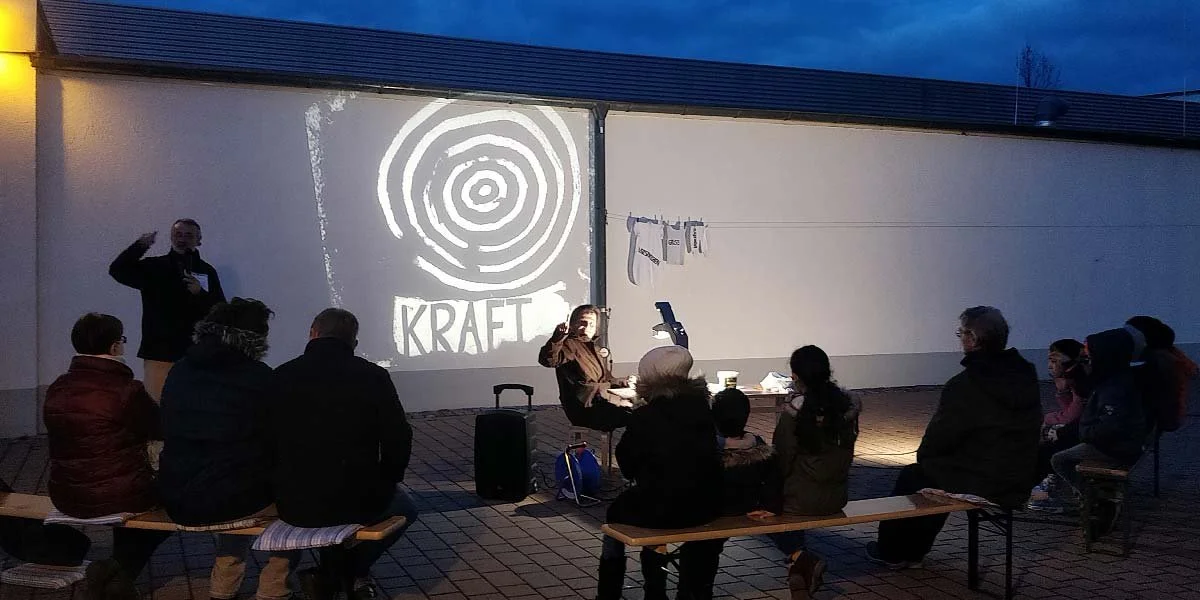
Volunteers for the Senfkorn Stadtteilmission share the Christmas story on a cold winter’s night in Gotha, Germany (PHOTO: courtesy Senfkorn)

How migrants are changing Europe's churches

October 10, 2022

“Each apartment block has its own community, its own dynamics, its own culture,” Ute Paul said as she walked among the Plattenbau — formidable apartments built of prefabricated concrete slabs —  in Gotha West, a working-class suburb of the central German city, Gotha.

Originally constructed as a planned housing development (Neubaugebiet) during the waning years of the socialist East German Republic, the district is now home to migrants who have made their way from Ukraine and Eritrea, Afghanistan and Romania, Nigeria and Syria. Many of them are relocated to places like Gotha West, where they often end up grouped with their fellow countrymen and forming cliques based on shared language, religion, or background.

On Coburger Place, a centrally located square with shops and a small casino that serves as the neighborhood’s main hangout spot, there is a small storefront with the words, “from dark to light” written across its windows.

The shop is the principle gathering place for the Mustard Seed District Mission (senfkorn.STADTteil Mission). Since 2015, pastor Michael Weinmann and his wife Christiane have been leading Mustard Seed and “experimenting with new forms of community in Gotha-West,” said Paul, who joined the pair along with her husband, Frank, in 2021.

Focusing less on events and more on “relationships, ‘accidental’ encounters, and natural life in the district,” Paul said the mission has little to show in terms of deliverables or church attendance.

Instead, reflecting the challenges and opportunities of migrant mission in Europe, Paul said Mustard Seed has been able to “create a vibrant network of relationships between people of different backgrounds and origins from across the world.”

Along the way, Paul said the Mustard Seed team has had to unlearn a lot of what they thought they knew about mission and adapt to the everyday realities of those God has given them to serve.

Since the unprecedented migratory movements that shook Europe in 2015 and 2016, an increasing number of Christian organizations have had to reshape their institutions and rethink the identity of Christianity from below.

Mustard Seed is just one example of how the movement of asylum seekers, economic migrants, and internally displaced persons has created new commissions and institutions to meet changing facts on the ground across the continent.

Migration to Europe is not a recent phenomenon. But since 2013, some 17.2 million migrants from outside the European Union (EU) have come to Europe, finding their way to places like Germany and Spain, the UK and Italy. As they arrived, they have sparked public discourse around European culture, values, and religious identity.

Amid the debate, churches have played key roles in the process of integration. Beyond offering religious hospitality, a 2018 study from the Churches’ Commission for Migrants in Europe (CCME) found how congregations provide “symbolic resources for positive self-identification and opportunities for interaction with others as well as crucial services.”

The result has been a transformation of the churches themselves.

Read more at Christianity Today
In Church Ministry, Missiology, Religion, Religion News, Religious Studies Tags Senfkorn, Senfkorn Stadtteilmission, Gotha, Germany, Immigration, Federal Office for Migration and Refugees, Migration, Migrant churches, Migrant Christians, Christianity, Christians, Mission, Missionaries, German churches, Evangelicals, Evangelicals in Germany, Migrants in Europe, European Christianity
Comment
Latest Writing RSS

Fresh Tweets

Tweets by kchitwood

Latest Writing RSS

RELIGION | REPORTING | PUBLIC THEOLOGY