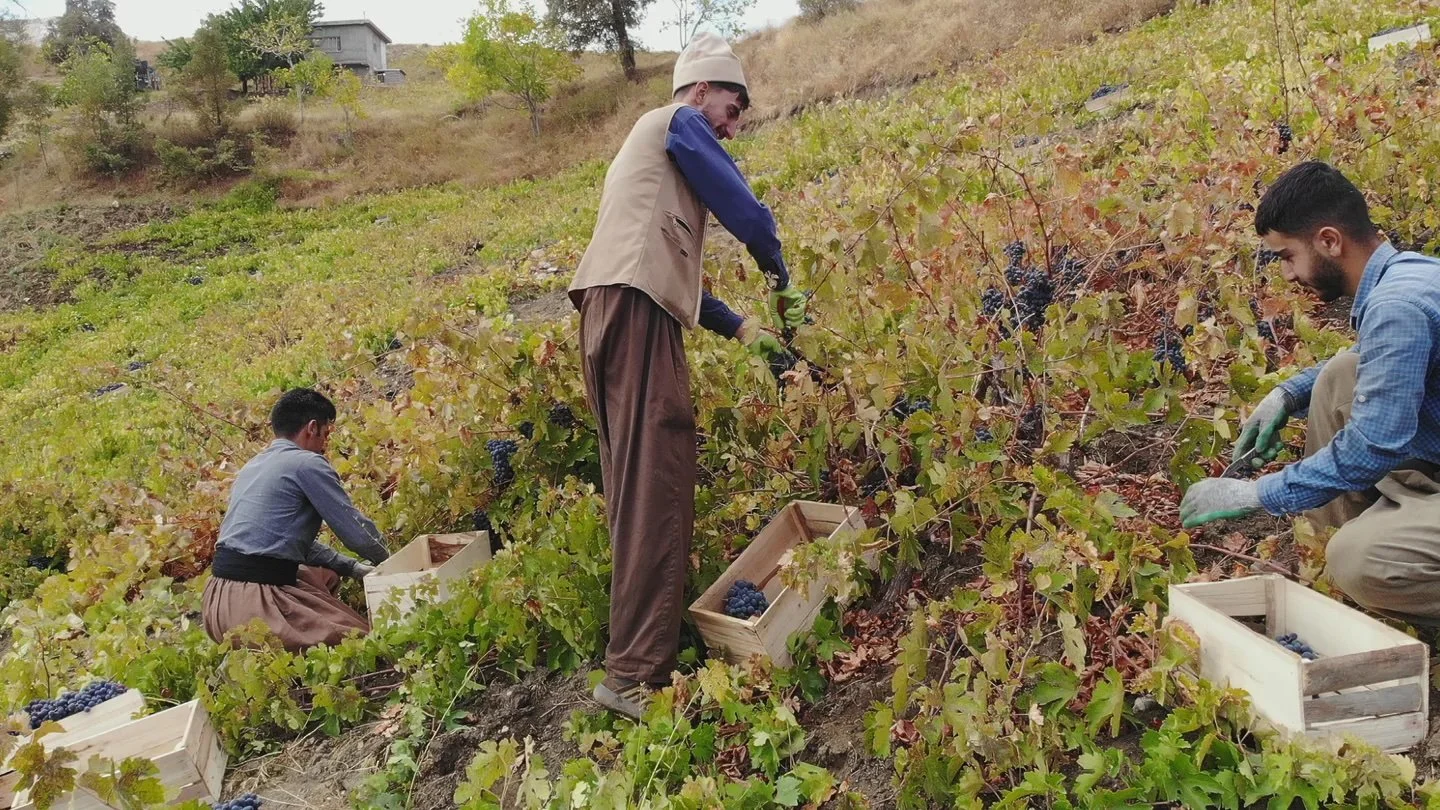
When the Islamic Revolution swept Iran in 1979, Shahram Soltani’s family was told to stop making wine.
For decades, winemakers like the Soltanis enjoyed the support of the Pahlavi monarchy and its head of government Mohammad Reza Pahlavi, who wanted to see Iran become one of the world’s biggest wine producers. With that backing, in the years leading up to the revolution, there were around 300 wineries growing, harvesting, and processing grapes on massive vineyards in the Zagros Mountains and the semi-arid farmlands around the city of Shiraz. These areas were not new to the business of making wine; they constituted a part of viticulture’s fertile crescent—stretching across Iran, Iraq, Turkey and the countries of the southern Caucasus, Armenia, and Georgia—where wine culture existed for at least 7,000 years.
Then, in February 1979, things took a turn. “One day to another, Iran’s commercial wine culture just stopped,” said Soltani. “Everyone was finishing their harvest—all the tribes and families—preparing their new vintage and [then] bang, a seven millennia-long history of Persian winemaking entered a new, uncertain chapter.”
Even with new laws introduced by the Islamic Republic, families kept making wine behind closed doors. And, non-Muslim minorities such as Armenian and Assyrian Christians, Jews, and Zoroastrians were exempted from the ban, permitted to produce their own alcohol for ceremonial purposes. But it was nothing that Iran’s winemakers could share with the world.
When Soltani left Iran and relocated to Sweden in 2016, he wondered if a new chapter might be written in the history of Persian wine. “I saw urban wineries in Sweden. Or in London. Or in Germany, who would buy grapes from wine regions elsewhere and make wine in the city,” said Soltani. “That’s when I had the thought, why can’t we do the same? It’s legal to export grapes from Iran, so what is stopping us from making Persian wine elsewhere?”
In 2021, Soltani opened Drood—the first new Persian winery in nearly five decades—nestled amidst the old-growth forests, quaint red cottages, and historic glass factories and paper mills of Sweden’s rural Småland province. Over the last five years, the winery not only re-introduced Persian wine to a new audience but helped shed light on its border-crossing history and Iranians’ ongoing fight to preserve their cultural heritage along the way.