• Home
  • About
    • Overview
    • Engaged Spirituality
    • Borícua Muslims
    • The Muslims of Latin America and the Caribbean
  • Contact
Menu

KEN CHITWOOD

Religion | Reporting | Public Theology
  • Home
  • About
  • Books
    • Overview
    • Engaged Spirituality
    • Borícua Muslims
    • The Muslims of Latin America and the Caribbean
  • Contact
“The person who knows only one religion, knows none”
— Max Müller

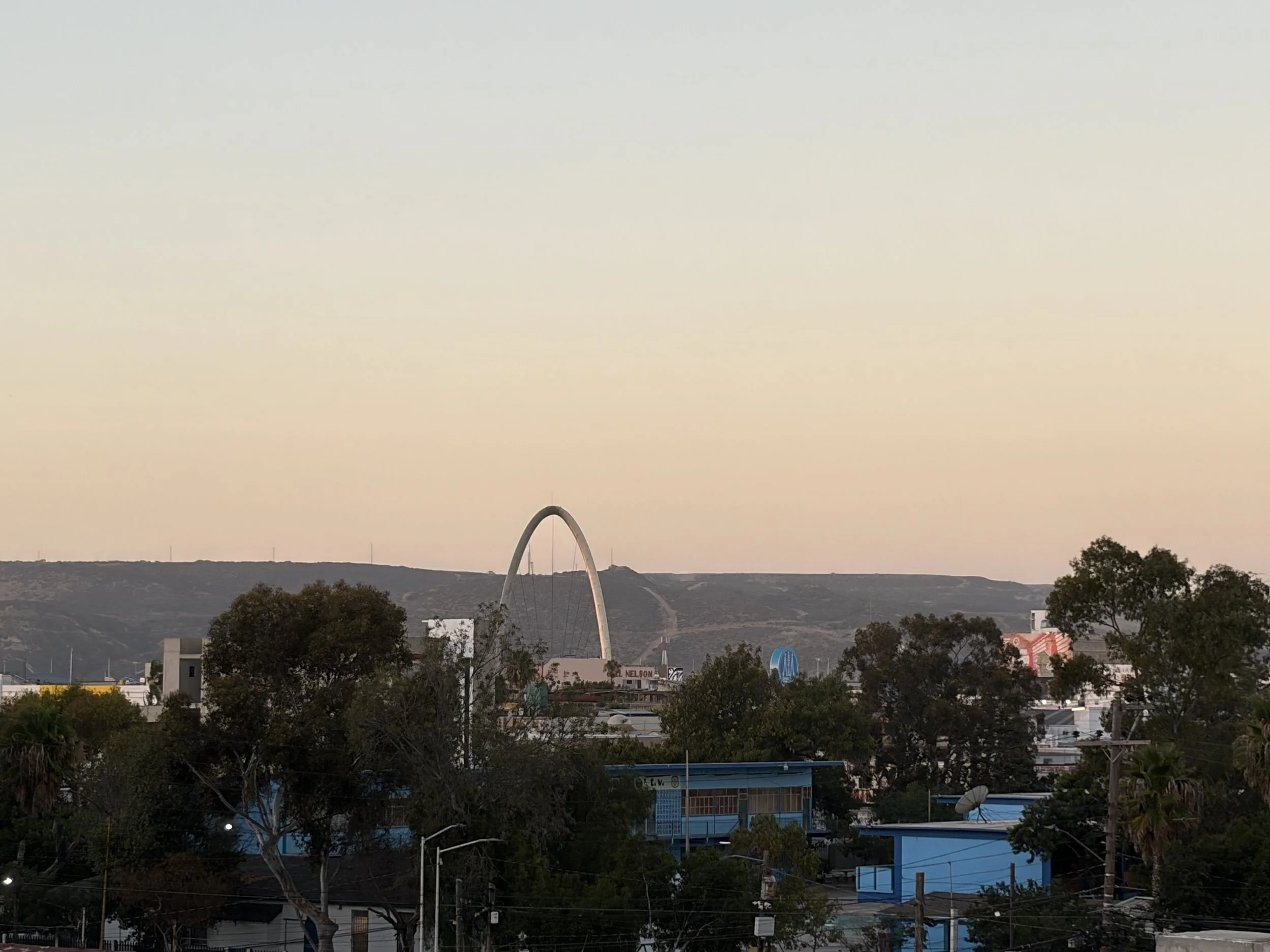
Looking out across Tijuana — and past the United States/Mexico border — to the U.S. PHOTO: Ken Chitwood

Waiting on November

October 6, 2026

When Mag and I first met, all I heard was a shout.

As I walked up to Albergue Assabil, the first shelter for Muslim migrants on the U.S./Mexico border, he yelled in my direction asking why I was there.

The 33-year-old Mag (short for Magomed, a Russianized form of Muhammad) was leaning on a white pick-up truck in a black hoodie and matching sweatpants sporting a full, more-than-fist-length reddish beard with a slight white streak running down the side. He had been in Mexico since December 2024. Originally from Dagestan, a federal republic of Russia located in the North Caucasus region, he was on the road for two years since leaving his family back home for reasons he consistently referred to as “complicated.”

He arrived in Tijuana just before the border shut down completely in January 2025. He’s been stuck there since.

Now he spends his afternoons at the shelter, a few blocks from the rust-colored bollard fencing that marks the U.S./Mexico border, close enough to the wall to see the drag roads that Border Patrol trucks use to police the 50-to-100-foot no man’s land known as the “zone of enforcement” between the barriers on the Mexican side and those in the U.S.

Even with that view, so close and yet so far to his goal of living in Los Angeles, Mag is, by his own reckoning, waiting for one thing: November.

The 2026 U.S. midterm elections are still weeks away, but Mag — like many other migrants waiting in Mexico — has pinned his hope for a different life onto a single date on a calendar.

Like most at Assabil, and thousands more scattered across cities like Tijuana, Tapachula, and Mexico City, Muslim migrants who arrived in the last two years have adopted a shared shorthand for the future.

They are, as Mag put it to me, “waiting on November.”

But as Mag himself would admit, waiting may not be enough – and the democracy he hopes will self-correct and open a pathway for his presence may leave him and many others like him disappointed come December.
Read the full story
Tags Mexico, Muslims in Mexico, US/Mexico border, U.S./Mexico border, Muslims at the border, Democracy, Elections 2026, Religion news
Comment

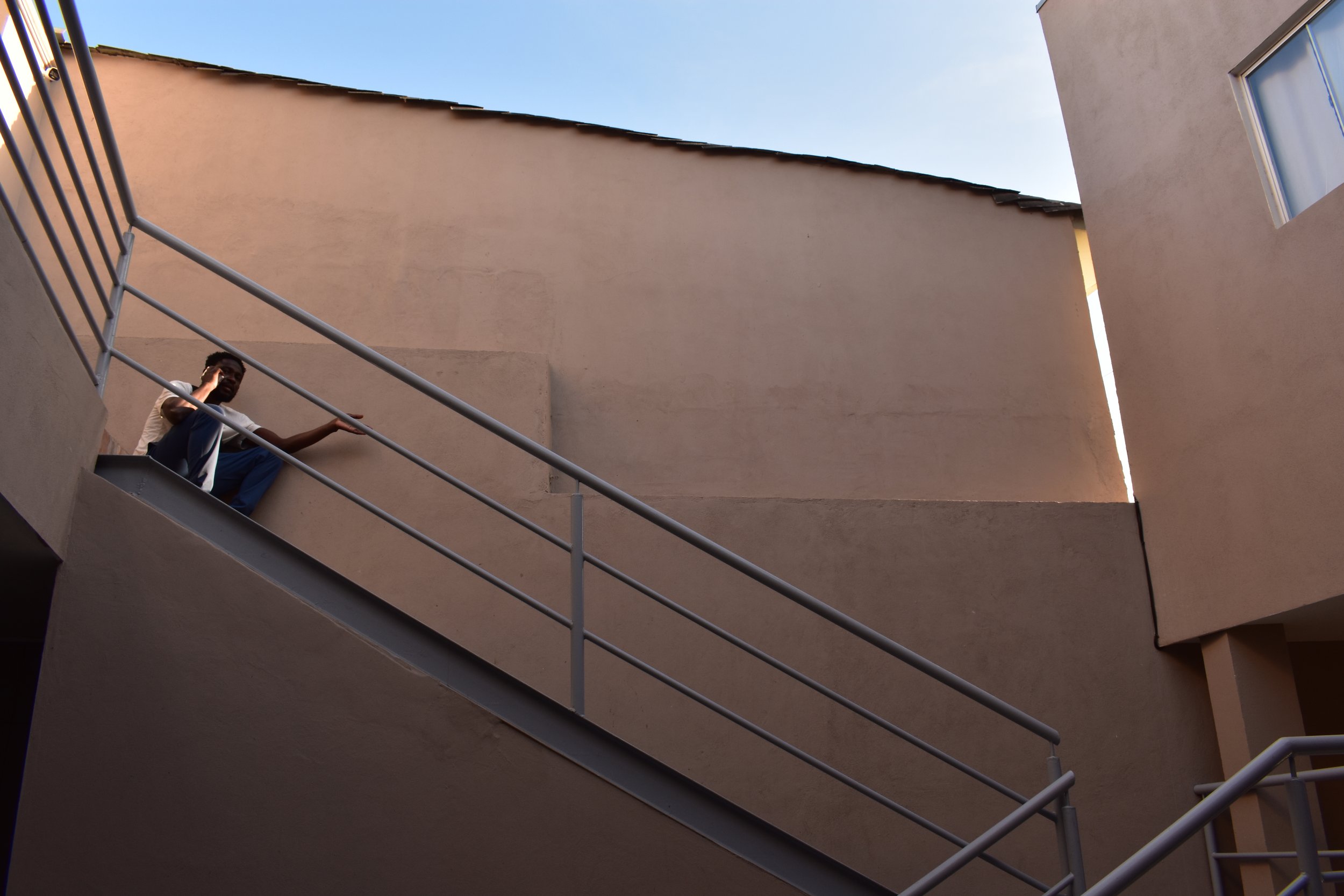
An asylum seeker calls home in the central patio at Albergue Assabil in Tijuana, Mexico. PHOTO: Ken Chitwood

BorderLine Impossible

April 10, 2023

As Hamza starts tellling his story, tears roll slowly down his cheeks.

Sitting on the back of a white pick-up truck with other Ghanaians, Hamza and his fellow countrymen are within eyesight of the rusted steel bollard fencing that demarcates the dividing line between San Ysidro, California and Tijuana, Mexico.

On the other side of la linea, Hamza hopes to claim asylum in the United States.

It’s been a long, laborious journey to get this far. Hamza left Ghana for Brazil the day after his only daughter was born, which also happened to be Eid al-Fitr. That was May 2, 2022. It took Hamza another three, arduous months to make his way by foot, truck, train, and bus across the Amazon and then through Colombia, Panama, Costa Rica, Nicaragua, and Guatemala to Mexico. Along the way, Hamza said he saw dead bodies hidden in the bush, witnessed multiple assaults, and suffered the pangs of frequent hunger without adequate access to halal food. He spent another one and a half months in Mexico, bouncing from shelter to shelter, struggling to maintain a halāl diet and keep to his daily cycle of prayers.

Then he heard about Albergue Assabil (“the Shelter of the Path”), a sanctuary in Tijuana for Muslim migrants run by the Latina Muslim Foundation (LMF) of San Diego, California.   

Sitting outside the shelter, tantalizingly close to his goal, he is filled with hope and fear, expectation and exhaustion. “Next week, insha’Allah, I will be in the U.S.,” he said.

Hamza is far from alone.

Described as a “waiting room” for “thousands of migrants who try to reach the border between Mexico and the US every month” and a principal landing point for deportees, Tijuana has taken center stage in the ever-unfolding drama of migrants’ journeys to the U.S.

Among them are Muslims like Hamza, from places like Chechnya and Afghanistan, Syria and Ghana. According to Eduardo Campos Lima, writing for Arab News, “thousands of people from Southeast Asia, Middle East and Africa try to reach the US-Mexico border every month.” Although there are no firm statistics about these “Muslim migrant flows,” organizations in the region report that more-and-more are making their way north from Brazil to the U.S./Mexico border.

For Muslim migrants, the “normal” stresses of labor precarity, family separation and potential imprisonment, deportation, or death are compounded by additional complications. Arriving in Tijuana, Muslim migrants face added challenges of finding shelter where they can consume halāl food, access facilities for prayer, and procure information about asylum in a language they can easily comprehend. If they are able to cross over, a triple bind of Islamophobia, anti-migrant sentiment, and a host of American fears about crime, disease, and a loss of cultural privilege await.

To provide a humane, and helpful, place for Muslim migrants to land in Tijuana Sonia Tinoco García and LMF constructed a purpose-built Muslim shelter. Opening in the border city’s Zona Norte neighborhood in March 2022, the shelter features separate men’s and women’s facilities, a prayer and wudu area, halāl food, Quran classes, and legal services to assist migrants. In the first year of operation, they served over 1,000 asylum seekers, deportees, and others seeking shelter.

Read the full story
In Religion, Religion and Culture, Religion News, Religious Studies, Travel Tags Albergue Assabil, Latina Muslim Foundation, Sonia Tinoco García, Sonia Tinoco Garcia, Sonia Garcia, Muslim migrants, U.S./Mexico border, Immigration, Asylum, Asylum seeker, Muslims at the border, Muslim migrants to the U.S., USC Center for Religion and Civic Culture, Spiritual Exemplars Project, Engaged Spirituality, Latino Muslims, Latinx Muslims, Muslims in Mexico
Comment
Latest Writing RSS

Fresh Tweets

Tweets by kchitwood

Latest Writing RSS

RELIGION | REPORTING | PUBLIC THEOLOGY