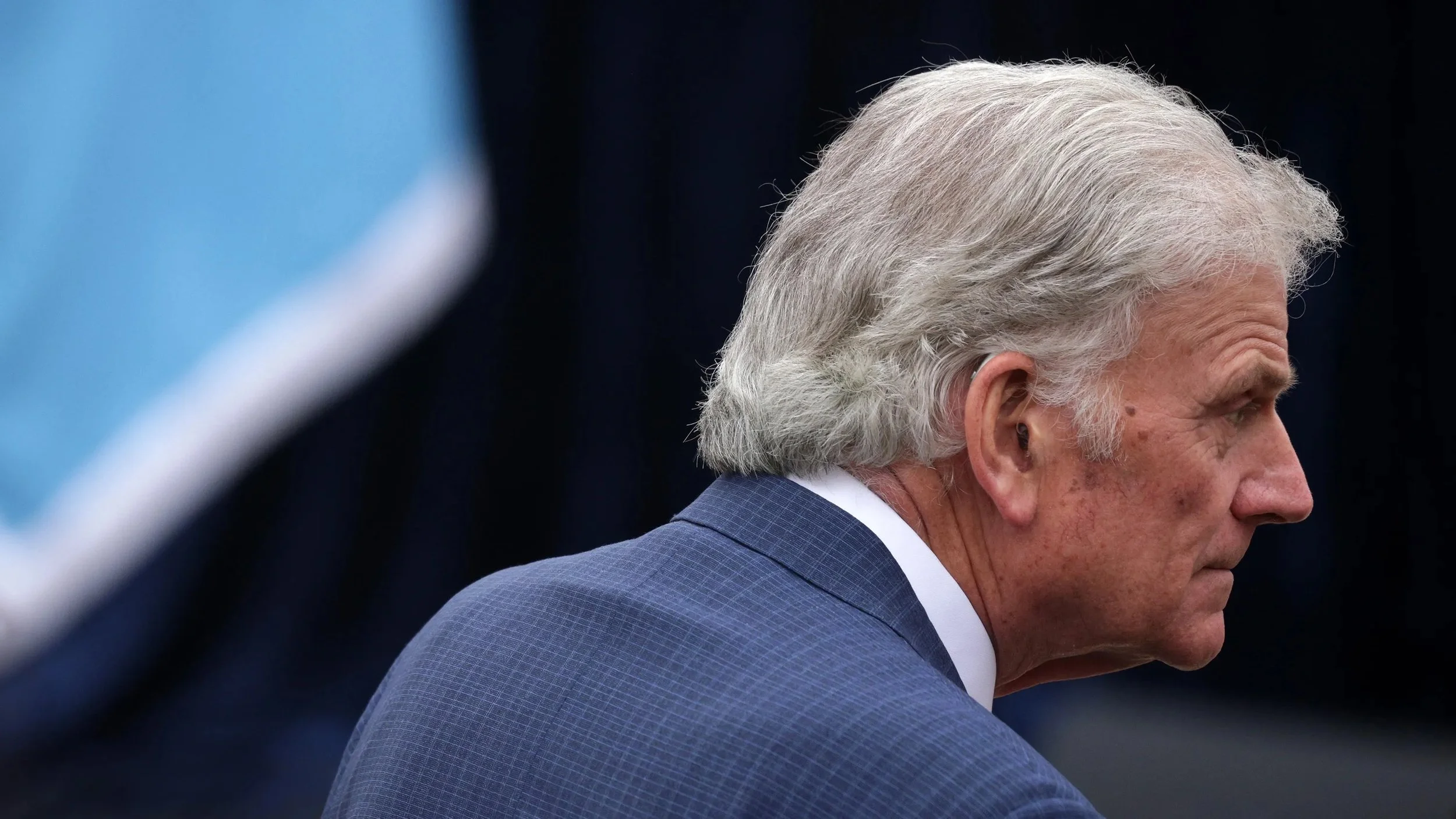
For three nights starting Friday, the Chizhovka Arena in Minsk will hold the largest gathering of evangelicals ever in Belarus’s history, according to organizers.
Organizers expect around 9,000 people to enter the indoor sports arena for the Festival of Hope, organized by the Billy Graham Evangelistic Association (BGEA) from May 15 to 17. Franklin Graham is scheduled to preach on the final two nights, and a choir of more than 1,300 singers, as well as musicians from Belarus, Russia, and the United States, will also take the stage.
For Leonid Mikhovich, one of the event’s coordinators, the scale itself marks a significant moment. “We’ve never had anything like this,” he told CT, noting that even in the 1990s, when post-Soviet religious life briefly bloomed, gatherings of this size were unheard of. “We had large activities, maybe up [to] 1,000,” he said, “but nothing like this.”
A coalition of Belarusian evangelical networks, including United Church of Christians of the Evangelical Faith in the Republic of Belarus and the Union of Evangelical Christian Baptists of the Republic of Belarus, is facilitating the festival. Mikhovich, who is also the general secretary of the Baptist Union, said that while Belarus’s evangelical churches have long operated in parallel and partnered on outreach programs, this is the first time they are coordinating at a national scale.
Mikhovich believes the event also gives the small evangelical community in Belarus a sense of legitimacy. “For us, to have something like this in an arena of this importance, it’s almost a kind of legalization,” he said.
In a country where the authoritarian government tightly manages the public square and constrains civil society, the festival represents a rare moment of visibility for evangelicals, who make up less than 2 percentof the population. Meanwhile, the Belarusian Orthodox Church, which is under the authority of the Moscow Patriarchate, makes up 60 percent.
But while organizers like Mikhovich describe the gathering as a milestone, religious liberty monitors caution it may not bring greater freedoms for evangelicals. Instead, experts warn, the event highlights how authoritarian systems can selectively permit large religious gatherings while maintaining restrictions on everyday religious life.