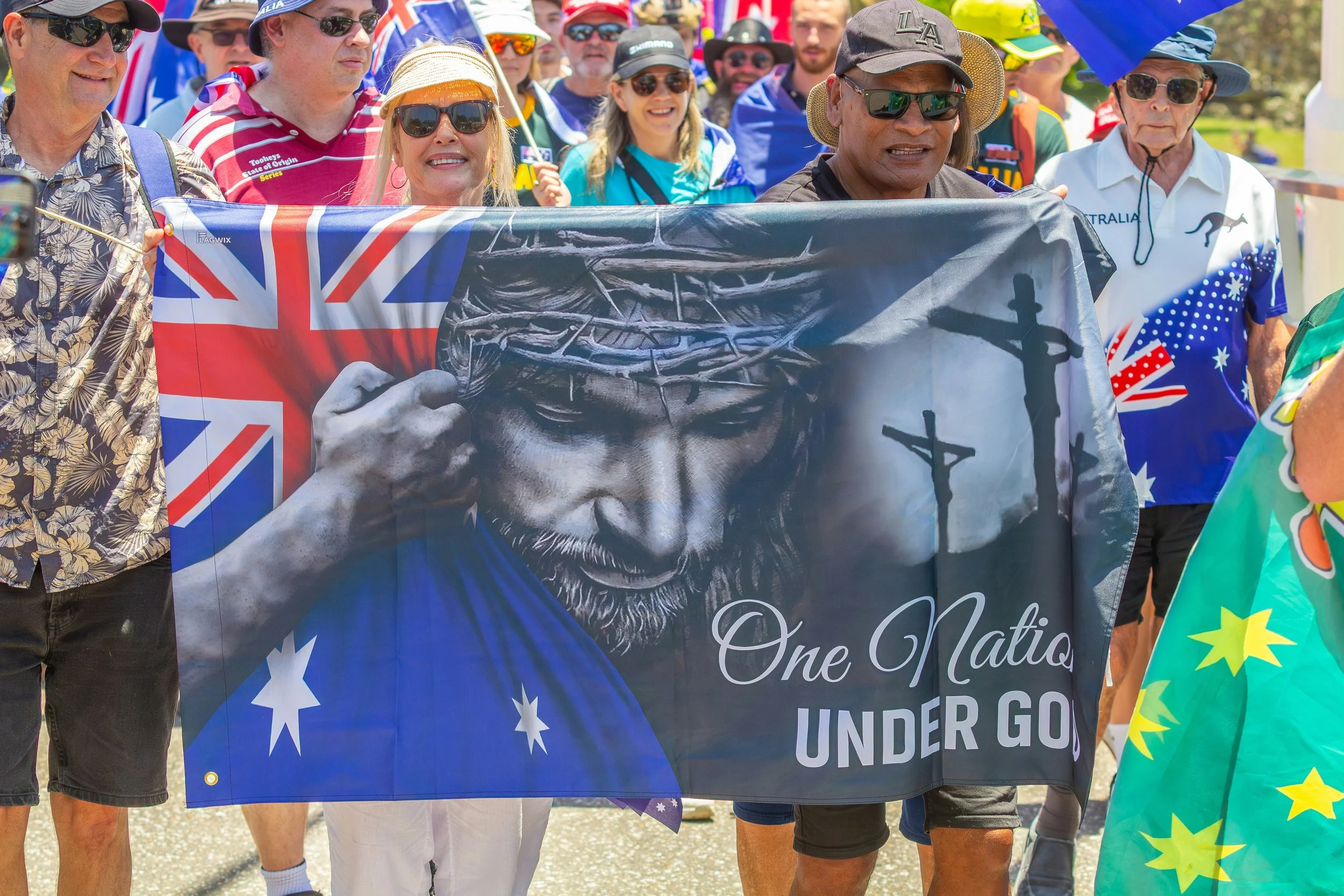
Maybe you’re here because you read “Christian Nationalism” in the title.
That is, in part, my point.
Over my last 15 years in religion media, I’ve learned that in the competition for public attention, not all subjects are created equal. Some generate more clicks, more eyeballs, more attention, more praise, and more prize money. I’ve also seen how editorial meetings, grant-making priorities and selection committees all play a role in determining which stories dominate the national conversation.
In the past several years, few topics have benefited more from this convergence of attention than what has been called “Christian nationalism.” And rightly so. Its prominence reflects real concerns and urgent questions. But it also invites a reflection on what stories we are missing with so much attention given to Christian nationalism — and in particular, the white version thereof.
Is Christianity the Heart of the American Story?
In recent years, coverage of Christian nationalism has become ubiquitous.
Journalists, scholars and commentators have rightly sought to define the term, trace its historical roots and document its contemporary manifestations. The phenomenon, loosely understood as the fusion of a particular vision of Christianity with American civic identity and political power, has been linked to exclusionary policies, democratic erosion, and cultural conflict. It has been called a democracy demolisher. Given such stakes, the surge of attention seems understandable and urgently so.
Others, however, have raised concerns that coverage of Christian nationalism is “overhyped” and the concept poorly defined.
I’m not here to discount the careful work being done by my academic and journalistic colleagues, but my sense is that there is a growing case for interrogating not only Christian nationalism itself, but also the scale and framing of the attention it receives. Essentially, from my perspective, when coverage becomes disproportionate, when it begins to dominate institutional resources, editorial priorities and intellectual energy, it risks producing unintended consequences.
Chief among these is that in attempting to critique Christian nationalism, media ecosystems may inadvertently amplify its central claim: that Christianity sits at the heart of the American story.
Proving Christian Nationalists Right
With that said, recent commentary reflects increasing unease with how the term “Christian nationalism” is deployed and circulated. Writers have observed that the phrase has, in some contexts, drifted from analytic category toward polemical shorthand. Its elasticity can obscure more than it clarifies, argues historian Heath Carter, for example, flattening distinctions among religious conservatives or disregarding progressive political actors who have also imagined the U.S. as a “Christian nation.”
This ambiguity presents a challenge for journalists, whose tenacity in reporting the subject must meet the reality of the term’s recent overuse and imprecise application. Failing to do so risks dulling the term’s explanatory power, turning it into what Carter describes as a catch-all epithet rather than a rigorously defined concept.
At the same time, others have raised questions about the political economy of attention surrounding Christian nationalism. As sociologist Musa al-Gharbi wrote on Substack a few years back, elite discourse often gravitates toward topics that resonate within professional and academic circles, sometimes at the expense of broader or more materially consequential issues.
Christian nationalism, with its dramatic narratives and moral clarity, lends itself to compelling storytelling. It attracts readership, funding and institutional recognition for the journalists who cover it. But this very appeal may encourage a concentration of resources on a single frame of analysis while sidelining other dimensions of American religious and political life.
And this leads me to my main concern. With all the coverage of Christian nationalism, and with so much type-space, bandwidth and podcast minutes given to its predominately white practitioners, it is possible the volume and framing of coverage may unintentionally reinforce the movement’s claims.
At its core, Christian nationalism asserts that the U.S. is fundamentally a Christian nation and that its identity, history, and future should be understood through that lens. When media coverage repeatedly centers Christian nationalists, whether in critique or condemnation, it risks reifying that centrality. The story remains anchored around Christianity, particularly white versions thereof, even if the moral valence is inverted.
The Stories We Aren’t Seeing Enough Of
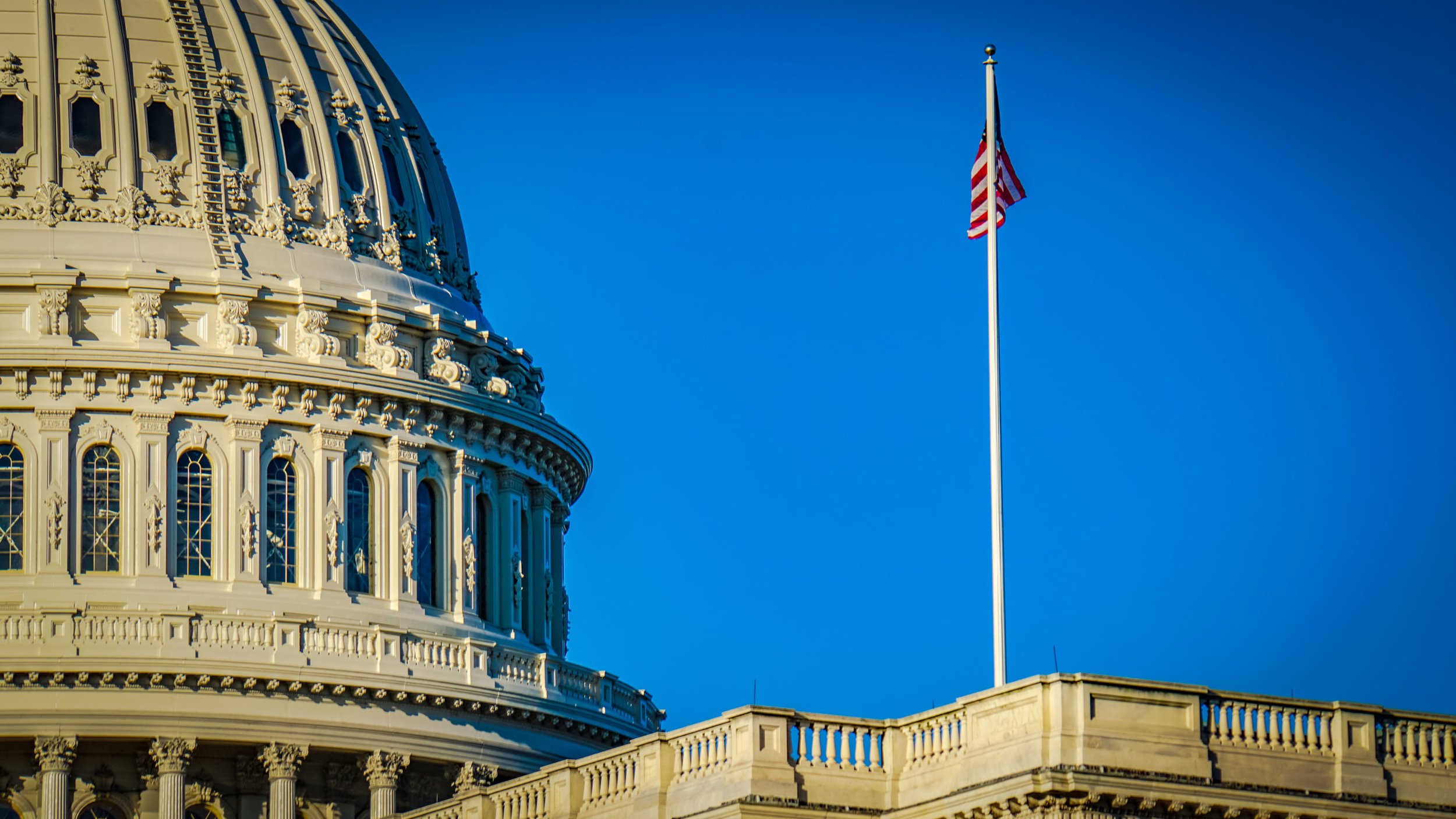
This dynamic is particularly salient as the nation approaches its 250th anniversary.
Anniversaries are moments when societies revisit foundational stories and reconsider whose voices are included — or excluded. If the discourse leading up to this milestone is dominated by debates over Christian nationalism, there is a danger that the broader tapestry of American religious life will be overshadowed.
Such an outcome would be a profound loss. As I often teach in my courses on American religion, the religious history of the U.S. is not reducible to white Christianity and its various internal debates, denominations and divisions (as important as those are!).
It encompasses, instead, Indigenous traditions that predate European colonization, the diverse expressions of Christianity in all its forms, as well as Judaism, Islam, Sikhi, Buddhist and Hindu traditions, other faiths brought by immigrants and the many forms of religious innovation that have emerged over the last two-and-a-half centuries. It also includes the growing population of Americans who identify as religiously unaffiliated, but whose ethical and communal lives nonetheless shape the nation’s moral and spiritual landscape and its futures.
To focus disproportionately on Christian nationalism is to risk narrowing this expansive field into a single story. This not only encourages a binary framing of “Christian nationalism v. its opponents” but may divert attention from other notable issues at the intersection of religion and public life: interfaith cooperation, religious responses to climate change, the role of faith-based organizations in social services or the evolving legal landscape of religious freedom.
Widen The American Story’s Scope
None of this is to suggest that coverage of Christian nationalism should stop.
On the contrary, investigative reporting and scholarly analysis remain essential for understanding its influence and mitigating its harms. But narrative diversity matters and, at this point, I am starting to wonder if we are losing the plot.
So, the question becomes not whether to cover Christian nationalism, but how to situate that coverage within a broader ecosystem of stories.
As the Semiquincentennial approaches, the U.S. faces an opportunity to tell a richer, more inclusive story about itself. This story should acknowledge conflict and the important role played by Christianity in shaping the nation’s past, present and future — including the contemporary challenges posed by Christian nationalism.
But we should also celebrate the diversity of religious traditions that have shaped, and continue to shape, America. To do otherwise is to risk conceding the narrative to those that insist on Christianity’s centrality.
Ironically, in other words, in trying to challenge that framework, we may end up sustaining it.
The task, then, is not simply to report on Christian nationalism, but to resist allowing it to define the scope of our attention. By broadening the breadth of our coverage and diversifying the narrative, we can instead contribute to a public discourse that is not only more accurate, but also more expansive — one that resists reduction and embraces, for good and for ill, the plurality that has always been at the heart of the American story.